Category: Retirement Home

  • The Juggle Is Real: Why You Should Join Me

    The Juggle Is Real: Why You Should Join Me

    If you’ve ever felt like you’re being pulled in ten different directions at once, you’re not alone.

    You’re building your career. You’re showing up for your family. Maybe you’re raising kids. And at the same time, you’re starting to take on a new role you were never really trained for helping aging parents navigate one of the most complex systems out there.

    That’s the sandwich generation (responsible for bringing up their own children and for the care of their aging parents). And the juggle is very real.

    That’s exactly why I’m excited to be part of The Juggle Is Real: A Community Night for the Sandwich Generation, hosted by Whimble.

    This isn’t your typical “sit and listen” event. It’s designed to feel different in the best way.

    A Night That Actually Gets It

    We’ve all been to events that feel a bit too formal or a bit too removed from real life. This isn’t that.

    The goal of this night is simple: bring together people who get it.

    People who understand what it feels like to:

    • Try to plan for the future while dealing with what’s happening right now
    • Have tough conversations with parents about care, housing, and support
    • Balance ambition at work with responsibility at home
    • Feel like you’re supposed to have all the answers… even when you don’t

    You can expect a relaxed, welcoming atmosphere. Think cocktails, good conversation, and a room full of people who are navigating similar challenges.

    There’s going to be a panel discussion, but it’s not meant to be clinical or overwhelming. It’s meant to be real, practical, and actually helpful.

    What We’ll Be Talking About

    The panel is focused on giving you tools you can actually use.

    Not theory. Not jargon. Just honest conversations about things like:

    • How to start planning before a crisis happens
    • What to do when you’re not sure what your parents need yet
    • How to manage stress and avoid burnout
    • How to build a support system that actually works

    And most importantly, there will be time for questions. Because everyone’s situation is different, and sometimes you just need to ask the thing that’s been on your mind.

    Meet the Panel

    One of the best parts about this event is the mix of perspectives.

    You’re hearing from people who live and breathe this space in very different ways.

    Minnelle Williams

    An Estate and Legacy Educator, Minnelle brings a level of warmth that makes even the hardest conversations feel approachable. With experience as both a Funeral Director and Death Doula, she helps families think about planning in a way that feels human, not overwhelming. Her work is all about making sure people feel prepared, not panicked.

    Elizabeth Mohler

    Elizabeth brings a thoughtful, research-backed perspective on care systems and policy. As a PhD candidate at Western University, she studies how people actually experience care in real life. What I really respect is that she also brings lived experience as a caregiver, which adds a level of honesty you don’t always get in these conversations.

    Emma Brown

    The Founder and CEO of Whimble, Emma built this event from a place of personal experience. After decades of providing backup care for a loved one, she understands just how fragile and complicated the system can be. Her goal is to make care more accessible, reliable, and easier to navigate for families.

    Daniel Clarke (that’s me)

    I’ll be there talking about how we can make finding care a little less overwhelming.

    Through Elderado, I spend a lot of time helping families figure out the difference between long-term care, retirement homes, and home care and more importantly, how to actually find the right fit.

    Because the reality is, most people only learn about this system when they’re already in it. And that’s when it feels the hardest.

    Where Elderado Fits In

    A big part of what I’ll be sharing is how families can take back a bit of control in the process.

    Finding care shouldn’t feel like guesswork.

    Whether you’re:

    • Just starting to think about options
    • Trying to understand the difference between retirement homes and long-term care
    • Looking for home care support to stay at home longer
    • Or in a situation where you need to make a decision quickly

    There are tools and resources that can make this easier.

    That’s why we built Elderado to give families a clear, simple way to search, compare, and connect with care options without feeling overwhelmed or pressured.

    And honestly, even knowing where to start can take a huge weight off your shoulders.

    Why You Should Come

    If you’re part of the sandwich generation, this night is for you.

    Not because you need another thing on your calendar but because you deserve support too.

    You deserve:

    • Clear information
    • Honest conversations
    • A space where you don’t have to explain why this is hard

    And maybe most importantly, you deserve to feel like you’re not doing this alone.

    This event is about learning, yes. But it’s also about connection.

    It’s about walking into a room and realizing there are other people figuring this out too.

    We’re never really taught how to navigate this stage of life. There’s no handbook for balancing career, family, and caregiving. Most people figure it out as they go. But nights like this can make that process feel a little less overwhelming.

    If you’ve been meaning to start the conversation, ask questions, or just connect with people who understand this phase of life, this is a great place to start.

    I hope to see you there.

  • A Tour of Retirement Suites By The Lake

    A Tour of Retirement Suites By The Lake

    Retirement Suites By The Lake (RSBL) is situated close to my own home and is a landmark I have driven past countless times over the years. It is a building that has always occupied a space in my peripheral awareness, partly because I have known several peers whose parents once lived there. Through my recent engagement with the residence, I discovered that a significant majority of the residents are long-standing members of the local community. They are choosing to age in place within the neighborhood they already know and love.

    The location itself is one of its most striking features, perfectly positioned near some of the city’s most breathtaking natural spaces, including Rosetta McClain Gardens, the scenic beaches, and the Scarborough Bluffs. Beyond its geographic appeal, the building possesses a unique physical character owing to its past life as a former hotel. Walking in for my tour with Kathleen, I felt a distinct sense of both familiarity and intrigue. 

    During my visit, I also uncovered fascinating local history. The site was originally home to the historic White Castle Inn, a grand structure built in the late 1800s. Tragically, the original inn was destroyed by fire in 1955, but a new structure was quickly rebuilt on the exact same footprint. This second building ultimately evolved into the modern retirement residence we see today, carrying forward a long history of resilience and hospitality.

    The Vibrant Lifestyle: Independent Living

    There are 92 suites in total at RSBL, currently housing approximately 86 residents. About 60% of this population is in the Independent Living program. As I toured the home with Kathleen, it was immediately evident that these residents are thriving and highly active. The atmosphere does not feel like a traditional facility but rather a lively community of adults. For example, we stopped to chat with one resident who was glowing with excitement after returning from a two-week sunny vacation abroad.

    The social energy of the building was palpable throughout the tour. In the dining room, I saw staff members engaging in genuine laughter with residents as they prepared the tables for dinner. In the lounge areas, I observed groups of residents simply chatting and laughing together. In one area, a resident sat comfortably with her dog, while chatting with a friend, illustrating the pet-friendly and relaxed nature of the home. It truly felt like a place where connection is the priority, with its laid-back and inclusive vibe.

    Because the building was originally a hotel, the suites are considerably larger than the industry average. Many feature unique, non-standard layouts that you rarely find in purpose-built retirement homes. Some units include private walk-outs or balconies, and they all feel remarkably bright due to the oversized hotel-style windows. Sizes range from cozy studio suites to expansive two-bedroom, two-bathroom configurations. Every suite is equipped with individual climate controls, allowing residents to maintain their own comfort levels. Depending on the season, some residents even enjoy beautiful views of the lake.

    Dining is a central part of the experience. The community shares one main dining room with two seating times for each meal to ensure a relaxed pace. Behind the high-quality menu is Red Seal Chef Ian Purdy, who brings extensive experience from high-end resorts, luxury hotels, and his own former restaurant. He views his role as more than just cooking; he is creating a culinary community. To keep things engaging, he hosts special themed events throughout the year, such as lobster dinners, which are always a highlight.

    The pricing structure is transparent and all-inclusive. Residents pay a flat monthly fee based on their suite type, which covers all standard inclusions: three meals daily, afternoon tea, weekly housekeeping and laundering of linen, utilities, and all social activities. The daily exercise class is consistently the most popular event, reflecting the residents’ commitment to staying active. Additionally, the residence operates a van for weekly outings to local shops, buffet restaurants, and theatres.

    Care and safety are woven into the routine without being intrusive. Personal Support Workers (PSWs) are on-site 24 hours a day, and nursing staff are present daily from 7:00 a.m. to 4:00 p.m. A doctor visits twice monthly, and there is a weekly podiatrist as well as an on-site physiotherapy room. Residents may also choose to supplement their care through Ontario Health at Home or by hiring private caregivers.

    Personalized Care: Supportive Living

    As needs change, RSBL offers tailored services through their Supportive or Assisted Living tier, which currently accounts for approximately 40% of the population. This allows residents to stay in their familiar environment even as they require more hands-on assistance.

    Residents can choose extra support “a la carte,” organized into housekeeping, maintenance, and wellness. This can include daily cleaning, laundry, or practical maintenance tasks like hanging pictures. Wellness services include bathing assistance, medication administration, and dining room escorts. Unique to RSBL, PSW care is scheduled in blocks of time rather than specific tasks—for example, 15 minutes as needed or a dedicated 30 minutes daily. This provides significant flexibility for meeting individual care requirements.

    While adaptable, there are clinical limits. RSBL can accommodate a resident-provided Hoyer lift but cannot care for individuals requiring a two-person assist, feeding assistance, or secure memory care for wandering behaviours. In cases where needs exceed what RSBL can provide, they often work with McCowan Retirement Residence for higher levels of clinical care.

    Flexibility and Comfort: Short-Term Stays

    RSBL offers several short-term stay options, including respite care for surgery recovery or stays when regular caregivers are away. They also encourage “trial stays” for those considering a permanent move. There is a simple two-week minimum, which is popular for post-operative recovery. Fittingly, the residence still maintains a dedicated hotel suite for visiting guests—a charming nod to the building’s history.

    A Final Perspective: Overall Impressions

    After my visit, I read through a recent newsletter and was struck by its charm. It was filled with local trivia and quirky facts, like a column dedicated to the history of bubble wrap. This captures the essence of RSBL: a community that values lifelong learning and humour. With nightly movie screenings at 7:00 p.m., it is clear that fun and friendship are built into the very fabric of daily life at Retirement Suites By The Lake.

  • A Tour of Delmanor Wynford Retirement Home

    A Tour of Delmanor Wynford Retirement Home

    As I arrived at Delmanor Wynford, I was immediately welcomed by the concierge, who serves as a helpful presence on-site every day from 8:00 a.m. to 8:00 p.m. I was able to take some time to relax in the well-appointed lobby ahead of my tour, where I could truly admire the elegant surroundings and the warm atmosphere of the residence. Delmanor Wynford is centrally located in the heart of Don Mills, making it easily accessible via the Don Valley Parkway. However, its unique position within the valley means it is also tucked away near nature and lush green spaces. The entire environment felt remarkably serene and elegant as I began my journey through the various wings of the home. 

    A Strong Focus on Independent Living

    Currently, there are approximately 130 residents at Delmanor Wynford, and the community maintains a significant focus on Independent Living. It is a notably active home with a plethora of daily activities and numerous common areas for residents to congregate, whether they prefer indoor lounges or the beautifully landscaped outdoor terraces. Residents pay a flat monthly price that varies based on the size and layout of their suite, and this fee is quite comprehensive. It includes all chef-prepared meals, daily activities, an emergency medical response pendant, and weekly housekeeping services that also include the laundering of towels and bed sheets. 

    In addition to these standard inclusions, every resident is part of the signature LivingWell program. In this program, residents have the opportunity to meet with a dedicated life coach once per week. The coaches work closely with residents to establish personalized exercise routines and wellness goals, with a specific focus on maintaining mobility, agility, balance, flexibility, and overall stamina. This proactive approach to health can be instrumental in reducing the risk of heart disease, increasing bone density, rehabilitating chronic back pain, and minimizing the risk of accidental falls. While these coaches have strong fitness backgrounds, they also emphasize holistic well-being by providing social and emotional support. Because of this, the LivingWell program also encompasses a variety of intellectual and social events, such as guest lectures, workshops, book clubs, and art classes. It is quite apparent that at Delmanor Wynford, there is a genuine commitment to helping residents “thrive”. Everyone is encouraged to stay active and healthy, with a wide array of supports in place to make that possible. 

    Regarding health care on-site, the residence features a nursing station on the main floor that is staffed from 7:00 a.m. to 11:00 p.m. There is a professional health care team on site 24 hours per day. Some residents also receive additional care through visiting providers from Ontario Health at Home. A physician visits the community once per week, and several fee-based outside providers come in regularly to offer specialized services, including professional foot care, eye care, dental care, and hearing assessments. 

    Touring Around the Home

    As I made my way through the home, it was a delight to see the many different areas and rooms that contribute to such a full and active lifestyle. The residence was a bustle of activity; I observed residents exercising in the fitness areas, heading out to meet friends, and reading quietly in one of the many comfortable sitting areas. One popular spot is the “Pub,” where continental breakfast is served daily, along with lunch options and refreshments in the afternoon. The main dining room, which was beautifully set for lunch during my visit, offers seven distinct meal choices each day for both lunch and dinner.

    The multipurpose room is a versatile space that supports a number of activities, ranging from structured exercise programs to a gourmet demonstration kitchen where monthly cooking demos are held. In addition to the fun things to do on-site, the residence organizes four weekly bus trips, including local shopping excursions. I also learned that Tammy, the residence’s hair stylist who has been at Delmanor Wynford since it first opened, is available at the in-house hair salon three times per week. For residents who are still active drivers, reserved underground parking is available for a fee, and storage lockers are also provided for an additional charge. 

    The resident suites themselves are very well-appointed and spacious. While most are one-bedroom units, there are also one-bedroom plus den and two-bedroom options available. Each suite comes equipped with its own personal washer and dryer, as well as a full-sized refrigerator. One particularly appealing feature is that almost all units include a private balcony. Furthermore, there is a stunning rooftop terrace that includes a putting green, a bocce court, a scenic walking path, and treed sitting areas. 

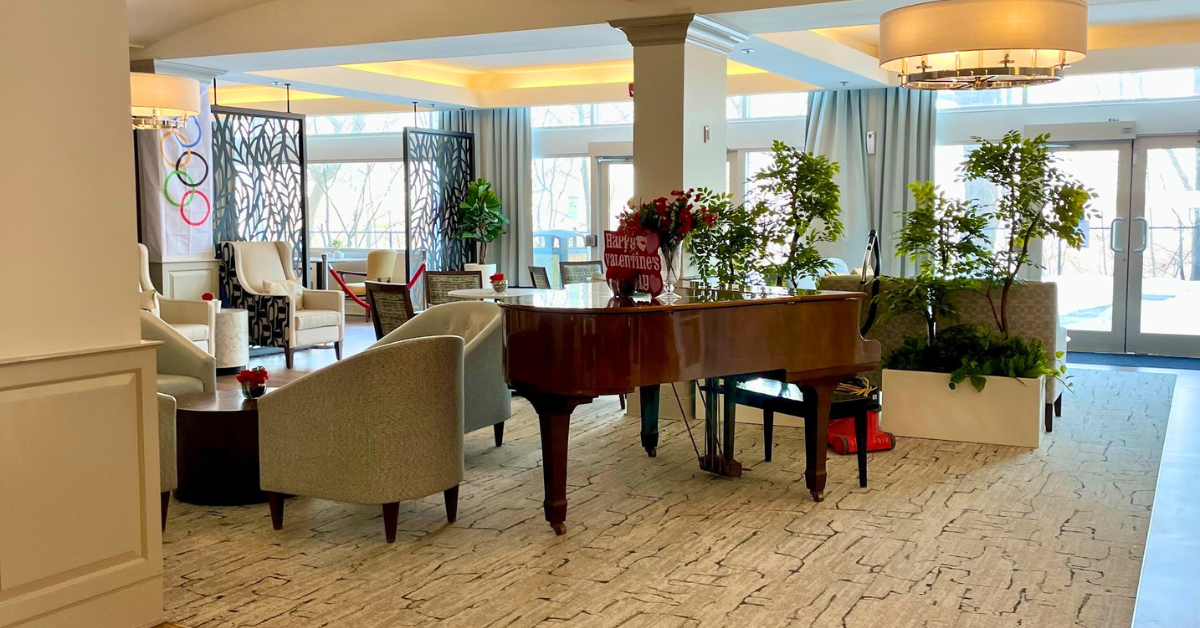
    The residence even features a gorgeous movie theatre with its own in-house popcorn maker, which was about to be transformed into an Olympic viewing space when I visited. They play movies regularly, and residents even have the option to request their own favorites through Netflix. These amenities all work together to support a truly independent and fulfilling lifestyle. 

    Supportive Living

    As care needs change, residents have access to Supportive Living, where assistance is provided discreetly within the privacy of their own suites. Personal support can be added as needed, and residents typically pay for these services in increments of 15 minutes. Residents also have access to a dedicated health and wellness team to assist with personal daily living tasks, medication management, daily housekeeping, and laundry services. All care provided above what is included in the Independent Living package is offered on an a la carte basis, with several specialized packages available. 

    Residents can work closely with the nursing staff to determine their specific care requirements. While Delmanor Wynford can provide a high level of care, they cannot accommodate residents who require a two-person assist or a Hoyer lift. They do offer supports for some memory care; however, if a resident becomes unsafe or begins to wander, the staff will work with the family to transition them to a more appropriate home, such as Delmanor Elgin Mills, which specializes in Assisted Living and Memory Care. 

    Guest and Respite Stays

    Delmanor Wynford also offers short-term respite stays for individuals who need temporary support, such as those recovering from an illness or surgery. These stays include all the standard resident amenities, along with additional services like door-side medication management, 30 minutes of daily personal support, weekly bathing assistance, and personal laundry service. For those who simply want to experience retirement living before making a permanent move, the community also offers guest stays. These short-term trial stays provide a taste of the Delmanor lifestyle without the same level of clinical care included in a respite stay. 

    Overall Impressions

    I ended my tour by spending some time chatting with my guide in the Conservatory, located just off the main lobby. This is a very serene and peaceful space, with sunlight streaming in and an abundance of lush greenery. Once again, I was struck by a real feeling of comfort and elegance. I left with a deep appreciation for how the environment at Delmanor Wynford empowers residents to lead active, engaged lives where they can truly thrive in their older years.

  • A Hidden Gem in Leaside: First Impressions of The Millwood

    A Hidden Gem in Leaside: First Impressions of The Millwood

    Arriving at The Millwood Retirement Residence felt less like a formal tour and more like popping into a friend’s home. Despite driving past the building many times before, I hadn’t fully realized this boutique residence was tucked away right in the heart of Toronto’s Leaside neighborhood. It blends seamlessly with the surrounding houses, schools, and local shops, feeling deeply embedded in the community rather than set apart from it. That organic connection is likely why the atmosphere felt so warm and inviting the moment I stepped inside for my visit. It doesn’t scream “institutional facility”; instead, it whispers “neighbourhood sanctuary.”

    Deep Roots and Local Connection

    The Millwood may be intimate in scale compared to larger modern complexes, but it maintains a vibrant and significant presence in the local area. The building is 38 years old and is currently undergoing extensive renovations designed to modernize the space without causing any sense of disruption to the residents’ daily lives. The results of these updates were immediately clear as I entered the main dining room on the ground floor. I was struck by a beautiful, muted forest-scene wall covering that anchors the room, adding an instant sense of serenity and natural beauty to the space.

    The enhancements extend outdoors as well. Just off the dining room, a large new front patio is being constructed. This addition will further strengthen The Millwood’s community feel, allowing residents to sit outside and feel part of the neighborhood’s natural rhythm, waving to neighbors as they pass by. Inside, the suites are being systematically updated as they turn over, and unique new features, such as an enclosed greenhouse, are being added to the amenity list to provide year-round greenery.

    The “village” feel is more than just architectural; it is deeply social. My host, Brent, shared how The Millwood maintains a close relationship with a local elementary school just down the street. The school choir visits regularly to perform for the residents, and every October, the residence hosts a special trick-or-treat experience for the students. Because many residents originally hailed from Leaside or have family living nearby, it’s quite common to see relatives and friends drop by for a quick visit while out for a stroll. Even the house beautician is a local staple, visiting the on-site hair salon twice a week for years. It is this integration into the local fabric that makes the transition to retirement living feel like a natural next step rather than a departure from one’s life.

    Flexible Living, Clinical Excellence, and Personalized Care

    The Millwood offers 53 suites in total. Of these, 35 are dedicated to Independent Living and can accommodate a wide range of “Select Care” options as needs evolve. For example, assistance with hygiene or mobility can be added within Select Care. The studio and one-bedroom layouts are designed with a bright, airy aesthetic that makes them feel larger than their footprint. There is a high degree of flexibility here; the philosophy is to adapt the care to the resident, meaning almost any level of support can be brought directly to any suite. This ensures that residents don’t have to move just because their needs change.

    A major plus for many families: pets are warmly welcomed. The monthly fee includes the standard retirement living staples—meals, utilities, weekly housekeeping, and an emergency pendant—but it also goes a step further. The base price covers two loads of personal laundry per week and medication administration up to four times per day. It also includes one assisted bath per week, which is not common in Independent Living but is a great addition for those who may need light support with bathing. To ensure everyone is thriving, each resident undergoes a comprehensive health assessment every six months. This proactive approach allows the team to track progress and identify potential declines early, providing families with both emotional and financial lead time to prepare for changes.

    The Millwood’s Select Care (similar to what other homes call Assisted Living) allows residents to add services a la carte. These six levels of care include personal support, mobility assistance, and specialized diabetes monitoring. Residents can also layer on specific needs like oxygen management, meal escorts, or daily housekeeping. On the clinical side, the operation is incredibly sophisticated. Staff utilize high-tech medication management systems involving carts that are taken door-to-door. Each resident is photo-scanned during administration to ensure absolute safety and accuracy. To streamline this, all residents use the same pharmacy, which provides prepackaged doses for every time of day.

    Furthermore, an in-house Nurse Practitioner is available 16 hours per week and can actually take on residents as primary patients. In addition to the on-site PSWs and nurses, there is a doctor on call at all times. For those receiving support through Ontario Health at Home, The Millwood operates under a “cluster care” model, which often means the resident receives care from the same regular caregiver, fostering deeper trust. The residence is also equipped for complex physical needs, including two-person lift assists and Hoyer lifts, and they are one of the few boutique homes capable of providing G-tube feeding.

    The heart of the home is the dining room. Rather than strict, one-hour sittings, The Millwood offers two-hour windows for each of the three daily meals. This allows residents to linger over coffee and conversation without ever feeling rushed. In addition to the standard menu, there is a daily snack cart that makes its way door-to-door: a fun and unique touch that residents clearly enjoy. For those days when a resident isn’t feeling their best, tray service to the suite is provided. As part of the Select Care offerings, families can even opt for a permanent meal delivery plan if that better suits the resident’s lifestyle.

    Specialized Support and Short-Term Respite Stays

    The Enhanced Care floor features 18 suites (both studios and one-bedrooms) designed for those who require a higher level of daily support but wish to remain in the familiar Millwood environment. This floor provides more dedicated, one-on-one attention, with 90 minutes of personalized care per day included, and a focus on structured daily living that provides security and comfort. The floor has its own dedicated dining area, creating a more intimate and manageable environment for those who might find the main dining room overwhelming. Enhanced Care functions as a blend of Assisted Living and Memory Care; while it features a keypad entry to prevent wandering, it is not a fully locked unit. If a resident develops needs that require specialized, 24/7 secure Memory Care, The Millwood works transparently with the family to transition them to an appropriate home in the immediate area.

    The Millwood also prioritizes Respite Care, or short-term stays. These are ideal for seniors recovering from surgery or those who simply want a “trial run” of retirement living for a minimum of 30 days. Unlike many homes that only offer respite when they happen to have a vacancy, The Millwood maintains suites specifically dedicated to short-term stays. These rooms come fully furnished, though they generally follow a basic fee structure that does not include the higher levels of clinical care.

    Final Impressions: A True Sense of Belonging

    What truly stood out to me during my tour was the sheer adaptability of the programming and care. From the inclusion of therapy dog visits to the meticulous medication scanning system and the whimsical daily snack cart, it is clear that The Millwood is focused on meeting specific needs rather than forcing a one-size-fits-all model. I had the pleasure of meeting Ramandeep, the Activities Lead, who spoke passionately about their core strength and fall prevention exercises—the most well-attended programs on the calendar. And, of course, there is the famous “Thursday Afternoons at the Opera,” which adds a touch of culture and elegance to the week. As I left, I passed a beautiful balloon arrangement from the previous day’s birthday party. The Millwood celebrates all birthdays for that month with one big community bash. It was just one more indication that this isn’t just a place where people live: it’s a place where they are celebrated as part of a family.

  • Lunch at Venvi The Kensington: A Taste of Retirement Living in Oakville

    Lunch at Venvi The Kensington: A Taste of Retirement Living in Oakville

    Choosing the right retirement home can feel overwhelming for families. Many people are not sure what life in a retirement residence actually looks like. What are the suites like? What kind of care is available? And one question that comes up again and again: How is the food?

    To help answer these questions, Elderado recently hosted a lunch with Venvi The Kensington, bringing together local professionals who support older adults and their families. The goal was simple: experience retirement living firsthand.

    The event included introductions, a tour of the residence, and a lunch prepared by the culinary team at the home. It was a great opportunity to learn more about retirement living in Oakville while connecting with other professionals who help families navigate aging and care decisions.

    What Is a “Lunch at” Retirement Home?

    The Lunch at series is our initiative to help local professionals better understand retirement living in their area.

    (Check out our blog about our Lunch at Bloom Oshawa)

    Each lunch brings together a small group of professionals who work with older adults and caregivers. This can include real estate professionals, financial planners, downsizing experts, and others who often help families while they navigate this major life transitions.

    The format is intentionally small and simple.

    A typical lunch includes:

    • Introductions and networking
    • A short overview of the retirement residence
    • A guided tour of the home and model suites
    • Lunch served from the same menu residents enjoy

    By keeping the group to about five to seven people, everyone has a chance to ask questions and share their perspective.

    For some guests, this is their first time experiencing retirement living.

    Lunch at Venvi The Kensington

    The lunch took place at Venvi The Kensington, a beautiful retirement residence located right on Lakeshore Road near the Oakville harbour.

    The event was hosted by Kerry McShane, Area Lifestyle Consultant at Venvi The Kensington, who welcomed the group and shared insight into the residence and its services.

    Attendees included:

    • Myra Afidchao — Regional Manager, Alivio Downsizing
    • Denny Chuang — Certified Financial Planner, Eagle Partners Financial Solutions
    • Brian Cowan — SRES Realtor, Transition With Ease
    • Nikoo Faghihi — Financial Planner, RBC Financial Planning
    • Damir Strk — Broker, RE/MAX Realty Specialists Inc.

    Touring Venvi The Kensington

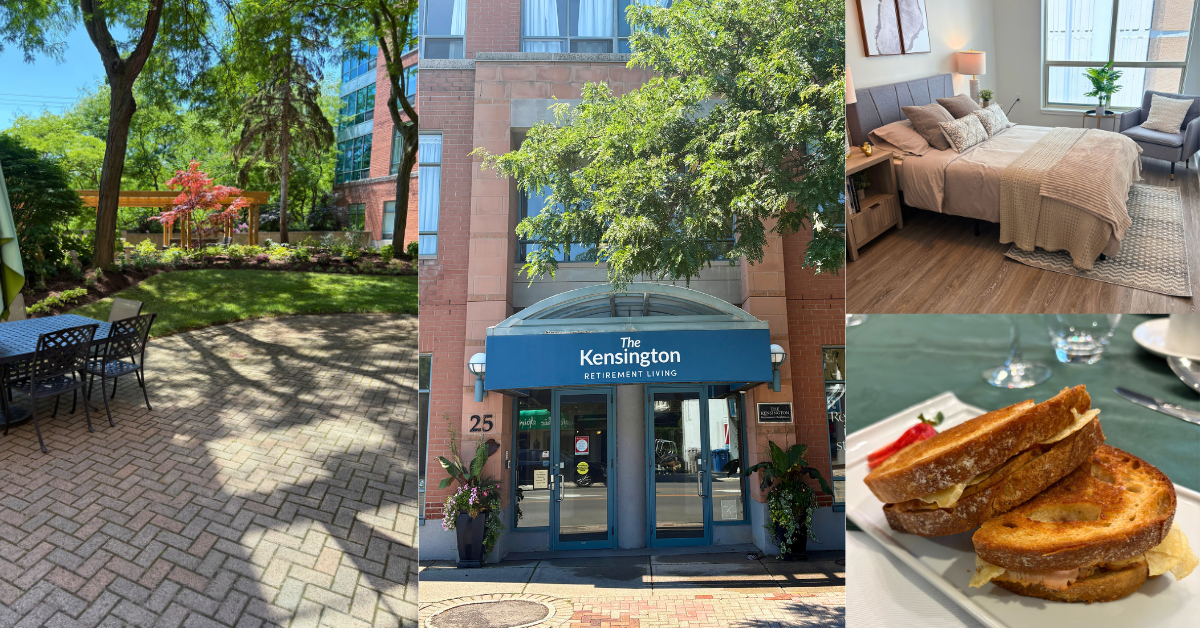
    The tour gave everyone a chance to see the a couple of model suites, and the common spaces used by the residents.

    One area that stood out was the exterior courtyard, a beautiful outdoor space that immediately impressed the group. It will be a great place come spring to enjoy fresh air, gardening, or simply relax outside.

    Another highlight was the library and lounge, which offers a sophisticated and comfortable place for residents to read, socialize, or enjoy quiet time.

    The residence also features a wide range of amenities and common areas, including:

    • Dining room and bistro
    • Movie theatre
    • Fitness centre
    • Craft kitchen
    • Recreation spaces
    • Hair salon
    • Communal garden
    • Private dining room for family gatherings

    The building also offers underground parking, elevators, and accessibility features to support residents with mobility needs.

    Retirement Living Options and Care

    Venvi The Kensington Oakville offers several living options to support residents as their needs change.

    These include:

    Independent Living
    For older adults who want a maintenance-free lifestyle while enjoying social activities and services.

    Independent Supportive Living
    For residents who want independence but may benefit from occasional support.

    Assisted Living
    For residents who need more help with daily activities.

    Short-Term or Respite Stays
    Temporary stays for recovery, caregiver relief, or trying retirement living before making a long-term decision.

    The residence offers nursing staff available seven days a week, along with optional services such as housekeeping, laundry, transportation, and on-demand care.

    Let’s Talk About the Food

    Food is one of the biggest concerns families have when considering a retirement home.

    Many people assume the meals will be basic or institutional. In reality, many retirement residences invest heavily in dining because meals are such an important part of daily life.

    Our lunch menu was identical to the residents menu for that day.

    Soup

    Guests could choose between:

    • Vegetable noodle soup (daily special)
    • Chicken noodle soup

    Main Courses

    Options included:

    • Chicken fingers with fries, salad, and plum sauce (daily special)
    • Turkey, cranberry and brie melt sandwich (a la carte feature)
    • Tuna salad, egg salad, or club sandwich
    • Two eggs any style with toast
    • Chef salad with mixed greens, egg, and cold cuts
    • Cheese, fruit, and cracker plate

    One standout was the Turkey, Cranberry & Brie Melt Sandwich.

    It’s very similar to a grilled cheese I enjoyed at Venvi The Kensington when I visited last summer. That grilled cheese actually won the “Eldie Award” for Best Grilled Cheese!

    Dessert

    Dessert options included:

    • Nanaimo bar (daily special)
    • Fresh baked cookies
    • Ice cream
    • Fresh fruit salad
    • Pudding
    • Jell-O

    The Location: Downtown Oakville on the Harbour

    Another major highlight of Venvi The Kensington Oakville is its prime location on Lakeshore Road.

    The residence sits in the heart of downtown Oakville, close to the harbour and surrounded by shops, restaurants, and cultural attractions.

    Within walking distance, residents can access:

    • Local shops and cafés
    • Parks and waterfront paths
    • Places of worship
    • Medical services
    • Community spaces

    For older adults who want to stay connected to the community, what’s within walking distance can make a big difference.

    Why Events Like This Matter

    Many professionals help families during major life transitions, but they may not always have the chance to experience retirement homes themselves.

    Events like this help bridge that gap.

    By touring the home, walking through model suites, and sharing a meal together, attendees gain a deeper understanding of what retirement living actually feels like.

    That can help them better guide families who are exploring their options.

    Interested in Hosting a “Lunch at” Your Retirement Residence?

    Elderado hosts these lunches to help professionals understand retirement living and build stronger connections in the local senior living community.

    The events are small, relaxed, and focused on conversation.

    If you operate a retirement residence and would like to host a future Lunch at event, we would love to hear from you. Email Daniel with the subject line, “Lunch at [your retirement home]” to daniel@elderado.ca.

    Exploring Retirement Homes in Oakville?

    If you or your family are starting to explore retirement homes in Oakville, it helps to compare your options and learn what each community offers.

    You can explore and compare retirement homes using Elderado here:

    elderado.ca/search

    If you are curious about availability at retirement residences, you can also join the Retirement Living Availability Registry:

    elderado.ca/availability-registry

    Finding the right retirement home starts with good information, thoughtful conversations, and sometimes even a great lunch.

  • The Green Bench Documentary: Celebrating Elder Wisdom and the Power of Listening

    The Green Bench Documentary: Celebrating Elder Wisdom and the Power of Listening

    The Green Bench Premiere

    On March 10, 2026 Schlegel Village premiered The Green Bench at Centre In The Square in Kitchener to a packed theatre of more than 1,000 attendees!  The documentary follows five residents from Schlegel Villages as they return to places that shaped their lives.

    You need to see this film

    I began to get some perspective of how big The Green Bench Premiere was when I tried to find parking. I arrived a hour before the show and all the lots around the theatre were full!

    When I made my way inside it was abuzz with energy. The seats weren’t green, but they might as well have been. There was a murmur through the crowd of people chatting to their neighbour as we waited for the show to start.

    If you’ve got this far, I’m sure you’ve clued in that I’m no film critic. But you need to see this film, so I’m going to try to make a compelling case.

    Five residents from Schlegel Village return to places that shaped their lives. They reflect on their experiences, the people they met, and the lessons they have learned.

    The audience was literally laughing and crying at various times throughout the film. I felt like I got to know Joan, Doug, Tom, Jan, and Doug – each of their stories is compelling and well told.

    I walked away from The Green Bench with two thoughts:

    1. We all have a story to tell, especially older adults who have a lifetime of experiences. We just need to slow down to take a moment to hear them.
    2. I am going to make more time to create new memories with with people closest to me.

    Ageism exists. Instead of giving us a slap on the wrist and bombarding us with facts about all the way ageism in detrimental to society, The Green Bench uses storytelling to highlight the absurdity of it. Older adults have a lifetimes worth of wisdom to share. We think our problems are ours, and ours alone, but when we take the time to slow down and listen we quickly realize the generations before us have had to work through most of the same problems we’re working though today, they’re just dressed up a little differently. Today’s youth are tomorrow’s older adults.

    Upcoming screenings of The Green Bench are listed below, and you can use THIS LINK to sign up to host a screening.

    What Is The Green Bench Documentary?

    At its heart, The Green Bench is about stories, memory, and connection.

    The documentary follows five residents from Schlegel Villages as they return to places that shaped their lives. Along the way, they reflect on their experiences, the people they met, and the lessons they have learned.

    The journeys featured in the film include:

    • Joan Demetriadis returning to St. John’s to reconnect with her roots and community.
    • Doug Robinson travelling to Brighton and reflecting on the adventures and relationships that shaped his life.
    • Tom Farr returning to Elmira, where his connections to family and faith come together.
    • Doug and Jan Nash visiting Ottawa, sharing stories about family, resilience, and growing older together.

    Each journey shows that every older adult carries a lifetime of experiences worth hearing.

    The film reminds viewers that wisdom is not just something we read in books. It lives in the stories of people around us.

    The Meaning Behind the Green Bench

    The Green Bench documentary celebrated 10 years of #ElderWisdom from the Green Bench.

    When someone sits on the bench, it becomes an invitation. A place where people can slow down, talk, and listen to one another. The goal is to create space for conversations between generations.

    Over the past decade, green benches have appeared in many places, including:

    • Libraries
    • Parks
    • City halls
    • Retirement communities
    • Public spaces across Ontario and beyond

    Thousands of conversations have taken place on these benches. Each one helps us understand each other in a more positive way.

    Why Elder Wisdom Matters

    One of the biggest challenges older adults face is ageism. This is when people make unfair assumptions about someone simply because of their age.

    The #ElderWisdom movement pushes back against that idea.

    Instead of seeing aging as decline, the campaign asks us to recognize something important: older adults hold valuable knowledge that comes from decades of life experience.

    When younger generations take time to listen, several things happen:

    • Stronger community connections form
    • Misunderstandings about aging start to disappear
    • Older adults feel seen, valued, and respected

    In other words, listening helps build a more age-friendly society.

    The #ElderWisdom Pledge

    The Green Bench also invites people to take a pledge:

    “I pledge to restore to a place of reverence the elders of our society, honouring the wisdom our oldest citizens have gained through lifetimes of trials, tribulations, joys and successes. I further vow to end ageism, once and for all counting this unjust form of prejudice unacceptable.”

    Click to take the #ElderWisdom Pledge: www.elderwisdom.ca/pledge/

    It is a simple commitment, but it carries a powerful message.

    If more people take time to listen to older adults, communities become stronger for everyone.

    What Families and Communities Can Learn

    For families caring for older loved ones, the message of The Green Bench is simple.

    Take time to listen.

    Ask questions.
    Sit together.
    Learn from the stories that shaped the people you love.

    Often, the most meaningful conversations happen when we slow down and give someone our full attention.

    And sometimes, all it takes is a bench to start the conversation.

    Upcoming screenings

    • March 23–25 — Together We Care Conference, Toronto
    • Wednesday, May 13 — Maycroft Manor Luxury Care Home, Brighton, UK
    • Wednesday, May 20 — Senior Living Executive Conference, Nashville, TN, USA
    • Tuesday, May 26 — BC Care Providers Association’s 48th Annual Conference
    • June — Hamilton, Ontario
    • June — Ottawa, Ontario
    • June — Elmira, Ontario
    • June — Brampton, Ontario
    • June — London, Ontario
    • Date TBD — St. John’s, Newfoundland
  • Inside Cedarcroft Place: AMA with Robert Miles, Sales Consultant

    Inside Cedarcroft Place: AMA with Robert Miles, Sales Consultant

    Choosing a retirement home can feel overwhelming. Many families do not know where to start, what questions to ask, or how retirement homes work.

    Recently, we hosted a drop-in information session at Cedarcroft Place in Oshawa where families could ask questions about retirement living.

    While we were there, I sat down with Robert Miles, Sales Consultant at Cedarcroft Place, to talk about what life is like in the community and to answer some of the questions sent to us about Cedarcroft Place.

    About Cedarcroft Place in Oshawa

    Cedarcroft Place is a retirement residence located in Oshawa, Ontario, offering both Independent Living and Assisted Living.

    The community focuses on creating a warm, welcoming environment where residents can stay independent while having access to support when they need it.

    The home is located near St. Gertrude’s Church, Farewell Park, and local shops, making it easy for residents to stay connected to the surrounding community.

    Levels of Care

    Cedarcroft Place supports residents with different care needs, including:

    Independent Living
    For older adults who want the convenience of retirement living while maintaining independence.

    Assisted Living
    For residents who benefit from help with daily tasks such as medication or personal care.

    The home also offers:

    • 24/7 on-site nursing
    • Weekly physician visits
    • Support services that can adapt as residents’ needs change.

    Suites and Living Spaces

    Residents live in private suites designed for comfort and accessibility.  Resident suites feature large windows that allow in a lot of natural light.

    Residents bring their own furniture and decorate their space so it truly feels like home.

    Amenities and Activities

    Cedarcroft Place offers a range of amenities designed to support social connection and wellbeing.

    These include:

    • Resident-maintained outdoor gardens
    • Fireside lounge and library
    • On-site theatre room
    • Hair salon

    Residents can also take part in many activities, such as:

    • Fitness classes
    • Group physiotherapy
    • Arts and crafts
    • Live music and entertainment
    • Community outings

    The goal is to create a community where residents can stay active and engaged.

    Dining at Cedarcroft Place

    Residents enjoy three home-cooked meals each day served in a full-service dining room with restaurant-style seating.

    Snacks and beverages are also available throughout the day, giving residents opportunities to socialize and connect during meals.

    Q&A with Robert Miles from Cedarcroft Place

    During our visit, Robert answered some of the most common questions families ask when they are exploring retirement homes.

    What happens on moving day?

    Moving day is carefully planned so the transition goes smoothly.

    Families can book the elevator for specific time slots, usually outside of busy meal periods. This helps avoid congestion and makes the move more comfortable for everyone.

    Cedarcroft Place also allows:

    • Overnight guests in certain circumstances
    • Family members to stay in guest suites if available
    • Occasional overnight stays in resident suites with advance notice for safety

    Are residents allowed to invite guests to meals?

    Yes.

    Cedarcroft Place encourages residents to invite friends and family to meals.

    Residents can:

    • Book the private dining room for family gatherings
    • Reserve a spot for a guest to join them in the dining room

    This helps residents stay connected with the people who matter most to them.

    Are overnight guests allowed at Cedarcroft Place?

    Yes, overnight guests are allowed in certain situations.

    Robert explained that Cedarcroft Place understands how important it is for residents to stay connected with family, especially when someone is adjusting to a new home.

    The residence offers guest suites (sometimes called respite suites) that family members can book, depending on availability. These suites allow loved ones to stay overnight and spend more time together.

    In some cases, a family member may also stay overnight in the resident’s suite, but the team asks that this be arranged ahead of time so staff are aware for safety reasons.

    This flexibility can be especially helpful during the first few days after moving in, when families want to help their loved one settle into their new home.

    For many residents, knowing that family can stay overnight occasionally provides added comfort and peace of mind.

    What care services do independent living residents use most?

    Many residents in independent living choose to add a few services as needed.

    Some of the most common include:

    • Medication administration
    • Assistance with showering
    • Other personal support services

    Medication can be provided in two ways:

    • At a medication cart near the dining room during meals
    • In-suite medication service

    This flexibility allows residents to receive support while still maintaining independence.

    Can the kitchen accommodate dietary restrictions or allergies?

    Yes.

    Before moving in, residents complete a pre-move health assessment with the nursing team.

    During this meeting, the team discusses:

    • Food allergies
    • Dietary needs
    • Special diets

    The kitchen team can accommodate many needs, including gluten-free diets and other food sensitivities.

    What is the difference between retirement homes and long-term care homes?

    This is one of the most common questions families ask.

    According to Robert, retirement homes often have a wider range of independence among residents.

    Some residents may:

    • Still drive
    • Live mostly independently
    • Only need light support

    Long-term care homes, on the other hand, typically serve people with more complex health needs, including advanced dementia or significant medical conditions.

    How do you help new residents settle in?

    Cedarcroft Place takes a team approach to welcoming new residents.

    When someone moves in:

    • They are introduced to key staff members during their tour
    • Resident ambassadors help welcome them to the community
    • Staff check in regularly during the first days and weeks

    Robert also personally visits new residents with a welcome gift and information binder.

    How can families tell if a retirement home is licensed?

    In Ontario, retirement homes must be licensed by the Retirement Homes Regulatory Authority (RHRA).

    Licensed homes display a licence certificate in the building, which is updated annually.

    Families can also verify licensing on the RHRA website.

    What is included in the monthly fee at Cedarcroft Place?

    The monthly fee includes many services, such as:

    • Weekly suite cleaning
    • Weekly personal laundry and linens
    • Three meals per day
    • Access to activities and amenities
    • A personal emergency pendant
    • 24/7 nursing support

    This all-inclusive structure helps make budgeting easier for residents and families.

    What should families pay attention to when touring a retirement home?

    Robert says the most important thing to look for is how the home feels.

    When touring, pay attention to:

    • How staff interact with residents
    • The atmosphere in common areas
    • Whether residents appear engaged and comfortable

    The staff you see during your tour are the same people who will be supporting your loved one every day.

    Why are health assessments updated every six months?

    Cedarcroft Place updates care plans every six months to ensure residents receive the right support.

    This helps the team:

    • Monitor changes in health
    • Adjust care services when needed
    • Communicate updates with families

    The goal is to help residents age in place comfortably and safely.

    How does Robert interact with residents day-to-day?

    Before becoming a sales consultant, Robert worked in recreation for eight years.

    Because of that background, he spends a lot of time interacting with residents throughout the day.

    Whether he is walking through the dining room or chatting in the hallway, he makes a point to stop and connect with people.

    He also enjoys sharing photos of his young children with residents, which often sparks great conversations.

    What is one question families should ask when touring a retirement home?

    Robert recommends asking about health services available on site.

    Examples include:

    • Visiting doctors
    • Hearing aid specialists
    • Eye care professionals

    Having these services available in the building can make a big difference, especially during winter when travel can be difficult.

    Cedarcroft Place offers several visiting services, as well as regular physician visits.

    Visiting Cedarcroft Place

    If you would like to learn more about Cedarcroft Place or schedule a tour, you can contact Robert by filling out on contact form on the Cedarcroft Place page, or by calling Robert directly:

    Robert Miles
    Sales Consultant – Cedarcroft Place

    Phone: 905-723-9494 x2004

    Tours are a great way to experience the community and get a feel for daily life in the residence.

    Need Help Comparing Retirement Homes?

    Choosing the right retirement home can feel overwhelming, especially if you are navigating it for the first time.

    Elderado makes it easier to search, filter, and compare retirement homes and long-term care homes across Ontario.

    You can explore communities, learn about care options, and connect directly with homes.

    👉 Start your search here: www.elderado.ca/search

    You can also check out the Retirement Living Availability Registry (RLAR) to find retirement homes that have current availability.

    👉 Check the RLAR: www.elderado.ca/availability-registry

  • AMA at Westney Gardens Retirement Home in Ajax

    AMA at Westney Gardens Retirement Home in Ajax

    Ask Me Anything About Retirement Homes and Long-Term Care

    Join Me at Westney Gardens in Ajax on Sunday, March 8

    If you have ever wondered how retirement homes work, what long-term care homes are really like, or how the long-term care waitlist in Ontario works, you are not alone.

    Most of us did not learn about elder care in school. We usually start asking questions only when we need to help a parent, grandparent, spouse, or even ourselves.

    When that moment comes, the system can feel overwhelming. There are new terms to learn, strong opinions from friends and family, and many decisions that suddenly feel urgent.

    That is exactly why I am hosting an Ask Me Anything (AMA) about retirement homes and long-term care this weekend.

    Event Details

    What: Ask Me Anything about Retirement Homes and Long-Term Care
    Where: Westney Gardens Retirement Home, Ajax
    When: Sunday, March 8, 2026
    Time: 1:00 PM to 4:00 PM

    The AMA will take place during the Westney Gardens Open House, so you can also explore the home, meet the team, and learn more about retirement living.

    Why I’m Hosting This AMA

    Through my work with Elderado, I spend a lot of time visiting retirement homes and learning about how elder care works across Ontario.

    I talk to families who are trying to understand their options. I meet staff who care deeply about the residents they support. And I see how confusing the system can be when people are trying to make important decisions.

    There are many questions families commonly ask, such as:

    • What is the difference between a retirement home and a long-term care home?
    • How does the long-term care waitlist in Ontario actually work?
    • What kind of care services are available in retirement homes?
    • How much does a retirement home and long-term care cost?

    These are important questions, and they are not always easy to find the answer to. This AMA is meant to be relaxed, open, and welcoming. Whether you are actively looking for care, planning ahead, or simply curious, you are welcome to stop by.

    Who Should Attend

    This event may be helpful if you are:

    • Planning ahead for the future
    • Helping a parent or loved one explore senior living options
    • Curious about retirement homes
    • Trying to understand the long-term care system in Ontario

    Even if you are not sure where to start, that is completely normal. Most people feel the same way.

    Stop By and Say Hello

    If you are in Ajax this Sunday, I would love to meet you.

    Drop by Westney Gardens Retirement Home between 1 PM and 4 PM on Sunday, March 8 during their open house. Ask your questions, learn something new, and take a look around.  Luke and the team at Westney Gardens will be available to take you for a tour if you’re interested.

    Elder care decisions can feel heavy, but having the right information can make them a little easier.

    Start Exploring Your Options Today

    If you are beginning to explore retirement homes or long-term care for yourself or a loved one, you can also use Elderado to help guide your search.

    Elderado makes it easier for families to search, filter, compare, and contact retirement homes and long-term care homes in Ontario.

    You can start exploring here:

    elderado.ca/search

    It is free to use, and designed to help families navigate elder care with more confidence.

    See Which Retirement Homes Have Availability

    If you are searching for retirement homes with immediate availability, you can also explore the Retirement Living Availability Registry (RLAR).

    The RLAR helps families quickly see which retirement homes currently have availability, saving time and making the search process easier.

    You can view the RLAR here:

    elderado.ca/availability-registry

    It is a simple way to get a real-time snapshot of retirement living availability in your area.

  • Small Home, Big Heart: A Visit to Alexis Lodge

    Small Home, Big Heart: A Visit to Alexis Lodge

    You cannot talk about the magic of Alexis Lodge without first talking about its visionary founder and director, Christiana Egi. The unfiltered passion she has for Alexis Lodge is like no other I have encountered. She told me during our conversation that she effectively “eats and breathes dementia,” and that reality quickly became very clear to me. Arriving at Alexis Lodge didn’t feel like walking into a healthcare facility; instead, it felt like I was attending a warm family party in a loved one’s house, with plenty of dancing, laughing, and celebrating. My visit came on the heels of a monthly visit from dancers with Canada’s National Ballet School, and also in attendance were the local Member of Provincial Parliament and other community members. I was immediately welcomed by everyone and encouraged to interact with all the guests. It didn’t take me long to understand that Alexis Lodge is a very special place that prioritizes human connection over clinical protocol.

    Beyond the Institution: A Place That Feels Like Home

    Alexis Lodge first opened in 1999, and it is a small retirement living home located in Scarborough that is dedicated solely to people living with dementia. It is unlike any of the other homes I have visited, starting with the physical building itself. The residence consists of two houses sitting side by side which are attached but currently not connected on the inside. At one point in their history, they would’ve had families living in them and Alexis Lodge continues that authentic family feeling today. One house accommodates ten residents and the other houses eleven residents.

    Each house is similar to a typical family home in that the residents have their own private bedrooms, then there are communal spaces for everyone to enjoy together: one bathroom per one or two residents, a shared kitchen, multiple sitting rooms, and a central dining room. The bedrooms are various sizes, shapes, and styles, and the residents are always welcome and encouraged to decorate them to make them feel like their own. There is also a spacious backyard which I could imagine being a very popular spot in the warmer months for gardening or fresh air, despite it being covered in a thick layer of snow when I visited. Most of the bedrooms are located upstairs; however, there are a limited number of bedrooms on the main floor which would be suitable for residents with mobility restrictions as there is currently no elevator at Alexis Lodge.

    Dignity Without Deadlines: A Radical Approach to Care

    Alexis Lodge provides specialized Memory Care to all of its residents and the approach to care is truly person-centered. There is no “one size fits all” method of caring for the residents and there are no strict or rigid schedules that must be followed. The pricing structure is such that it is total care for everyone and the care price is completely all-inclusive from day one. The total cost is much less expensive than Memory Care found elsewhere, and once a resident moves in, their monthly fees will never increase for the duration of their stay. This is just one example demonstrating Christiana’s deep passion for meeting the needs of the residents and treating them like family.

    There is a dedicated doctor who comes to the home once per month and is also available on call 24 hours per day. For those residents who are accessing care from Ontario Health at Home, Alexis Lodge has a cluster care model whereby there is one PSW from OHH assisting the staff with providing care to the residents. There is a consistent staff presence at all times, including the head cook who has been with Alexis Lodge for almost 20 years! She is responsible for making all the food for the residents with the help of other staff and even some residents, ensuring it is safe and dignified for them to do so. This is a prime example of making sure the residents are stimulated and participating in daily activities that interest them. The staff members speak a wide variety of languages, which makes Alexis Lodge uniquely welcoming for residents of various cultural backgrounds. Of course, the spoken language isn’t the only way they communicate. They also communicate love through everything they do: dance, sharing food, activities, smiles, and physical hugs.

    In terms of the activities for the residents, I was very impressed with the flexibility offered. The residents congregate in the shared spaces as they please and are free to come and go into their bedrooms at any time. This approach really caters to the individual needs and whims of the residents. For example, there are set meal times; however, there is flexibility in terms of when people actually eat. If someone wants to sleep in and not come to breakfast right away, then that is completely acceptable and they can have their food whenever they are ready. Christiana and the rest of the staff set the tone in the home with plenty of dancing, games, and laughter, but they never force anyone to participate. It is guided by what the residents want to do – I saw two women sitting at the dining room table together looking at photos, while others were watching TV in the living room and others were simply up and about.

    Most of my time at Alexis Lodge was on one side of the house, but when I visited the second side, it also felt like a true home. One resident was napping peacefully on the couch while others were watching television. I had a lovely chat with another who told me about his time as a teacher many years ago, and another resident had written several books. It was a reminder that these are people with interesting and full lives and that we must not let the dementia diagnoses define who they are. 

    As care needs increase, Alexis Lodge is able to provide palliative and comfort care, including IV care with support. They have one Hoyer lift for residents with mobility challenges, though they cannot support G-tube feeding. If a resident has to go to the hospital for more acute care, Alexis Lodge is still there for them. Christiana makes daily visits to see the residents in hospital and is always a fierce advocate for them to return home to Alexis Lodge as soon as appropriate. Respite care is also provided at Alexis Lodge when they have a room available, for a minimum of one month.

    Overall Impressions of Alexis Lodge: Final Thoughts on a Special Community

    I was very fortunate to spend plenty of time with Christiana which allowed me to learn about her background and the long history of Alexis Lodge. Her commitment and passion for caring for people with dementia is truly admirable and rare. She lit up when telling me about past residents and their personal stories, just like she was talking about her own family members. And some of the families have become like family to her now, even long after the resident has passed away. Christiana writes books and speaks at events of her dreams for the future in which this home-like care can be brought to more people. I learned on my visit that Alexis Lodge is also a training ground for new PSWs—this is a testament to the amazing, outside-the-box care that they provide and it’s important for people learning about dementia care to keep an open mind in terms of the approach to care. While Alexis Lodge is very small compared to other retirement homes, the care provided is like none other. As they say on their website, “Small Home. Big Care.” and this is exactly my feeling after visiting Alexis Lodge.

  • You Can’t Pour from an Empty Cup: A Guide to Caregiver Support in Canada

    You Can’t Pour from an Empty Cup: A Guide to Caregiver Support in Canada

    Guest blog by: CarePatrol

    Caring for an aging family member is one of the most profound gifts you can offer. It is a role defined by compassion, but let’s be honest: it is also physically demanding and emotionally taxing. Whether you are juggling a career, raising your own children, or simply trying to maintain your own health, you weren’t meant to do this in isolation. There are resources that can help and they are right around the corner. 

    In Canada, a robust network of services and communities exists to ensure that while you are looking after them, someone is looking after you. Asking for help is a sign of strength and having support is so valuable. 

    Reclaiming Your Energy: Respite and Home Care

    Understanding the professional support available can be the difference between burning out and finding a sustainable rhythm. 

    1. Respite Care: The Essential “Pause”

    Respite care is not a luxury; it is a safety net. It provides short-term relief by having a professional step in for a few hours or even a few weeks.

    • Where: It can happen in your home, at a specialized day center, or within a long-term care facility.
    • Why: Use this time to breathe. Attend your own doctor’s appointments, catch up on sleep, or simply reconnect with yourself. Your loved one remains safe, and you return with renewed patience. You’ll have the ability to provide the best care when you feel recharged. 

    2. Home Care: Comfort Meets Capability

    Home care allows seniors to age in place—where they are most comfortable. However, it’s important to know which type of care your loved one would most benefit from:

    • In-Home Support: Focuses on daily living—meal prep, companionship, and personal hygiene.
    • Home Health Care: Focuses on medical needs—administered by licensed nurses or therapists (e.g., wound care or physical therapy).

    Finding Your People: The Power of Support Groups

    There is a unique type of healing that happens when you speak to someone who truly “gets it.” Support groups offer a judgment-free zone to vent, learn, and laugh. Shared experiences are a powerful link and knowing that you are not alone can bolster your spirit. 

    Choosing the Right Fit

    • In-Person vs. Virtual: If you crave physical presence and local community, look for neighbourhood meetups. If you are a young caregiver, are short on time, or live in a rural area, virtual groups offer high-level support from the comfort of your couch.
    • Peer-Led vs. Professional: Peer-led groups feel like a conversation with friends who have been there. Professionally facilitated groups (led by social workers or counselors) offer expert clinical strategies alongside emotional support. Both are effective in showing you that you are truly not alone and can provide tools to make your experience as a family caregiver easier. Both types of groups will let you know that you are indeed not alone in this journey. 

    The Tangible Benefits

    Joining a group provides more than just a shoulder to cry on; it offers Shared Wisdom. You’ll pick up tools for navigating healthcare, discover local resources you didn’t know existed, and learn coping mechanisms to keep your stress levels in check.

    Leading Caregiver Resources in Canada

    If you’re ready to reach out, these organizations are excellent starting points:

    Organization Best For
    Alzheimer Society of Canada Specialized support and programs for those navigating dementia and memory loss.
    Canadian Centre for Caregiving Excellence Advocacy and disability-informed resources to help caregivers influence policy and find support.
    Canadian Mental Health Association (CMHA) Essential resources for maintaining your own mental resilience and preventing burnout.

    Taking care of yourself isn’t “selfish”—it’s a prerequisite for being a good caregiver. When you access support, you aren’t just helping yourself; you’re ensuring your loved one receives the best version of you.


    This blog was provided by CarePatrol; ‘your partner in senior care solutions‘.  CarePatrol is a free advisory service for families.  CarePatrol paid by the retirement home when a senior family member moves into their community.   Click here to learn more about CarePatrol.