Author: Elderado

  • Free Webinar – Navigating Senior Care: What Every Family Should Know

    Trying to make sense of senior care options can feel overwhelming. Retirement living, long-term care, home supports – the terminology alone is enough to leave families unsure where to begin, let alone how the pieces fit together.

    That’s exactly what this upcoming free webinar is designed to clear up.

    About the session

    Navigating Senior Care in Northumberland: Understanding Retirement Living, Long-Term Care and Home Supports is a free, one-hour session built to help residents and caregivers understand the senior care landscape and learn how to navigate the system with confidence.

    It’s hosted by the Northumberland Health Team and features:

    • Daniel Clarke, founder of Elderado
    • Nousha Naweeda and Vanessa Bright, Senior Managers from Ontario Health atHome

    Together, they’ll walk through the main types of senior care, explain how the system actually works, and answer the questions families most often get stuck on.

    A note on location

    This particular session is tailored to Northumberland County residents, with local context and resources in mind. But here’s the thing: the fundamentals of senior care — understanding the difference between retirement living and long-term care, knowing what home supports exist, and learning how to advocate within the system — apply no matter where you live.

    So even if you’re outside Northumberland, the session is well worth your time. The principles travel; only some of the specific contacts and programs are local.

    Event details

    • Date: Thursday, June 18
    • Time: 11 a.m. to Noon
    • Where: Microsoft Teams (online)

    Register here

    Spots are free — we’d love to see you there.

  • Ontario Long-Term Care Rates for 2026: What You Need to Know

    Ontario Long-Term Care Rates for 2026: What You Need to Know

    If you or a loved one lives in a long-term care home in Ontario, accommodation rates are expected to increase again on July 1, 2026.

    The Ministry of Long-Term Care adjusts long-term care accommodation rates each year to reflect inflation and rising accommodation costs. While the 2026 rates have not yet been announced, families can expect an update before the new rates take effect on July 1.

    In this guide, we’ll explain how long-term care rates work in Ontario, what families can expect in 2026, and how the Long-Term Care Rate Reduction Program can help residents who have limited income.

    Note: This article will be updated as soon as the Ministry of Long-Term Care releases the official 2026 rates.

    When Do Long-Term Care Rates Change in Ontario?

    Long-term care accommodation rates are updated annually on July 1.

    The Ministry of Long-Term Care sets maximum accommodation charges for:

    • Basic accommodation
    • Semi-private accommodation
    • Private accommodation
    • Short-stay (respite) stays

    These rates are standardized across Ontario, meaning every long-term care home follows the same maximum accommodation charges, regardless of whether the home is for-profit, non-profit, or municipal.

    Residents receive the same nursing and personal care regardless of room type. The accommodation charge covers room and board rather than medical care.

    What Will Ontario Long-Term Care Rates Be in 2026?

    The Ministry has not yet released the official accommodation rates for July 1, 2026.

    Historically, annual increases are tied to inflation as measured by the Consumer Price Index (CPI), subject to a maximum annual increase of 2.5%. In 2025, accommodation rates increased by 2.4%.

    Current Long-Term Care Rates (Effective July 1, 2025)

    Accommodation Type Daily Rate Monthly Rate
    Basic $68.56 $2,085.37
    Semi-Private* $77.97 – $82.66 $2,371.59 – $2,514.24
    Private* $89.70 – $97.95 $2,728.38 – $2,979.32
    Short-Stay $44.38/day N/A

    *Rates vary depending on the age and classification of the bed.

    2026 Long-Term Care Rates (Effective July 1, 2026)

    UPDATE COMING SOON

    The Ministry of Long-Term Care typically announces new rates shortly before July 1. We will update this article as soon as the official rates become available.

    Why Do Long-Term Care Rates Increase?

    Long-term care accommodation rates are adjusted annually to help offset inflation and rising operating costs.

    Accommodation fees contribute toward:

    • Meals and snacks
    • Housekeeping
    • Laundry
    • Building maintenance
    • Administration and accommodation costs

    The provincial government continues to fund nursing care, personal support, recreation programs, therapies, and other regulated services separately.

    What Is the Long-Term Care Rate Reduction Program?

    One of the most misunderstood aspects of long-term care in Ontario is that many residents qualify for financial assistance.

    The Long-Term Care Rate Reduction Program helps low-income residents reduce the cost of basic accommodation. The subsidy is available only for residents living in basic accommodation and certain redesignated semi-private rooms. Private and standard semi-private accommodation are not eligible.

    Importantly, your assets are not considered when calculating eligibility. The program focuses on income rather than savings or property ownership. A home that you own is not counted as income for the purposes of the rate reduction calculation.

    Who Qualifies for a Rate Reduction?

    There is no single income cutoff because eligibility depends on several factors, including:

    • Annual income
    • Dependants living in the community
    • Eligible deductions and exclusions

    According to the Ministry of Long-Term Care, a resident with no dependants or special deductions would likely qualify for some level of assistance if their annual income is approximately $26,812 or less based on the 2025 accommodation rates.

    Most people who receive a rate reduction still contribute a portion of their accommodation costs. The amount of assistance varies based on individual circumstances.

    Do You Need to Reapply Every Year?

    Yes.

    The Long-Term Care Rate Reduction Program runs from July 1 to June 30 each year.

    Residents who receive a rate reduction must reapply annually. If you do not reapply, your long-term care home may begin charging the full basic accommodation rate. Applications are submitted through the long-term care home.

    How Do You Apply for the Rate Reduction Program?

    The process is straightforward:

    1. Tell your long-term care home that you would like to apply.
    2. Complete the required application forms.
    3. Provide supporting income documentation.
    4. Submit the application to your long-term care home.

    Staff at the home can help residents and families complete the application process.

    For questions about the program, families can contact their long-term care home administrator or email:

    LTC.RateReduction@ontario.ca

    Key Takeaways

    • Ontario long-term care accommodation rates are expected to increase on July 1, 2026.
    • The official 2026 rates have not yet been announced.
    • Long-term care rates are standardized across Ontario.
    • All residents receive the same level of care regardless of room type.
    • Financial assistance is available through the Long-Term Care Rate Reduction Program.
    • Residents receiving a rate reduction must reapply each year.
    • Elderado will update this article as soon as the 2026 rates are released.

    Looking for Long-Term Care in Ontario?

    Elderado helps families navigate and compare long-term care homes in Ontario.

    elderado.ca/search

    You can search by location, compare homes, explore photos and amenities, and learn more about the long-term care application process.

    Whether you’re planning ahead or navigating a crisis, having the right information can make the process easier.

  • What Is March of Dimes Canada and How Do They Help Seniors and Caregivers?

    What Is March of Dimes Canada and How Do They Help Seniors and Caregivers?

    When people hear the name “March of Dimes Canada,” many assume it’s only connected to children or historical polio programs. But today, March of Dimes Canada plays a much bigger role in supporting older adults, caregivers, and people living with disabilities across Canada.

    For many seniors and families, March of Dimes Canada can be an important source of support for aging at home, accessibility, stroke recovery, mobility challenges, and caregiver assistance.

    And with Canada’s aging population continuing to grow, these services are becoming more important than ever.

    What Is March of Dimes Canada?

    March of Dimes Canada is a national charitable organization that supports people with disabilities and helps them live more independently in their homes and communities.

    The organization originally began in the 1950s during the fight against polio. Over time, its mission expanded to support Canadians living with physical disabilities, acquired brain injuries, stroke recovery challenges, mobility limitations, and age-related health conditions.

    Today, many of its programs are highly relevant for:

    • older adults
    • family caregivers
    • stroke survivors
    • people recovering from illness or injury
    • adults trying to remain independent at home

    How March of Dimes Canada Helps Seniors

    One of the biggest goals for many older adults is staying in their own home safely for as long as possible.

    March of Dimes Canada supports that goal through programs focused on:

    • accessibility
    • independent living
    • community support
    • rehabilitation
    • caregiver support

    A lot of seniors first connect with the organization after:

    • a fall
    • a stroke
    • a hospitalization
    • worsening mobility
    • a Parkinson’s diagnosis
    • increasing difficulty managing daily activities at home

    Their programs are designed to help seniors maintain independence and avoid unnecessary hospital stays or premature moves into long-term care.

    Home and Accessibility Support

    One of the best-known programs for seniors in Ontario is the Ontario Home & Vehicle Modification Program (HVMP).

    This program helps eligible Ontarians pay for accessibility upgrades such as:

    • wheelchair ramps
    • stair lifts
    • grab bars
    • accessible showers
    • widened doorways
    • vehicle accessibility modifications

    The program is administered by March of Dimes Canada on behalf of the Ontario government.

    For many families, these types of modifications can make the difference between:

    • safely aging at home, or
    • needing to move into retirement living or long-term care earlier than expected.

    Learn more here:

    Independent Living and In-Home Support

    March of Dimes Canada also provides independent living and community support services in many parts of Ontario.

    Depending on the region, services may include:

    • personal care assistance
    • help with bathing and dressing
    • medication reminders
    • meal preparation
    • homemaking support
    • supportive housing
    • caregiver respite
    • referrals to community resources

    The overall goal is to help older adults remain independent in their homes for as long as possible.

    Some programs are free, while others may have eligibility requirements or waitlists depending on location.

    You can explore local services through:

    Stroke Recovery Support

    Stroke recovery is another area where March of Dimes Canada provides major support for seniors and caregivers.

    Their “After Stroke” program helps stroke survivors and families navigate recovery after leaving the hospital.

    Support can include:

    • peer support groups
    • recovery education
    • caregiver resources
    • virtual programming
    • rehabilitation guidance
    • community connections

    Stroke recovery often continues long after someone leaves the hospital, and many families feel overwhelmed trying to figure out next steps. Programs like this can help people feel less alone during recovery.

    Learn more here:

    Why This Matters for Caregivers

    Family caregivers often become responsible for:

    • coordinating care
    • managing appointments
    • making homes safer
    • helping with mobility
    • researching community resources

    That can become overwhelming very quickly.

    Organizations like March of Dimes Canada help fill some of the gaps by connecting families to practical supports and services that many people don’t even know exist.

    In many cases, getting the right support early can:

    • reduce caregiver burnout
    • improve safety
    • reduce falls
    • prevent unnecessary hospital visits
    • help seniors maintain independence longer

    How to Get Started

    The best starting point is contacting March of Dimes Canada directly or reviewing the services available in your region.

    Helpful links:


    March of Dimes Canada also offers Information Navigators who can help families understand what programs or supports may be available.

    Final Thoughts

    Many families only learn about organizations like March of Dimes Canada during a health crisis or after a major life change.

    But learning about these supports earlier can make a big difference.

    Whether it’s accessibility funding, stroke recovery support, in-home assistance, or caregiver resources, March of Dimes Canada helps many seniors stay safer, more independent, and more connected to their community.

  • Home Care in Ontario: Essential Resources for Caring for an Elderly Loved One

    Home Care in Ontario: Essential Resources for Caring for an Elderly Loved One

    By: CarePatrol

    Caring for an aging loved one at home can be one of the most rewarding roles you take on but it is one that comes with challenges. Whether you’re supporting an elderly parent, spouse, or another family member, navigating care decisions can feel overwhelming, especially as needs change over time.

    Home care in Ontario offers flexible, personalized support that allows older adults to remain in their own home while receiving the help they need.

    What is Home Care?

    Home care services refer to a range of supports delivered directly in a person’s home to help them live safely, comfortably, and independently. These services can be short-term or ongoing and are tailored to match changing physical, emotional, and cognitive needs.

    Unlike residential settings, in-home care allows your loved one to stay connected to familiar surroundings, routines, and neighbours. For many families, this approach supports dignity, autonomy, and healthier lives for aging loved ones.

    For many Canadians, the goal is to age in place or recover from illness within the familiar comfort of their own home. However, “home care” is an umbrella term that covers a vast spectrum of support, from light social help to intensive medical intervention.

    To help you navigate these choices, here is a more detailed look at the types of professional at-home services available in Ontario.

    1. Companion & Social Support

    Often the first step in home care, companion services focus on emotional well-being and maintaining a high quality of life. This is ideal for seniors who are largely independent but may be experiencing social isolation.

    • Social Engagement: Assistance with hobbies, playing cards, or going for walks.
    • Community Access: Escorts to grocery stores, malls, or community centres to keep the individual active in their local neighbourhood.
    • Logistical Help: Managing mail, scheduling appointments, and providing transportation to and from the doctor.
    • Safety Supervision: Providing a “watchful eye” for those with mild forgetfulness to ensure appliances are turned off and doors are locked.

    2. Personal Support Workers (PSWs)

    PSWs provide “hands-on” non-medical care. In Canada, they are the backbone of the home care system, focusing on Activities of Daily Living (ADLs).

    • Personal Hygiene: Respectful assistance with bathing, showering, oral care, and hair washing.
    • Dignified Dressing: Help with choosing outfits and managing buttons or zippers, which can become difficult with arthritis.
    • Mobility & Transfers: Using specialized techniques or equipment (like Hoyer lifts or gait belts) to help individuals move safely from bed to chair.
    • Incontinence Care: Managing toileting needs with sensitivity to maintain skin health and prevent infections.

    3. Skilled Nursing & Clinical Care

    When care requires a medical license, registered nurses (RNs) or registered practical nurses (RPNs) step in. This level of care is often necessary for chronic disease management or post-surgical recovery.

    • Medical Procedures: Wound care for post-op incisions or pressure sores, catheter care, and administering injections.
    • Medication Administration: Going beyond simple “reminders” to actually managing complex medication schedules and monitoring for side effects.
    • Health Monitoring: Tracking vital signs and blood sugar levels for conditions like diabetes, COPD, or heart failure.
    • Palliative Care: Specialized comfort care for those with life-limiting illnesses, focusing on pain management and quality of life.

    4. Specialized Rehabilitative Therapies

    Home care isn’t just about maintenance; it’s also about regaining independence. Many Canadian providers offer in-home therapy sessions:

    • Occupational Therapy (OT): Professionals assess the home for safety hazards and suggest modifications (like grab bars or ramps) to help you live more independently.
    • Physiotherapy: Personalized exercise programs to improve balance, strength, and range of motion after a fall or joint replacement.
    • Speech-Language Pathology: Assistance for those recovering from a stroke or managing neurological conditions that affect swallowing or communication.
    • Dietetic Services: Registered dieticians can help design meal plans for specific medical needs, such as low-sodium or kidney-friendly diets.

    5. Respite & Family Support

    Caregiving is a demanding role. Respite care is specifically designed to support the caregiver by providing a professional to take over duties temporarily.

    • Short-Term Relief: Whether for a few hours a week or a 24-hour stay, this allows family members to attend to their own health, errands, or rest.
    • Crisis Support: Immediate, temporary help if the primary family caregiver becomes ill or has an emergency.

    6. Household & Lifestyle Assistance

    Sometimes, the biggest barrier to staying at home is the physical demand of maintaining a household.

    • Nutrition: Meal planning, grocery shopping, and preparing fresh, healthy meals.
    • Light Housekeeping: Laundry, bed-making, vacuuming, and tidying up to ensure a hygienic living environment.


    Home Care in Ontario

    Ontario Health atHome is a valuable resource that can help families with information and support as they search for publicly available home care.  Ontario Health atHome assess a patients care needs and provides in-home and community-based services to support health and well-being, as well as access and referrals to other community services.

    When care needs increase, some families consider hiring professional caregivers. These trained care providers can deliver consistent, reliable support while reducing the physical and emotional strain on you.

    Private home care doesn’t replace family involvement but complements it, allowing you to focus on quality time rather than constant tasks.

    Family Caregiving Responsibilities

    Even with outside help, family caregiving responsibilities remain significant. You may still manage finances, attend medical appointments, and make decisions about long-term care.

    Clear communication between you, your loved one, and any professional caregivers is essential. Establishing a shared care plan helps everyone understand roles, expectations, and priorities as needs evolve.

    Balancing Caregiving and Personal Well-Being

    Caring for someone else is difficult if you neglect your own needs. Many caregivers experience exhaustion, anxiety, or declining health over time.

    Make space for rest, social connection, and activities that restore you. Accepting help, whether from professional services or trusted family and friends, is not a failure. It’s a necessary part of sustaining care and supporting healthier lives for everyone involved.


    Brought to you by CarePatrol, your partner in senior care solutions. Reach out to learn more about our senior care advisory services at no cost to you. CarePatrol is paid by the company providing the care service.

  • How Elderado Verifies Retirement Home Availability Data

    If you’ve spent time browsing Elderado, you may have noticed that some retirement homes display their current availability right on their listing. This isn’t guesswork. Here’s how it works.

    Elderado collects availability data directly by working with participating retirement homes. Each listing reflects information gathered through these ongoing interactions, so you can trust that what you see comes straight from the source.

    We also believe that outdated information is worse than no information at all. That’s why we only display availability data that has been verified within the last 30 days. If a listing’s data falls outside that window, we remove it until it can be refreshed. We also do our best to intentionally display when the data was last verified by the home to help boost confidence in the data. It’s a simple rule, but it goes a long way toward making sure you’re never making decisions based on stale numbers.

    Not every home on Elderado participates in availability sharing yet, and that’s okay. We’re always working to expand coverage so more families can plan with confidence.

    Have suggestions or feedback? We’d love to hear from you. Reach us anytime at info@elderado.ca.

  • What Move Management Certifications Mean – And Why They Matter

    What Move Management Certifications Mean – And Why They Matter

    This guest blog was written by ONESource Moving Solutions.

    When searching for the right move management company, experience matters—but so do the certifications, associations, and specialized training behind the people guiding your move. Move management is about far more than packing boxes. It often involves coordinating timelines, supporting emotional transitions, organizing decades of belongings, working with families, and helping seniors safely settle into a new home. 

    That’s why professional accreditations can make a meaningful difference.

    Why Credentials Matter in Move Management 

    Anyone can advertise moving or organizing services, but accredited move managers invest in ongoing education, professional standards, ethical practices, and specialized training. These designations show a commitment to understanding the unique challenges that can come with downsizing, senior moves, estate transitions, and relocation planning. 

    Choosing a company with recognized industry credentials can give families greater confidence that they’re working with trained professionals who understand both the logistical and emotional sides of moving. 

    Here’s a closer look at some of the most important qualifications and organizations in the move management industry—and why they matter when choosing the right team for your transition. 

    National Association of Senior & Specialty Move Managers (NASMM) 

    NASMM is one of the leading organizations dedicated specifically to senior and specialty move management. Members of NASMM follow professional standards and have access to ongoing education, industry resources, and best practices designed specifically for transition services. 

    Move managers affiliated with NASMM are part of a professional network focused on helping seniors and families navigate complex life transitions with compassion, organization, and professionalism. 

    Why It Matters

    Working with a NASMM-affiliated company means you’re choosing professionals who are connected to recognized industry standards and continuing education in senior move management. 

    Dementia Friendly Supporter 

    Dementia Friendly Supporter training helps professionals better understand how dementia affects communication, routines, decision-making, and emotional wellbeing. 

    For move managers, this training can be especially important when assisting clients living with Alzheimer’s disease or other forms of dementia, as moving can often increase stress and confusion. 

    Why It Matters 

    A move manager with dementia-friendly training is better prepared to approach transitions with patience, sensitivity, and strategies that help reduce overwhelm for clients and families. 

    National Association of Productivity & Organizing Professionals (NAPO) 

    NAPO is a professional association for organizers, productivity specialists, and relocation professionals. Membership demonstrates a commitment to organization, efficiency, ethical business practices, and continuing education. 

    Many move managers assist with sorting, downsizing, decluttering, and setting up organized living spaces—making professional organizing knowledge an important part of the process. 

    Why It Matters 

    Move managers connected to NAPO often bring stronger organizational systems and practical downsizing strategies that help create smoother, less stressful transitions. 

    Ontario Retirement Communities Association (ORCA) 

    ORCA represents retirement communities across Ontario and promotes quality standards, education, and best practices within the senior living sector. 

    Move managers connected with ORCA often have greater familiarity with retirement residences, transition planning, and the unique requirements involved when moving into retirement living and long-term care communities.

    Why It Matters 

    Experience working within retirement communities can help make the move-in process more seamless and coordinated for seniors and their families. 

    Canadian Association of Movers (CAM) 

    CAM is the national trade association representing professional moving companies in Canada. The organization promotes ethical business practices, professionalism, consumer protection, and industry standards. 

    While move managers are distinct from moving companies, strong relationships and understanding of the professional moving industry can help ensure better coordination and accountability during a move. 

    Why It Matters 

    Affiliation with CAM demonstrates a commitment to working within recognized standards of professionalism and reputable moving practices. 

    Certified Relocation & Transition Specialist (CRTS) 

    The CRTS designation is specialized training focused on helping professionals support seniors through relocation and life transitions. This certification emphasizes understanding the emotional, physical, and practical challenges that often come with downsizing and moving later in life. 

    CRTS training includes topics such as: 

    • Senior-focused transition planning 
    • Communication and family dynamics 
    • Safety and accessibility considerations 
    • Downsizing and organization strategies 
    • Compassionate client support during major life changes 

    Why It Matters 

    A move manager with CRTS certification has additional training specifically centered around senior transitions, helping ensure clients receive knowledgeable, compassionate, and well-coordinated support throughout the moving process.

    Institute for Challenging Disorganization (ICD) 

    The Institute for Challenging Disorganization (ICD) provides specialized education for professionals working with individuals affected by chronic disorganization, hoarding behaviours, ADHD, brain-based conditions, and other challenges that can impact organization and decision-making. 

    For move managers, ICD training can provide valuable insight into how to approach complex downsizing situations with patience, understanding, and effective strategies tailored to each client’s needs. 

    Why It Matters 

    Move managers with ICD-related training are often better equipped to support clients facing overwhelming organizing challenges, helping create a more respectful, supportive, and manageable transition experience for both clients and families. 

    What to Look for in a Move Manager 

    When comparing move management companies, it’s worth asking about: 

    • Professional memberships and certifications 
    • Specialized senior transition training 
    • Experience with downsizing and organizing 
    • Relationships with retirement communities and movers 
    • Ongoing education and industry involvement 
    • Insurance coverage and police clearances 

    The right move manager should offer more than transportation logistics—they should provide guidance, coordination, organization, and compassionate support throughout the entire transition process. 

    The Value of a Qualified Move Management Team 

    Moving—especially later in life—can feel overwhelming. Working with trained, accredited professionals helps ensure that every detail is handled with care, professionalism, and understanding. 

    Credentials alone don’t tell the whole story, but they do reflect a commitment to education, ethics, and specialized expertise. When choosing a move management company, these qualifications can help you identify a team that is prepared to support both the practical and personal sides of a major life transition.


    This blog was brought to you by ONESource Moving Solutions, a professional move management team supporting seniors, families, and professionals through every stage of transition.

    From planning and organizing to coordinating the details of the move and helping clients settle into their new space with ease—we take the stress out of changing your address. If you’re exploring a move or want to understand what support could look like for your situation, reach out to learn more about our services and how we can help make your next transition a smoother one.

  • Q&A with Chantel Escoffery from Sandwich Years

    Q&A with Chantel Escoffery from Sandwich Years

    We did a Q&A with Chantel Escoffery from Sandwich Years to learn about the Sandwich Generation, and how she’s helping families through the sandwich years.

    What are the Sandwich Years?

    The “Sandwich Years” refers to a stage in life where individuals find themselves caring for aging parents or older loved ones while also supporting younger dependants. While traditionally defined as caring for parents and children, we’ve seen the definition expand to include elderly relatives like aunties and uncles, sometimes siblings, as well as younger dependants such as nieces, nephews, grandchildren, and even those who simply look up to you for guidance. It’s a season of life defined by responsibility, love, and often being the one everyone turns to.

    What inspired you to work in the aging and elder care space?

    My inspiration came from lived experience. Navigating the emotional, physical, and logistical responsibilities of supporting aging parents while managing my own family and career opened my eyes to how many people are going through this quietly. I realized there was a need for more open conversations, accessible resources, and a supportive community—which led to the creation of Sandwich Years.

    What are the most common questions you hear from adult children?

    Many adult children ask: “Am I doing enough?”, “How do I balance everything without burning out?”, “Where do I even start when it comes to care planning?”, and “What resources are available to help me?” There’s often uncertainty, guilt, and a strong desire to do right by their loved ones.

    What challenges is the industry facing that families should understand?

    Families should understand that the elder care space can be complex and fragmented. Access to clear, timely information can be difficult, and services can vary widely in quality and availability. There is also a growing demand for care as populations age, which can put pressure on systems and families alike.

    If you could give one piece of advice to adult children, what would it be?

    You don’t have to do this alone. Seek out support early—whether it’s through community, professionals, or resources. Taking care of yourself is not selfish; it’s essential to being able to care for others.

    Why is transparency and information access important in this space?

    Transparency and access to information empower families to make informed decisions. When people understand their options, costs, and available resources, they can plan better and feel more confident navigating what can otherwise feel overwhelming.

    What role do you think platforms like Elderado play in helping families navigate decisions?

    Platforms like Elderado play a critical role in simplifying the journey. By bringing together trusted information, resources, and options in one place, they help families save time, reduce stress, and make more confident decisions about care.

    If someone reading this feels overwhelmed about where to start, what would you tell them?

    Start small. Begin with one conversation or one piece of research. You don’t have to solve everything at once. Give yourself grace, and remember that support exists—you just have to take the first step to find it.

    Learn more about Sandwich Years

    Chantel Escoffery, Founder & Marketing Strategist

    www.sandwichyears.com

    Instagram: @sandwichyears

    LinkedIn: @sandwichyears

    Facebook : @sandwichyears

    YouTube: @sandwichyears

  • Beyond the Big House: A New Perspective on the Right-Size Move

    Beyond the Big House: A New Perspective on the Right-Size Move

    Guest blog by: CarePatrol

    There’s a specific silence that settles into a Canadian family home once the kids have moved to the city and the hockey gear has finally stopped cluttering the mudroom. It’s a house full of memories, sure—but it’s also a house full of stairs to climb, gutters to clear, and expensive heating bills for rooms nobody actually uses.

    By 2026, nearly 20% of us will be entering our third act. In Canada, we’re seeing a shift away from the traditional forever home toward something much more intentional: The Right-Size. This isn’t about losing your space; it’s about shedding the chores that hold you back from the life you actually want to live.

    The Maintenance Tax on Your Time

    We all know the feeling. It’s a Saturday morning in February, and instead of enjoying a coffee and a book, you’re eyeing the driveway, wondering if you should get out the shovel before the plow traps you in.

    If you find yourself living in a “three-room radius” (kitchen, bedroom, TV room) while paying to heat and maintain twelve, you’re paying a maintenance tax on your freedom. When the home starts feeling like a job you never applied for, the timing is usually right.

    The Strategy: A Human-First Approach to Moving

    1. Audit Your Must-Haves vs. Might-Needs

    The biggest hurdle isn’t the heavy lifting; it’s the emotional weight of a basement full of just-in-case items.

    • The Year Rule: If it hasn’t survived a full Canadian seasonal cycle (you didn’t use it in summer or winter), it’s likely taking up mental real estate you don’t have to spare.
    • Legacy, Not Junk: Don’t wait for a frantic moving weekend to offer heirlooms to the grandkids. Start those conversations now over Sunday dinner. It’s much more meaningful to see a piece of furniture enjoyed in a new home while you’re still around to tell the story behind it.

    2. The Day One Reality Check

    Grab the floor plan for that condo or bungalow. Take a literal measuring tape to your current favorite armchair.

    Pro-Tip: If your current dining table seats twelve but your new space barely fits six, view it as an invitation to host more intimate, higher-quality gatherings rather than a loss of hosting power.

    3. Digitizing the Sentiment

    You don’t need the physical weight of 40 photo albums to keep the memories. Modern digital frames can cycle through thousands of photos, bringing those memories into your daily life rather than leaving them in a dusty box under the stairs. For bulky items—like that trophy from the 84′ curling finals—take a high-res photo and let the physical object go.

    Designing for a Safer Future-You

    Let’s be honest: our bodies change, but our homes often don’t. Transitioning now—while you are active and capable—is a gift to your future self.

    • The “No-Stumble” Zone: Look for walk-in showers and single-level layouts.
    • The Social Safety Net: One of the biggest risks for seniors isn’t physical—it’s isolation. Moving into an age-friendly community or a vibrant urban hub puts you back in the path of your peers.

    The First-Night Survival Kit

    Don’t let your first night in a new place be a hunt for the kettle. Pack a specific “Essentials Box” that stays in your car, not the moving truck:

    • The Paperwork: Health cards, SIN, and the lease or deed.
    • The Comforts: A favorite tea, your daily meds, and every charger you own.
    • The Setup: A fresh set of sheets and a towel so you don’t have to unpack a single box to get a good night’s rest.

    Downsizing in Canada isn’t a retreat. It’s a tactical move. It’s choosing a life where you spend less time on a ladder and more time on a plane, a trail, or a patio with friends.

    Brought to you by CarePatrol, your partner in senior care solutions. Reach out to learn more about our senior care advisory services at no cost to you. CarePatrol paid by the retirement home when a senior family member moves into their community.

  • You Can’t Pour from an Empty Cup: A Guide to Caregiver Support in Canada

    You Can’t Pour from an Empty Cup: A Guide to Caregiver Support in Canada

    Guest blog by: CarePatrol

    Caring for an aging family member is one of the most profound gifts you can offer. It is a role defined by compassion, but let’s be honest: it is also physically demanding and emotionally taxing. Whether you are juggling a career, raising your own children, or simply trying to maintain your own health, you weren’t meant to do this in isolation. There are resources that can help and they are right around the corner. 

    In Canada, a robust network of services and communities exists to ensure that while you are looking after them, someone is looking after you. Asking for help is a sign of strength and having support is so valuable. 

    Reclaiming Your Energy: Respite and Home Care

    Understanding the professional support available can be the difference between burning out and finding a sustainable rhythm. 

    1. Respite Care: The Essential “Pause”

    Respite care is not a luxury; it is a safety net. It provides short-term relief by having a professional step in for a few hours or even a few weeks.

    • Where: It can happen in your home, at a specialized day center, or within a long-term care facility.
    • Why: Use this time to breathe. Attend your own doctor’s appointments, catch up on sleep, or simply reconnect with yourself. Your loved one remains safe, and you return with renewed patience. You’ll have the ability to provide the best care when you feel recharged. 

    2. Home Care: Comfort Meets Capability

    Home care allows seniors to age in place—where they are most comfortable. However, it’s important to know which type of care your loved one would most benefit from:

    • In-Home Support: Focuses on daily living—meal prep, companionship, and personal hygiene.
    • Home Health Care: Focuses on medical needs—administered by licensed nurses or therapists (e.g., wound care or physical therapy).

    Finding Your People: The Power of Support Groups

    There is a unique type of healing that happens when you speak to someone who truly “gets it.” Support groups offer a judgment-free zone to vent, learn, and laugh. Shared experiences are a powerful link and knowing that you are not alone can bolster your spirit. 

    Choosing the Right Fit

    • In-Person vs. Virtual: If you crave physical presence and local community, look for neighbourhood meetups. If you are a young caregiver, are short on time, or live in a rural area, virtual groups offer high-level support from the comfort of your couch.
    • Peer-Led vs. Professional: Peer-led groups feel like a conversation with friends who have been there. Professionally facilitated groups (led by social workers or counselors) offer expert clinical strategies alongside emotional support. Both are effective in showing you that you are truly not alone and can provide tools to make your experience as a family caregiver easier. Both types of groups will let you know that you are indeed not alone in this journey. 

    The Tangible Benefits

    Joining a group provides more than just a shoulder to cry on; it offers Shared Wisdom. You’ll pick up tools for navigating healthcare, discover local resources you didn’t know existed, and learn coping mechanisms to keep your stress levels in check.

    Leading Caregiver Resources in Canada

    If you’re ready to reach out, these organizations are excellent starting points:

    Organization Best For
    Alzheimer Society of Canada Specialized support and programs for those navigating dementia and memory loss.
    Canadian Centre for Caregiving Excellence Advocacy and disability-informed resources to help caregivers influence policy and find support.
    Canadian Mental Health Association (CMHA) Essential resources for maintaining your own mental resilience and preventing burnout.

    Taking care of yourself isn’t “selfish”—it’s a prerequisite for being a good caregiver. When you access support, you aren’t just helping yourself; you’re ensuring your loved one receives the best version of you.


    This blog was provided by CarePatrol; ‘your partner in senior care solutions‘.  CarePatrol is a free advisory service for families.  CarePatrol paid by the retirement home when a senior family member moves into their community.   Click here to learn more about CarePatrol.

  • Ontario Announces New Investments to Improve Dementia Care in Long-Term Care Homes

    Ontario Announces New Investments to Improve Dementia Care in Long-Term Care Homes

    Families often worry about how their loved one with dementia will be supported in long-term care. This week, the Ontario government announced new funding and programs aimed at improving dementia care in long-term care homes across the province.

    Here is what you need to know about it:

    Improving Dementia Care Program (IDCP)

    The Ontario government has announced a $9 million investment over three years to launch the Improving Dementia Care Program (IDCP).

    The program is starting with 17 long-term care homes in 2026, with plans to expand to nearly 50 homes by 2027–28.

    The goal is simple: help staff better support residents living with dementia by focusing on how people feel, not just their medical needs.

    What makes this program different?

    The IDCP focuses on emotion-based care, which means:

    • Understanding a resident’s personal history and preferences
    • Building stronger relationships between staff, residents, and families
    • Reducing stress, confusion, and responsive behaviours
    • Improving overall quality of life inside the home

    Staff in participating homes will receive specialized training to better understand dementia and respond in ways that support dignity and comfort.

    Organizations across the seniors’ sector, including the Alzheimer Society of Ontario, have welcomed the investment, highlighting how staff training plays a critical role in delivering person-centred dementia care.

    Who is receiving Improving Dementia Care Program funding in 2026?

    The following 17 long-term care homes have been selected for the first year of the Improving Dementia Care Program:

    Central Region

    • Cooksville Care Centre, Mississauga (Butterfly)
    • Grove Park Home for Senior Citizens, Barrie (BSO 5STaR)
    • Union Villa, Unionville (BSO 5StaR)
    • Vera M. Davis Community Care Centre, Bolton (Butterfly)

    East Region

    • Extendicare Medex, Ottawa (BSO 5StaR)
    • Glebe Centre, Ottawa (Butterfly)
    • Glen Hill Strathaven, Bowmanville (BSO 5StaR)
    • H.J. McFarland Memorial Home, Picton (BSO 5STaR)
    • Lakeview Manor, Beaverton (Caring Connections Durham)

    Northeast Region

    • Algoma Manor Nursing Home, Thessalon (Butterfly, BSO 5 STaR)
    • Temiskaming Lodge, Temiskaming (Butterfly)

    Northwest Region

    • Princess Court, Dryden (Eden Alternative)
    • Wiigwas Elder and Senior Care, Kenora (Butterfly)

    Toronto

    • Isabel and Arthur Meighen Manor (BSO 5STaR)
    • The O’Neill Centre (Butterfly)

    West

    • Lee Manor Home, Owen Sound (Colour It Your Way)
    • The Elliott Long Term Care Residence, Guelph (Butterfly)

    Examples of Emotion-Based Dementia Care Models in Ontario Long-Term Care Homes

    As part of Ontario’s new Improving Dementia Care Program, some long-term care homes will begin adopting emotion-based models of care. These approaches are designed to improve the well-being of residents living with dementia by focusing on their experiences, relationships, dignity, and sense of belonging.

    Rather than treating dementia care as only a medical issue, these models recognize that how a person feels each day matters just as much as clinical care.

    Here are some of the models families may start hearing about in long-term care homes across Ontario.

    Butterfly Model

    The Butterfly Model, originally developed in the United Kingdom, focuses on creating smaller, home-like living environments inside long-term care homes.

    Homes using this approach often redesign spaces to feel warmer and more familiar, including colourful environments and fewer institutional features.

    Key benefits:

    • Creates a more comfortable, home-like atmosphere
    • Helps reduce confusion and stress
    • Encourages meaningful daily interaction
    • Supports emotional well-being for residents living with dementia

    The goal is to make residents feel like they are living in a home, not an institution.

    BSO 5STaR Model

    The BSO 5STaR model, developed by Behavioural Supports Ontario, focuses on strengthening staff skills while improving the living environment for residents.

    This approach promotes adaptable and familiar spaces that help reduce distress while supporting residents’ remaining abilities.

    Key benefits:

    • Staff receive specialized dementia training
    • Environments are designed to reduce anxiety and agitation
    • Care adapts as resident needs change
    • Encourages independence wherever possible

    This model helps care teams better understand behaviours and respond in supportive ways.

    Caring Connections Durham

    Caring Connections Durham was designed specifically for long-term care homes across Durham Region.

    This relationship-focused model places emotional well-being at the centre of care and works to build strong connections between residents, staff, and families.

    Key benefits:

    • Strong focus on relationships and community
    • Improved communication with families
    • Greater sense of belonging for residents
    • More supportive and collaborative care environments

    The model recognizes that connection and familiarity play an important role in dementia care.

    Eden Alternative

    The Eden Alternative, created by American physician Dr. Bill Thomas and his wife Jude Thomas, aims to address three common challenges in institutional care:

    • Loneliness
    • Helplessness
    • Boredom

    Unlike some models, this approach does not require physical renovations. Instead, it focuses on changing the culture of a home using what are called the Seven Domains of Well-Being:

    • Identity
    • Growth
    • Autonomy
    • Security
    • Connectedness
    • Meaning
    • Joy

    Key benefits:

    • Improves overall quality of life
    • Encourages resident choice and independence
    • Promotes meaningful activities and relationships
    • Creates a more vibrant home culture

    Many homes adopt Eden principles to shift how daily life is experienced by residents.

    Colour It Your Way

    Colour It Your Way, developed in Grey County, is a resident-centred approach that empowers staff to provide compassionate and personalized care.

    The focus is on understanding each resident as an individual and adapting care to meet their unique needs.

    Key benefits:

    • Highly personalized care experiences
    • Greater flexibility for staff to respond to residents
    • Supports dignity and individuality
    • Encourages compassionate caregiving practices

    This model reinforces the idea that no two dementia journeys are the same.

    Why This Matters When Choosing a Long-Term Care Home

    Not every long-term care home follows the same dementia care approach. As programs like the Improving Dementia Care Program expand, families may begin to see more homes adopting these models.

    When touring a home, it can be helpful to ask:

    • Which dementia care model does your home use?
    • Are staff trained in emotion-based care?
    • How does the home support relationships and daily quality of life?

    Understanding a home’s care philosophy can help families choose an environment where their loved one will feel respected, supported, and truly at home.

    More Specialized Dementia Supports: Behavioural Specialized Units (BSUs)

    Alongside the new Improving Dementia Care Program, Ontario is also expanding Behavioural Specialized Units (BSUs) in long-term care homes across the province.

    The government is investing:

    • $3.35 million in 2025–26, and
    • $9.82 million annually starting in 2026–27

    This funding will add 153 specialized dementia care beds designed to support residents with more complex dementia-related needs.

    Long-term care homes receiving new BSU funding

    The expansion will take place in five long-term care homes:

    • Algoma Manor in Thessalon: 13 new BSU beds
    • Bruyère Health Saint-Louis Long-Term Care in Ottawa: 24 beds (pending completion of renovations and designation approval)
    • Cassellholme in North Bay: 24 beds
    • The Village of Ridgeview Court in Milton: 32 beds
    • Baycrest’s Apotex Centre, Jewish Home for the Aged in Toronto: 60 new BSU beds, bringing the home’s total to 83 BSU beds

    These specialized units play an important role in supporting residents living with dementia who may experience responsive behaviours such as severe anxiety, wandering, or agitation.

    What is a Behavioural Specialized Unit?

    A BSU is a dedicated area within a long-term care home staffed by teams with advanced dementia training. Care is tailored to each resident’s physical, emotional, and cultural needs.

    Benefits of BSUs include:

    • Individualized therapies and care plans
    • Staff trained specifically in dementia and behavioural supports
    • Safer and calmer living environments
    • Reduced need for hospital transfers

    By expanding BSUs, Ontario aims to help more residents receive the right level of dementia care within long-term care homes instead of hospitals, improving comfort for residents while also helping free up hospital beds for acute care needs.

    Why Dementia Care Matters in Long-Term Care

    Dementia is one of the most common health conditions affecting people living in long-term care homes.

    Today, more than 60% of residents in Ontario long-term care homes live with dementia, and that number is expected to grow significantly in the coming decades. Experts predict the number of Ontarians living with dementia could triple by 2050.

    Because of this, improving dementia care has become a major focus for Ontario’s long-term care system.

    What This Means for Families

    For families navigating long-term care, these investments signal an important shift.

    Dementia care is moving toward a more person-centred approach, where quality of life, emotional well-being, and meaningful connection are just as important as medical care.

    For caregivers, this may lead to:

    • Better trained staff supporting loved ones
    • Fewer hospital transfers
    • Improved communication between families and care teams
    • More personalized daily care experiences

    Emotion-focused care aims to help residents feel safer, more understood, and more connected in their day-to-day lives.

    Part of Ontario’s Larger Long-Term Care Plan

    These dementia care investments are part of Ontario’s broader plan to strengthen long-term care, which includes:

    • Hiring and training more staff, including PSWs
    • Improving quality and oversight in homes
    • Building modern and safer long-term care homes
    • Expanding access to services for seniors and families

    The province is also working toward 58,000 new and upgraded long-term care beds to help address growing waitlists.

    What Caregivers Should Do Next

    If your loved one is living with dementia or may need long-term care in the future, it can help to:

    • Ask homes about their dementia care approach
    • Learn whether staff receive specialized dementia training
    • Ask if behavioural or specialized supports are available
    • Stay involved in care planning conversations

    Not all homes offer the same programs or environments, and understanding these differences can make a big impact on quality of life.

    How Elderado Helps Families Navigate Long-Term Care

    Finding the right long-term care home can feel overwhelming.  On Elderado families can search and compare long-term care homes across Ontario.

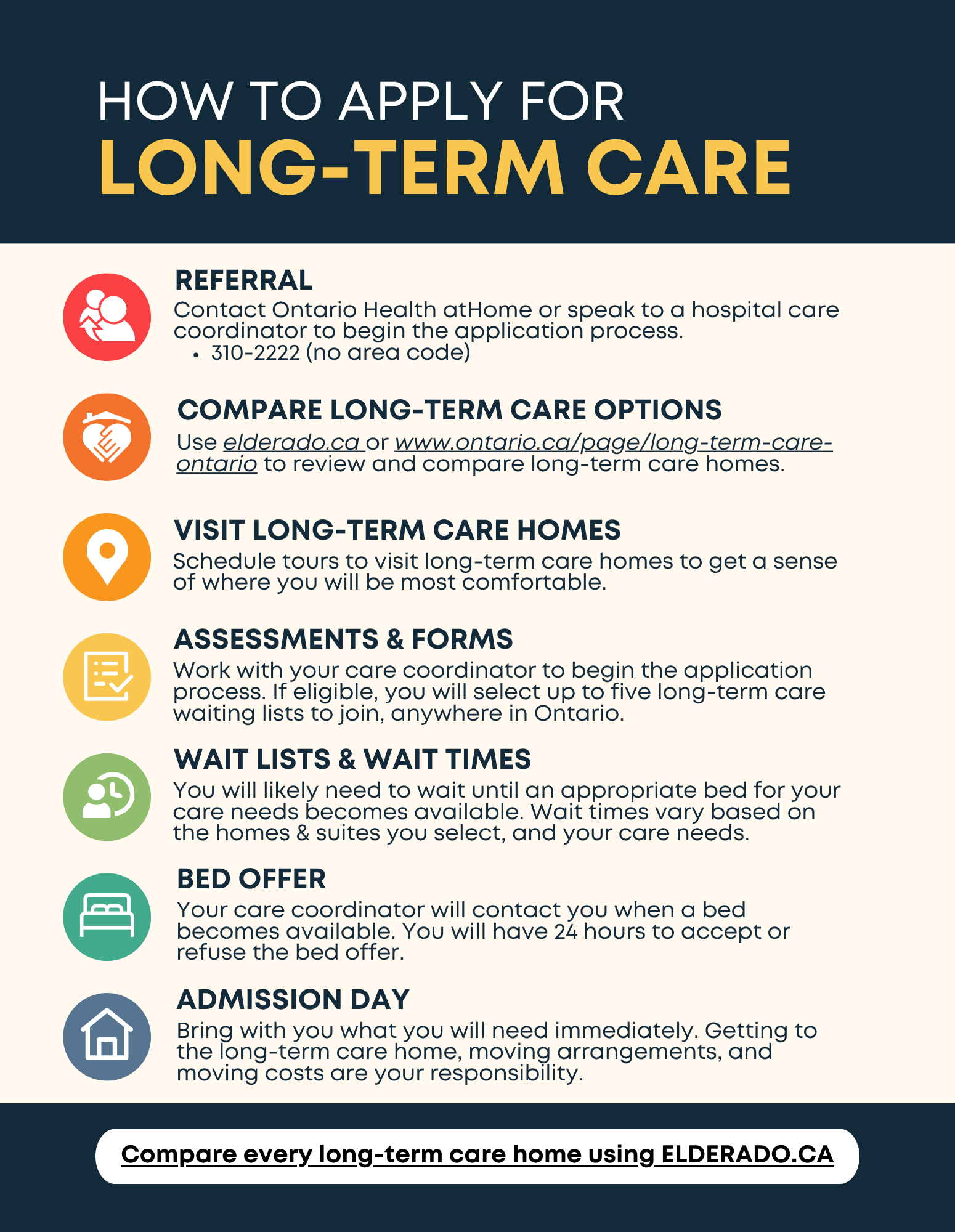
    Explore long-term care options near you with the Elderado Long-Term Care Map.