Category: Uncategorized

  • Introducing the Tour de Thanks: 200 Kilometres of Gratitude for Frontline Heroes in Senior Living

    On June 20, 2025 — the longest day of the year — Elderado founder Daniel Clarke will ride 200km across Durham Region visiting all 33 retirement homes to thank frontline team members in person and raise awareness for the Senior Living CaRES Fund.

    Donate or learn more about the Senior Living CaRES Fund.


    🚴 What Is the Tour de Thanks?

    The Tour de Thanks is a one-day, 200-kilometre bike ride through Durham Region to celebrate the incredible frontline team members who work in retirement homes. On Friday, June 20, 2025, Daniel Clarke — founder of Elderado — will begin his journey at sunrise (5:33am) and visit all 33 retirement homes in Durham.

    At every stop, Daniel will deliver a handwritten thank-you note to the dedicated team members who go above and beyond every day to care for seniors in their community.


    🗺️ The Route: 33 Homes, 1 Day, 200 Kilometres

    The ride will start at Daniel's home in Whitby, then head through:

    • Ajax
    • Pickering
    • Uxbridge
    • Port Perry
    • Bowmanville
    • Courtice
    • Oshawa
    • Whitby

    This summer solstice journey — the longest ride on the longest day — is a symbolic and heartfelt gesture of appreciation for the people who keep our retirement homes running with compassion and resilience.


    💛 Why We’re Riding

    At Elderado, we hear stories every day about the impact that frontline team members have on families. Whether helping a new resident feel at home, supporting resident's as they go about their day, or creating moments of joy — these are the people who make senior living feel like home.

    The Tour de Thanks is our way of recognizing their work and sharing our gratitude in the most personal way we know how: by showing up.


    🤝 Proudly Partnering with the Senior Living CaRES Fund

    We’re honoured to partner with the Senior Living CaRES Fund — an incredible initiative that has already distributed more than $3 million in emergency financial assistance and education bursaries to senior living staff across Canada.

    Created to recognize the passion, commitment, and resilience of those working in long-term care and retirement homes, the CaRES Fund is making a real difference in the lives of those who care for our elders.

    We’re excited to help spread the word about this program and the resources available to team members through the Fund — including financial aid, scholarship opportunities, and peer support.


    📢 How You Can Support the Tour de Thanks


    🙌 Join Us in Saying Thank You

    The Tour de Thanks is more than just a bike ride — it’s a celebration of the people who care for our loved ones. We hope you’ll join us in cheering on Daniel, supporting frontline team members, and shining a light on the work that often goes unseen.

    This June 20, let’s make sure the people who give so much to others know how much they’re appreciated.

  • 3 Must-Attend AgeTech Events During Toronto Tech Week 2025

    Toronto Tech Week is back from June 23 to 27, 2025, and this year the spotlight is shining on AgeTech—a fast-growing sector where innovation meets the needs of older adults. Whether you're a founder, investor, caregiver, or tech enthusiast, there are three standout events you won’t want to miss. From AI in senior care to accessibility in tech, and a market deep dive into the future of aging, these events are packed with insight and inspiration.

    1. Senior Living Techfluence Toronto

    📅 Tuesday, June 24 · 10:00 a.m. – 1:00 p.m.
    📍 Society Clubhouse – 967 College Street, Toronto
    🎟️ Register on Eventbrite

    Hosted by Parasol Alliance, this future-focused event explores the intersection of technology and senior living. With engaging Learning Labs, insightful operator spotlights, and a special guest appearance from the Ontario Caregiver Organization, Techfluence Toronto brings together leaders and innovators in the AgeTech space.

    Highlights:

    • AI in AgeTech with Amber Bardon
    • AI Tools for Smarter Tech Investments with Phil Vlach & SCOUT
    • Operator Spotlight: Gray Wave Retirement Homes
    • Special Guest: Ontario Caregiver Organization

    Thanks to sponsors WelcomeHome Software, Accushield, GoIcon, and Pulse, this is one of the week’s most promising events for anyone building in or serving the senior living industry.


    2. The Future is Accessible: Challenging Ableism in Tech

    📅 Wednesday, June 25 · 5:00 p.m. – 8:00 p.m.
    📍 OneEleven, Toronto
    🎟️ Register on Lu.ma

    Presented by Whimble, this community-driven event centers around accessibility in tech. It’s designed for disabled professionals in tech, DEI leaders, and allies looking to dismantle ableism and build a truly inclusive ecosystem.

    Why Attend:

    • Authentic, low-barrier community gathering
    • Honest conversations about exclusion in tech
    • Panels, story-sharing, and deep networking opportunities
    • A space where access isn't an afterthought

    If you’re passionate about inclusion, this is the event to prioritize.


    3. Market Overview – AgeTech @ TechTO HQ

    📅 Thursday, June 26 · 1:00 p.m. – 3:00 p.m.
    📍 782 King St W, Toronto
    🎟️ Register on Lu.ma

    Hosted in collaboration with Koru, this session dives deep into the AgeTech landscape, covering current market trends, investment opportunities, and startup innovation. Daniel Clarke, CEO of Elderado, will be pitching alongside other founders shaping the future of aging.

    Agenda:

    • 🔬 Market Research Presentation – Mariam Ayyoob, Koru
    • 🤝 Peer Discussions & Startup Spotlights
    • 🔥 Fireside Chat with Industry Leaders

    Featured Speakers:

    • Mariam Ayyoob – Research & Strategic Design Lead, Koru
    • Phil Vlach – AgeTech Labs, Schlegel Villages
    • Bruce B. Simpson – AgeTech Capital
    • Marijana Zubrinic – HALO Telemonitoring
    • Daniel Clarke – Elderado

    Whether you're a startup builder or a long-time sector advocate, this event offers a 360-degree view of the opportunities in AgeTech.


    Why These Events Matter

    Canada’s population is aging, and with that shift comes a pressing need for tech-driven solutions that support independence, care, and quality of life. Toronto Tech Week is the perfect moment to come together, learn, and accelerate progress.

    Mark your calendars and secure your spots. These three events aren’t just panels—they’re conversations that will shape the future of aging in Canada and beyond.

  • Ontario’s New Long-Term Care Rates for 2025: What Families Need to Know

    Families across Ontario planning for long-term care will see slight increases to accommodation costs in LTC homes starting July 1, 2025. These new rates, released by the Ministry of Long-Term Care, reflect standard inflation adjustments and help cover rising food and accommodation costs.

    Whether you're helping a parent transition into care or budgeting for your own future, understanding these new rates—and how they compare to previous years—can help you make informed decisions.


    2025 Long-Term Care Co-Payment Rates in Ontario

    Here’s a breakdown of the new daily and monthly rates for long-stay residents in LTC homes, starting July 1, 2025:

    • Basic $2,085.37 (was $2,036.40)
    • Semi-Private $2,371.59 – $2,514.24* (was $2,455.24)
    • Private $2,728.38 – $2,979.32* (was $2,909.36)
    • Short-Stay (Respite) $44.38/day (was $43.34)

    *The high end of the range is for newer beds. Newer beds are classified as "NEW" or "A" by the Ministry of Long-Term Care, while older beds are classified as "B", "C", "Upgraded D" or "D".


    How Much Have LTC Rates Increased?

    The 2025 co-payment for basic accommodation increases by $1.61 per day, rising from $66.95 to $68.56—a 2.4% increase. This change mirrors Ontario’s inflation rate and is consistent with historical trends:

    • Annual LTC rate increases are typically tied to the Consumer Price Index (CPI), capped at 2.5% per year.
    • Over the past decade, Ontario families have seen modest yearly increases of 1.5–2.5%, depending on inflation.

    For example:

    • In 2023, the basic daily rate rose by $1.55
    • In 2024, it increased by another $1.60

    These regular adjustments help homes manage the rising costs of meals, maintenance, and staffing while ensuring care remains accessible.


    Financial Support: What If You Can’t Afford the New Rates?

    Ontario offers a Rate Reduction Program for residents who cannot afford the full basic rate. Here’s how it works:

    • If you’re already receiving a rate reduction, you must reapply for the 2025–2026 cycle.
    • The current term ends June 30, 2025, and the new rate begins July 1.
    • Applications are handled through your LTC home, and staff will help with the paperwork.

    To be eligible, your income must fall below a certain threshold, and the subsidy only applies to basic accommodation, not semi-private or private rooms.

    For more information, contact your LTC home administrator or email LTC.RateReduction@ontario.ca.


    Why This Matters for Ontario Families

    Many people confuse long-term care homes with retirement homes—but they are very different. Long-term care homes are regulated, publicly subsidized, and designed for people with high medical or physical needs. Prices are consistent across Ontario, but every long-term care home has a waitlist, and features such as the amenities, culture, and rooms will vary from home to home.

    Elderado make it easier for families to:

    • Compare LTC homes by location, room type, and availability
    • See inspection reports and services offered
    • Contact homes with your questions

    Whether you’re planning ahead or responding to a sudden health change, being informed is important.


    ✅ Key Takeaways

    • Basic LTC rate increases to $68.56/day ($2,085.37/month) on July 1, 2025
    • Semi-private and private rooms also see small increases
    • Rate Reduction Program applications must be renewed by June 30
    • Year-over-year increases follow inflation, typically up to 2.5%
    • Compare and plan easily with Elderado.ca

    🔍 Looking for Long-Term Care in Ontario?

    Elderado is a free tool that helps families find and compare every long-term care home in Ontario. From current waitlists to sample menus and virtual tours, Elderado brings clarity to a complex system. Start your search today.

  • Who are we, what do we do, and how can we help Community Paramedics

    Who Is Elderado?

    Daniel Clarke, Founder of Elderado

    • Former family caregiver to my Grandma
    • My Grandma had lupus, was hospitalized, and needed to move into a long-term care home or a retirement home

    image

    The Problem

    • Navigating elder care options is hard!
    • There's limited resources to support families – even among social workers and discharge planners

    Our Solution

    • If we can compare hotels around the world on Booking.com, why can't we compare elder care homes?
    • In 2023, we started building our database of all 1,400 long-term care and retirement homes in Ontario

    What does Elderado do?

    A Free, Unbiased Website

    • Search, filter, compare, and contact every long-term care and retirement home in Ontario

    image

    How Elderado works

    1. Search by location – e.g., within 10 km of Whitby
    2. Apply filters – care services, price, language, culture, and more
    3. Compare homes
      • Video tours
      • Inspection reports
      • Google reviews
      • Sample menus
      • Activity calendars
    4. Contact homes directly – schedule a tour or ask questions
    5. Find resources – learn about applying for long-term care

    How Elderado Can Help Community Paramedics?

    If you're supporting an older adult or a family who needs long-term care or a retirement home, or information about how to navigate Ontario Health atHome to get elder care, Elderado is a free platform that can help..

    • We can provide you with the post cards below as a tangible tool to give to families
      image

    Trusted by Experts

    • 35,000+ users since launch (Feb 2024)
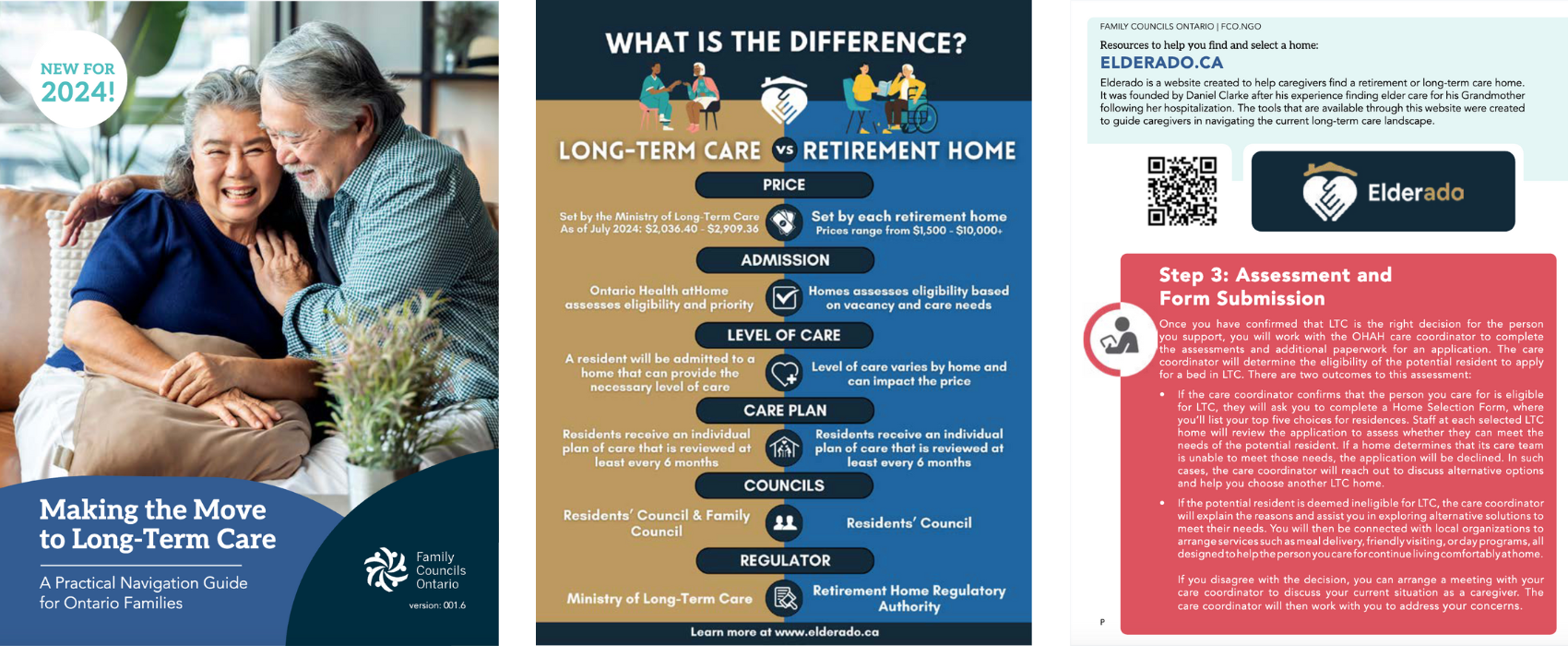
    • Family Councils Ontario recommends Elderado in their 2024 long-term care guide
    • Centre For Aging + Brain Health Innovation (CABHI) Ignite, 2025 Cohort

    image

    The Bottom Line

    • Choosing elder care shouldn’t be a guessing game
    • Families deserve tools to find the best home for their situation
    • Elderado makes it easier to navigate the process
  • Viive Planning: A Modern, Compassionate Approach to Estate Planning

    Rethinking Estate Planning with Viive

    Estate planning shouldn’t just be about writing a Last Will & Testament—Viive Planning knows this! It should be about guiding families through aging and end of life transitions with clarity, empathy, and proactive support. In this blog, we explore how Viive Planning offers a holistic model for legacy preparation that supports both emotional needs and legal obligations.

    Why Traditional Estate Planning Falls Short

    Viive was founded in response to the rigid, often impersonal systems of conventional estate planning. Rather than focusing solely on legal paperwork, Viive prioritizes the family dynamic and the communication needed to make transitions smooth.

    When Should You Start Planning?

    Many believe estate planning is only necessary after retirement or illness. Viive challenges that mindset.

    The Power of Check-ins: Staying Up-to-Date with Life Changes

    Planning isn't a one-time task. Viive recommends periodic reviews to adapt to evolving needs—especially in key decades like your 70s and 80s.

    What Sets Viive Apart: Executor Advisors and Ongoing Support

    Viive's team includes certified executor advisors who help families manage estate responsibilities with confidence.

    A Family Conversation: Breaking the Silence

    One of Viive's signature services is hosting collaborative family meetings. These foster trust and transparency between generations and reduce tension around aging and end of life planning.

    Do Married Couples Need Separate Wills?

    Viive's approach emphasizes that while a joint plan is created, individual legal documents are still necessary for each spouse. This reflects the complexity of modern family dynamics.

    Final Thoughts: Estate Planning for the Living

    Estate planning is not just about death—it's about living well, with peace of mind. Viive Planning helps families align their wishes, reduce stress, and communicate with purpose.

    For more information, visit ViivePlanning.ca.

  • Supporting Seniors in Real Estate: Navigating the Market with Compassion and Clarity

    Selling a home can be complex for anyone, but for seniors, it’s an especially emotional and logistical journey. From navigating family involvement to handling long-held possessions, the real estate process for older adults presents unique challenges. We sat down with Whitney Collins-Wilson, Realtor & Accredited Seniors Agent to talk about the issues seniors and their families may encounter when they sell their home, and how Realtor who understands the challenges seniors can face will help.

    Understanding the Unique Needs of Seniors in Real Estate

    "It starts with: What do they want to do? What can they afford to do?"

    Before even listing a home, the process begins with deeply understanding the senior’s goals, abilities, and lifestyle. This means exploring questions like: Can they maintain their current property? Do they need personal support workers (PSWs)? Are they considering retirement or long-term care?

    Challenges Seniors Face in the Current Market

    "Selling a home today is nothing like selling one 30 years ago."

    Many seniors haven’t sold a home in decades, and today’s market can feel unfamiliar. Staging, digital marketing, and legal paperwork are just a few of the new expectations. Walking seniors through each step is essential.

    Financing Options and Equity Planning

    "The equity in a senior’s home needs to be prepared for use—before it sells."

    Many seniors use the sale of their home to fund their next move. That’s why early conversations with banks and mortgage brokers are critical. Whether it’s a bridge loan, HELOC, or other product, planning ahead avoids funding gaps between sale and move.

    Family Involvement in the Selling Process

    "It’s often a daughter who takes the lead in helping parents sell."

    Family dynamics are central to senior moves. Power of Attorney (POA) may or may not be enacted, but even without it, adult children often assist with paperwork, logistics, and moral support.

    Handling Belongings During Downsizing

    "Parents think their kids want their stuff—but often, they don’t."

    One of the biggest emotional hurdles is dealing with sentimental items. Generational differences mean that beloved antiques and figurines may not hold the same value to the next generation. Professionals can help families navigate these discussions with empathy.

    Navigating Legal Considerations

    "Power of attorney and capacity assessments need legal and sometimes medical support."

    In cases where seniors can no longer make decisions independently, families must work with lawyers and physicians to enact legal authority. Realtors play a supportive—but limited—role in guiding families to the right legal channels.

    Why Staging Matters More Than Ever

    "Staged homes sell up to 30% faster and for more."

    Staging may seem foreign or disruptive to some seniors, but it's one of the most effective strategies in today's market. Helping clients understand how staging works—and how it can be done respectfully—is key.

    Customizing the Journey for Each Senior

    "Sometimes it takes two years before we even list the property."

    Every senior moves at their own pace. Some are ready to sell right away. Others need time, conversation, and support to explore options before making a decision. Tailoring services to the individual—not the transaction—is what truly makes a difference.

    Final Thoughts: Supporting Seniors With Care

    "Ask the questions they forget to ask."

    Sometimes, the most important role a real estate professional can play is to be an advocate—asking the right questions, offering clarity, and providing steady guidance during what can be a turbulent transition.

    Ready to Help a Loved One Take the Next Step?

    If your family is thinking about helping a senior sell their home, start with open conversations. Talk about goals, needs, and financial realities. And when you're ready, reach out to professionals who understand that selling a home later in life is more than just a transaction—it’s a major life transition that deserves care.

    Click HERE if you're interested in contacting Whitney Collins-Wilson to learn more.

    Whitney Collins-Wilson on Facebook

    Whitney Collins-Wilson on Instagram

  • What the Eldercare Industry Taught Me in Just 4 Weeks

    Hi, I’m Mayssam, Elderado.ca’s new marketing intern! If you’ve noticed a new face on our social media lately… that’s me behind the screen! Over the next few months, I’ll be sharing blog posts that reflect what I’m learning as I navigate the world of eldercare marketing, the insights, the surprises, and everything in between. Consider it a front-row seat to my internship in progress.

    When I first joined Elderado.ca as a marketing intern, I thought I had a pretty good grasp on what social media could do: amplify messages, build brands, drive traffic. But in just a few weeks, I’ve learned that marketing in the eldercare space isn’t just about awareness. It’s about trust, timing, and deep human connection.

    And while I wasn’t expecting to be emotionally moved by a website that compares retirement homes, the past few weeks have certainly proven me wrong.

    Learning the Language of Eldercare

    In my first week, I felt like I had opened the door to a world I hadn’t realized was so complex, or so vital.

    Words I’d never used before were suddenly everywhere: Assisted living. Memory care. Independent retirement communities. Respite stays.

    At first, it felt like industry jargon. But over time, I began to understand that every one of these terms represents a different need, a different phase of life and a different set of emotions, for both seniors and their families.

    Behind every search on Elderado.ca is someone making a decision that’s often overwhelming, deeply personal, and incredibly important. That changes the way you write a caption. It changes the way you think about "content."

    My First Visit to a Retirement Home

    In my second week on the job, I experienced one of the most eye-opening moments so far: visiting a retirement home for the first time. I didn’t realize how much I’d internalized outdated stereotypes: sterile hallways, impersonal routines, institutional environments.

    Instead, I found warmth. Art on the walls. People laughing. Real conversations. I met residents and staff who were genuinely engaged, proud to show me their community, and eager to share what they loved most about where they live and work.

    Being there made something click:
    We’re not marketing places. We’re helping people envision a new chapter of life, one that can be full of connection, dignity, and care. It gave me perspective and reminded me that marketing isn’t just about platforms. It’s about understanding people.

    Attending My First Networking Event

    If visiting a retirement home opened my eyes, then my first industry networking event opened my ears.

    I listened to company CEOs talk about the pressures they face, heard community engagement representatives describe the challenges of finding placement for seniors, and spoke to community leaders who genuinely want to do better for families.

    The biggest thing I noticed? Everyone in this space is here because they care. No one ends up in eldercare by accident, or at least not completely. It's a field driven by values and being around that level of purpose and compassion is energizing.

    It also made me think more carefully about how we represent the industry on social media. How we show empathy. How we balance facts with feelings. How we respect the gravity of what families are going through, even in a 30-second video.

    What This Experience Has Taught Me

    So far, this internship has taught me that good marketing doesn’t just sell a product, it reflects what matters to people.

    Here are a few lessons I’m carrying forward:

    Clarity matters. A single word like "residence" or "facility" carries weight. Every choice we make in our messaging can either empower or alienate someone.

    Emotional storytelling is essential. Real people, real voices, and real testimonials create the strongest connection between Elderado and the people we serve.

    Purpose is powerful. Marketing for eldercare is about more than metrics. It’s about dignity, timing, and support at a deeply human level. We may not receive heartfelt reviews every day, the kind that call Elderado a “Godsend” or “an answer to prayer," but when we do, they remind us what we’re working toward. And this summer, I hope to create content that reflects that kind of impact.

    Looking Ahead

    As I continue this journey, I want to help tell stories that reflect the full picture of retirement living: the fears, the decisions, the beauty, and the hope. Because there’s something powerful about helping people find not just a place, but a home.

    And if I’ve learned anything so far, it’s that every search on Elderado.ca starts with a question bigger than “What’s available?” It starts with “Where will my loved one be safe, happy, and cared for?”

    I’m grateful to be part of that answer.

    Written by Mayssam Fadili,
    Marketing Intern, Elderado.ca
  • Mortgages by Mellisa Helps Seniors Achieve Financial Security

    Tapping into the Value of Your Home

    Mellisa Thornton is a Level 2 Licensed Mortgage Agent with Pineapple Mortgage. Through her platform, Mortgages by Mellisa, she works directly with seniors and their families to unlock home equity through reverse mortgages. This is a key financial tool that allows homeowners aged 55+ to tap into the value of their homes without needing to sell or make monthly payments.

    What is a reverse mortgage?

    A reverse mortgage is a financial tool that allows homeowners aged 55 and older to access the equity in their home without having to sell or make monthly mortgage payments. Instead of making payments to the lender, the lender makes payments to the homeowner as a lump sum, regular payments, or a line of credit. It is a helpful option for seniors who want extra money in retirement while staying in their own homes.

    What's the biggest misconception about reverse mortgages?

    Many people believe that you lose ownership of your home with a reverse mortgage, but that’s not true. You stay the owner and can live in your home as long as you want. With a reverse mortgage, you remain the full owner of your home. You stay in your home for as long as you want, until you move, enter long-term care, or pass away. At that point, your estate typically has 6 to 12 months to decide what to do with the property.

    Another common misconception is that needing a reverse mortgage is something to be ashamed of. It’s not. Seniors today have built up a lot of home equity, and there’s nothing wrong with using it to live more comfortably, pay for care, or enjoy a nice retirement. It’s your money, and you deserve to spend it.

    What happens to the property if someone becomes mentally incapable?

    If one spouse becomes mentally incapable and the couple owns the home together, the other spouse can continue living in the home without any issue. If the person is single, a Power of Attorney (someone legally appointed to make decisions) can manage the property on their behalf. As long as the homeowner still lives in the home, they have the right to stay there as long as they want, regardless of mental capacity.

    How does a reverse mortgage work when you sell your home?

    When you sell your home, the reverse mortgage must be repaid. You (or your lawyer) request a discharge statement from the lender, which shows the total amount owed. After the home is sold, your lawyer pays off the reverse mortgage using the sale proceeds. Any remaining money goes to you, your Power of Attorney, or the executor of your estate, depending on the situation.

    What are some ways to receive the payment of a reverse mortgage?

    With a reverse mortgage, you can choose how to receive your money, because it’s your equity. Once approved (up to 55% of your home’s value), you can receive the funds:

    • As a lump sum
    • In monthly or bi-monthly payments
    • Biannually
    • A combination of these

    How is the value of your home determined?

    To calculate how much you can borrow through a reverse mortgage, the lender needs to assess your home’s value. This can be done in one of two ways: an online market review or a home appraisal, which the lender arranges at no cost to you. Once the home’s value is confirmed, the lender uses it to calculate your maximum eligible amount.

    What is different about reverse mortgages in the US vs. Canada?

    Reverse mortgages sometimes get a bad reputation, usually due to past issues in the U.S. and the U.K. But in Canada, the system is much more regulated and built to protect the homeowner.

    Here’s what makes Canadian reverse mortgages safer:

    • They are offered only by federally regulated lenders
    • Two lawyers are involved in every transaction: One for the mortgage process and one providing Independent Legal Advice (ILA) to protect the client
    • The client must fully understand the terms before anything is finalized

    Who is eligible for a reverse mortgage?

    In Canada, any homeowner aged 55 or older is eligible to apply for a reverse mortgage. This applies nationwide, with only minor differences in some provinces like B.C. and Alberta. However, the younger you are, the less you qualify for. For example, someone who’s 57 may be approved for a smaller percentage than someone who’s 70, ensuring they don’t outlive their home equity. The ideal age range for reverse mortgages is typically between 66 and 76, when many homeowners are looking for ways to boost retirement income while staying in their homes.

    What are the benefits of a reverse mortgage vs. a home equity line of credit?

    Both a reverse mortgage and a home equity line of credit (HELOC) let you access your home’s equity, but they work very differently. Here are the key benefits of a reverse mortgage:

    • No Monthly Payments

    With a reverse mortgage, you don’t have to make monthly payments. A HELOC requires minimum payments every month.

    • Easier to Qualify

    To qualify for a reverse mortgage, you just need to show you can cover property taxes and insurance.
    For a HELOC, you must pass a full income and credit check, similar to a traditional mortgage.

    • No Need to Requalify

    A reverse mortgage is locked in for life, and you don’t need to reapply. HELOCs may require requalification in a few years, and the lender can reduce or cancel your limit.

    • No Impact on Credit

    Since reverse mortgages don’t involve payments, missing a payment isn’t possible, which won’t hurt your credit score. Missing a HELOC payment, however, can damage your credit history.

    How do interest rates affect reverse mortgages?

    Reverse mortgage interest rates are usually lower than a home equity line of credit and slightly higher than a regular mortgage, by about 0.5% to 1%. As of now, regular mortgage rates are around 5%, while reverse mortgage rates are typically in the low 6% range. Just like a regular mortgage, reverse mortgages come with term options (2, 3, or 5 years). If rates change, you can discuss with your mortgage agent about renewing or switching lenders at the end of your term. This makes reverse mortgages more cost-effective for seniors.

    How does a reverse mortgage change over time?

    A reverse mortgage stays in effect for as long as you live in your home. It only needs to be repaid when you move out permanently, sell the property, or pass away. The home and the money remain yours throughout that time. If you pass away sooner, less interest accumulates because the loan was active for a shorter period. However, if you live longer, the interest will build over those extra years. During that same time, the value of your home is also likely to increase. For example, home prices in 2004 were significantly lower than in 2024. So, while interest accrues over time, the natural appreciation of your home can help offset those costs.

    Who is responsible for the debts of the homeowner?

    With a reverse mortgage, you will never owe more than the value of your home, due to how the loan is structured. Since you can only borrow up to 55% of your home’s value, there's a built-in safety net. Even in the unlikely event that the housing market drops significantly, reverse mortgage lenders in Canada include a market value guarantee. This ensures that your estate will not be left with debt beyond the home’s worth. When the homeowner passes away or moves out, the lender will assess the home’s current market value. The executor or beneficiary of the estate will then work with the lender to repay the loan using the proceeds from the sale.

    How to invest proceeds of a reverse mortgage?

    Although mortgage agents like Mellisa don’t offer investment advice directly, she works closely with trusted financial planners and partners who help seniors invest wisely while protecting their benefits. One key consideration is to ensure that any investments made don’t negatively affect government income supports like CPP (Canada Pension Plan) or OAS (Old Age Security). A knowledgeable planner can help structure the funds in a way that allows you to grow your money without losing access to essential retirement benefits.

    Can older seniors get a reverse mortgage?

    There is no upper age limit for a reverse mortgage. As long as you are 55 or older and own your home, you’re eligible to apply. Many older seniors use reverse mortgages to improve their quality of life later in retirement. For Mellisa, the oldest client she has helped was 92, and the youngest was 56. More and more people are rethinking retirement, and a reverse mortgage can offer the flexibility and financial freedom to support that. Even if you’re 94 or 99, you can still qualify, as long as the home is in your name.

    Can a Power of Attorney (POA) instigate a reverse mortgage?

    Yes, a POA can apply for a reverse mortgage on behalf of a homeowner who is unable to manage the process themselves due to cognitive decline or other health issues. This is especially helpful for members of the “sandwich generation” who are balancing care for aging parents and young families while trying to manage finances and support systems.

    In these cases, the POA can fully handle the reverse mortgage application and transaction. To ensure clarity and protection for all, it is recommended that the POA attend the Independent Legal Advice (ILA) meeting with the homeowner. This ensures both the homeowner and POA fully understand the terms and responsibilities of the agreement before proceeding.

    How to contact Mellisa and learn more about reverse mortgages?

    Mellisa is available to help seniors and families across Canada with reverse mortgage solutions. Whether you're just starting to explore your options or ready to apply, she is here to guide you through every step of the process. She can assess what you qualify for, gather a few basic documents, and get the process started. It’s quick, simple, and stress-free.

    📧 Email: mellisathornton@gopineapple.com

    📞 Call: 416-434-0634

  • Downsizing Diva: Simplifying Moves for Seniors and Older Adults

    Downsizing Diva: Simplifying Moves for Seniors and Older Adults

    Moving can be a stressful and emotionally challenging experience, especially for older adults transitioning from larger homes to smaller, more manageable living spaces. Downsizing Diva specializes in making this transition as seamless as possible, providing compassionate support and expert guidance throughout the entire downsizing process. Angela Newbery from Downsizing Diva sat down with us to explore what sets Downsizing Diva apart, how they help seniors navigate the downsizing journey, and key tips for successfully downsizing.

    What is Downsizing?

    Downsizing involves moving from a larger space to a smaller one, carefully selecting which belongings to keep and what to let go of. This process not only involves physical relocation but also emotional decisions regarding cherished possessions. Downsizing Diva assists clients by developing a customized floor plan that considers the new space layout, helping clients determine what fits and what doesn’t.


    How Downsizing Diva Helps Clients Transition

    Unlike traditional moving companies, Downsizing Diva takes a comprehensive approach to downsizing. They provide end-to-end services that include:

    • Customized Floor Plans: Downsizing Diva creates detailed floor plans that help clients visualize the new space and decide what to keep and where to place it.
    • Packing and Unpacking: Every item is carefully packed, inventoried, and labeled to ensure a smooth transition to the new space.
    • Donation and Sale Coordination: Downsizing Diva helps clients decide what to sell, donate, or discard, working with reputable auctioneers, donation centers, and buyers.
    • Settling In: The team unpacks and organizes the new space to replicate the familiar setup of the previous home, making it move-in ready.


    Unique Challenges of Downsizing

    One of the most emotionally charged aspects of downsizing is letting go of cherished items. According to Angela Newbery, Business Development Manager and Client Care Specialist at Downsizing Diva, many clients struggle with deciding what to keep, sell, or donate. The team supports clients in this process by asking questions like:

    • “Have you used this item in the past year?”
    • “Does it have sentimental or artistic value that justifies keeping it?”


    Tips for Downsizing

    Angela and the team at Downsizing Diva recommend breaking the process into manageable pieces. Focus on one area at a time, and don’t rush decisions. Take photos of sentimental items if you can’t keep them, and always ask yourself: “Would I buy this again today?” These small mindset shifts help reduce the stress of letting go.


    Understanding the Emotions Behind the Move

    Downsizing isn’t just a logistical process—it’s deeply emotional. Many clients feel guilt, grief, or anxiety as they let go of decades of memories. Angela talks about how the team supports clients through these emotions, offering both practical and emotional reassurance.


    Preparing for the Move

    Preparation is key to a smooth downsizing experience. Angela recommends starting small, such as tackling a junk drawer or sorting through seasonal items. She emphasizes that starting early and building momentum can make the process less overwhelming.

    Downsizing Diva uses a color-coded labeling system to categorize items as ‘Keep,’ ‘Donate,’ or ‘Sell,’ making the sorting process more organized and manageable.


    Moving Day: Managing Challenges

    On moving day, Downsizing Diva handles all logistics, from coordinating elevator schedules to overseeing traffic challenges in the Greater Toronto Area. The team ensures that all items are safely transported to the new space and promptly unpacks and arranges the home to match the client’s preferences.


    How to Get Started with Downsizing Diva

    If you or a loved one is considering downsizing, reach out to Downsizing Diva for expert guidance. Whether it’s a move to a smaller home, condo, or retirement residence, their team offers the compassion, experience, and resources to make the transition as smooth as possible.

    For more information, visit DownsizingDiva.com.

  • The Push for Accessible Housing in Canada: Why Universal Design Matters

    What Is The Accessible Housing Network?

    The Accessible Housing Network (AHN) is a coalition of over 70 nonprofit organizations across Canada, united to make a powerful but simple message: all new houses must be designed with accessibility as the priority. Co-founder Kate Chung emphasizes universal design as the norm and not the exception, which makes houses home for everyone, regardless of age and ability.

    Common Accessibility Challenges in Canadian Homes

    From steps that prevent wheelchair users from entering a home at all to slim bathroom doors that won't allow walkers to pass through them, common design errors have serious consequences. Immovable countertops in kitchens, inaccessible showers, and the lack of bathrooms on main levels in multi-story homes all point to how current standards fail those who are recovering from surgery, living with mobility impairments, or aging in general.

    What Is Universal Design in Home Design?

    Universal design is creating spaces that anyone can use without needing to adapt. From creating kitchens that are accessible by standing individuals and wheelchair users, to light switches and countertops within reach for all, universal design removes barriers before they exist. It's intuitive, inclusive, and flexible designed for everyone, not the "average" individual.

    Is Universal Design More Expensive?

    Contrary to public perception, it's not. The Canada Mortgage and Housing Corporation (CMHC) indicates that accessible design costs almost the same to incorporate into new apartments and little more than 1% added for houses. Upfront accessibility costs are best by saving dollars in the long run by reducing falls, hospital stays, caregiver fatigue, and expensive revisions or long-term care.

    Why Don't We See More Universal Design in Ontario?

    A blame game between different levels of government is at the heart of the issue. The federal, provincial, and municipal governments point fingers at one another and nothing is accomplished. In spite of national efforts like the Accessible Canada Act and organizations like CMHC, nothing is accomplished unless all levels are prepared to act.

    Global Examples of Universal Design in Action

    Australia and Norway lead the way. Australia's building code mandates accessible homes for all under the phrase "livable design." In Norway, state-subsidized housing loans are made available only for universally designed homes. Even Toronto is beginning to institute accessibility features in government-subsidized housing, but private construction continues to be behind.

    Tips for people looking for homes for the rest of their life

    When thinking long-term, it’s important to consider whether a home can adapt with you over time. Features like no-step entries, doorways that allow for mobility aids, and bathrooms that could accommodate future upgrades all make a difference. The accessibility design specifications adopted by the City of Toronto are a helpful tool when making any renovation or real estate decision even if no laws require them yet.

    How You Can Make a Difference in Accessible Housing

    Change will not happen without public pressure. Contact your town councillors, provincial Parliament members, and Parliament members. Schedule meetings, write letters to ask for them, or get them to visit your apartment complex to observe for themselves the accessibility issues. Most never consider accessibility until they or people close to them are affected by it and, at that point, it is too late. According to Kate Chung, an institution bed is no home. All human beings deserve to live a life of dignity and independence.

    To learn more about the Accessible Housing Network and how you can support their advocacy, visit: Accessible Housing Network