Category: Uncategorized

  • Honoring the Past, Empowering the Future: Embrace Your Family’s Heritage and Traditions

    Reconnecting Families Through Culture and Storytelling

    Learn how Root & Seed is making it easier for families to rediscover and preserve their heritage through powerful conversations. In this episode of the Elderado podcast, co-founder Anika Chabra shares the story behind their mission to help people document family traditions, recipes, and stories before they fade away.

    image
    Jennifer Siripong Mandel on the left and Anika Chabra on the right

    What is Root & Seed?

    Root & Seed was born from a personal journey to reconnect with cultural identity. Co-founded by Anika Chabra and Jennifer Siripong Mandel, the platform empowers families to preserve their traditions, stories, and heritage through meaningful conversations helping a new generation document their roots and carry them forward.

    Why Unlocking Family Stories Matters

    Every family has a story worth telling but too often, those stories are only shared when it’s too late. In this heartfelt clip, Root & Seed co-founder Anika Chabra explains why we need to have these conversations now while we still can.

    How Do I Introduce Root & Seed To My Family

    Anika encourages those taking the lead to approach it with compassion and openness. As the "kinkeeper," your role is to create a safe, welcoming space. It’s not about forcing a conversation it’s about inviting one in a way that feels natural and respectful.

    Why It’s Not Always Easy to Talk About the Family history

    Sharing family history isn’t always easy. For many, these conversations bring painful or bitter memories experiences tinged with loss, or trauma. Some elderly are hesitant to share because they do not want to transfer that emotional weight to the younger generation. This silence, as Anika Chabra explains, develops as a result of:

    • A desire to protect younger generation from triggering or heavy stories
    • The emotional burden of experiencing moments associated with loss or displacement

    Root & Seed offers a safe, aware space for these stories to be shared

    Turning Conversation Into Connection

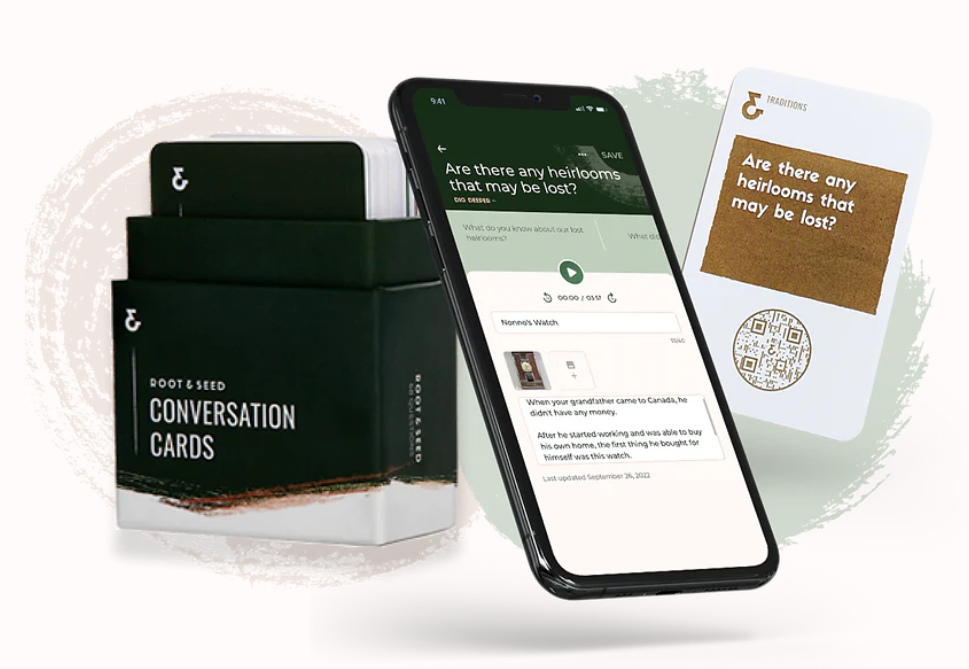
    When it comes to preserving culture, knowing where to start can be the hardest part. That’s why Root & Seed created their signature conversation cards a simple, powerful tool designed to spark meaningful conversations across generations.

    These aren’t just prompts. They’re carefully curated questions that help families reflect, remember, and reconnect. Whether you’re gathered for dinner, visiting grandparents, or video calling loved ones abroad, the cards make it easier to share stories that matter.
    image
    Root & Seed conversation cards

    Crafting Questions That Truly Connect

    The prompts on Root & Seed’s conversation cards are the result of intentional, collaborative work. Anika Chabra shares how she and her team partnered with cognitive linguists, journalists, and cultural advisors to ensure every question invites reflection, connection, and care.

    These aren’t just casual conversation starters they’re designed to open doors. Each one is shaped to help people feel seen, heard, and safe to share, whether they’re reminiscing about joyful traditions or navigating difficult memories.

    Designed for Every Kind of Gathering

    Anika Chabra explains that while the cards work beautifully in intimate, trusted settings, they’re just as effective in mixed groups. It's all about reading the room and choosing the right tone for the moment. Some prompts invite deep personal stories, while others spark light, joyful memories.

    There’s no “right” way to use them. The real value lies in the openness they create whether it’s between generations, across cultures, or among friends discovering each other’s roots for the first time.

    Making Storytelling Fun

    Some families have found creative ways to make the experience more engaging turning the cards into games or challenges to get everyone involved. Anika shares how gamifying the process helps spark curiosity, keep the energy light, and make storytelling something to look forward to.

    Creating the Right Environment

    Holidays can be a natural time to use the cards they add depth to gatherings and can even become part of family traditions. But Anika also acknowledges that holidays can be emotionally charged for some, especially if stories bring up difficult memories. For those families, Anika recommends one-on-one moments like car rides or walks where you're not looking each other in the eye. Looking out at the road or horizon can make it easier to connect and share.

    Cards For Every Voice

    The Women’s Day Expansion Pack isn’t just for women or just for family use. Anika explains it’s for anyone of any gender, culture, or background who wants to engage in meaningful conversations. It’s been used in settings like networking events, with people both inside and outside the family, making it a truly inclusive tool.

    A Platform for Culture-Seekers

    Root & Seed was built as a flexible platform to meet people wherever they are in their journey. Some are ready to share stories, others just want to be inspired and that’s why the team offers podcasts, blogs, digital tools, physical cards, and in-person events. It’s all designed to support culture seekers, tradition holders, and kinkeepers as they reconnect with their roots.

    Stories That Inspire the Mission

    Anika reflects on the heartfelt messages Root & Seed receives from users stories of reconnection, healing, and gratitude. These moments are what keep the mission alive and remind the team why they started this journey in the first place.

    The Traditions That Keep Us Grounded

    Anika, proudly calling herself her family’s “kinkeeper,” shares how tradition provides comfort in a chaotic world. In a time full of uncertainty, she believes that consistent rituals no matter how big or small help ground children and give them a sense of belonging. One tradition she hopes to carry on? Family karaoke nights, where they sing, laugh, and connect through music.

    Discover how Root & Seed helps families preserve culture, traditions, and stories through conversation tools, podcasts, and meaningful connection. Root & Seed
  • Learn About How Age-Friendly Consulting is Elevating Senior Living Standards

    A New Standard for Senior Living

    Discover how Age-Friendly Consulting (AFC) creates an even safer, more enriching environment for seniors and older adults. Learn about the benefits and future impact of their work.

    What Does Age-Friendly Consulting Do?

    Age-Friendly Consulting, founded by Debra Sayewich, is dedicated to helping businesses and communities adapt their environments and services to meet the needs of an aging population. Their work ensures accessibility, inclusivity, and that support is provided to all, helping older adults navigate the system.

    Their work helps to:

    • Build relationships with trust and respect
    • Get older adults the services and supports that are best suited for them
    • Provide support in one's area or region, either rural or urban

    Why start Age-Friendly Consulting?

    As an Anishinaabe Indigenous person, Sayewich saw firsthand the various broken promises that were made to First Nations people. Her motivation behind starting Age-Friendly Consulting was to bring people together, achieve a sense of balance, and build relationships for all services provided. There was a deep desire to intertwine all professions for all stages and all ages of life.

    Services include:

    • Home and Health Care
    • Community Resource (i.e., Friendship Centre, End-Of-Life)
    • Transportation

    How does the AFC community remain supportive and aligned with its core values?

    Sayewich emphasizes the importance of interviewing all AFC members. Sometimes, people will look for community partners, services, and resources on the internet at the last minute when they are in desperate need of these supports. Bringing all of these supports and services together and making them accessible helps members greatly.

    During the COVID-19 pandemic, many short-lived businesses emerged and disappeared, unlike the consistent support offered by AFC. AFC has a very unique collaborative culture, where members readily assist each other in finding support or referrals for services they may not personally offer, fostering a strong and positive working relationship.

    AFC takes pride in its strong, healthy working relationships. The organization's reputation is highlighted through its invitations to speak at different hospitals, showcasing its presence and credibility in the community.

    Changing the Narrative Around Aging and Senior Care

    Aging is often misunderstood, but it doesn’t have to be. Sayewich shares her insights on the biggest misconceptions surrounding aging and senior care, the personal passion that drives her work, and why she feels optimistic about the future for older adults.

    What are the biggest misconceptions about aging and senior care?

    Age is just a number — it doesn’t define a person's abilities, dreams, or worth. As such, we have no right to prejudge what someone can or cannot do and where they should be living. Challenging ageist stereotypes is essential to building a more inclusive, respectful society where every older adult is valued for who they are, not limited by assumptions about their age.

    While being a harmful stereotype, ageism can be considered a form of elder abuse, stripping older adults of dignity, opportunity, and respect. Instead of seeing aging as a decline, we should embrace the wisdom and experience that comes with it. Through the concept of OAKS (Older Adults Knowledge Sharing), Sayewich encourages us to educate ourselves on what abuse of older adults may look like, as it can be physical, emotional, or verbal.

    Why is this cause important?

    Aging is a privilege, not guaranteed to everyone, and it's up to us to help create a world where every person is supported with dignity throughout their life. True change begins by listening to all voices, regardless of wealth, status, or circumstance. Whether someone is living in a mansion or facing homelessness, aging support and services should be accessible to all. Compassion and community care must guide how we support people at every stage and age of life. Being able to spend extended quality time with older loved ones creates precious memories for us, further reinforcing the importance of supporting older adults as they age.

    What makes you optimistic about the future and quality of life for seniors?

    The optimism for the future of senior care lies within the growing spirit of support and inclusion in our communities. Sayewich believes that when we truly listen, we uncover conversations that need to happen and opportunities to make a real difference and do real good. Whether someone is a newcomer, a lifelong resident, or facing unexpected life challenges, access to care and support should never depend on wealth or status. By recognizing the gaps and working together to bridge them, we can help ensure that everyone, at every stage of life, is valued and supported.

    Cultural Respect and Innovation: A New Vision for Senior Care

    Creating a better future for seniors means more than improving services — it means rethinking how we honor culture, community, and individual dignity. Sayewich shares why innovation in senior care can go hand-in-hand with cultural respect, inclusion, and learning from Indigenous traditions. Drawing inspiration from First Nations traditions, she highlights how a more compassionate and equitable community approach can shape the next generation of senior living.

    What area related to aging would you like to see more innovation happening?

    Modern innovation in senior care must focus on greater diversity, cultural sensitivity, and true intergenerational inclusion. Sayewich emphasizes the need to meet older adults where they are, not just through social media and modern technology, but through meaningful, personal connections like phone calls and community outreach. Recognizing that many seniors, especially in rural areas, face barriers such as limited transportation and digital access, there is an emphasis placed on asking the right questions, listening deeply, and creating services that are accessible for people in all stages, all ages, and all communities.

    What was something First Nations communities had that should be adopted?

    There is a deep respect within First Nations communities for their elders, honoring them as the foundation for future generations. In these communities, older adults are recognized for the pathways they have built, and efforts are made to bring services and supports together in their honor. While progress like the development of health centers is a positive step, it is acknowledged that challenges remain, such as the need for water and better basic services. It is important to truly listen to the voices of elders, beyond headlines or social media, to ensure their needs are met with dignity and understanding.

    Would you like to see more LTC and retirement homes catering to the identity of First Nations Communities?

    It is vital to have long-term care and retirement homes that truly reflect the culture, language, and traditions of First Nations communities. While some communal living spaces for older adults already exist, there is no one-size-fits-all solution for these communities. Every First Nations community is unique, with its own needs, traditions, and preferences. Sayewich highlights that the first step must always be to listen — to ask older adults what they want and to build services that honor their voices, ensuring dignity, respect, and cultural continuity.

    Who should consider joining the Age-Friendly Consulting community?

    Individuals, organizations, and services that provide support and assistance to aging adults would be a great fit to join the AFC community.

    This includes:

    • Therapy Services
    • Community Resources
    • Legal Counsel
    • Home Modification Services
    • Downsizing and Estate Movers

    How can someone learn more?

    Age-Friendly Consulting is listed under the Federal Government website as an Indigenous business. Their information and literature are publicly available, helping them maintain a strong presence.

    More information can be found on their website – Age-Friendly Consulting

  • Watching the Masters in Style: Ontario Retirement Homes with Golf Simulators and Sports Lounges

    Where are you watching the Masters this week?

    If you're picturing your living room couch or the local clubhouse, think bigger. At some retirement homes in Ontario you can bring the Masters experience to a whole new level-with golf simulators, on-site pubs, and big screens perfect for following every shot at Augusta while taking a few swings of your own..

    At Parkland Ajax, residents there aren't just watching the Masters – they can step up to the tee themselves thanks to the golf simulator inside the pub. Shannon’s Pub, in the heart of the community, also features billiards, poker, and cozy spots to watch every shot from Augusta.

    Retirement Living in Ontario Is Changing

    Forget the outdated image of retirement homes. Across Ontario, retirement residences are redefining senior living. These communities are active, social, and designed for people who want to keep enjoying the things they love – whether it's golf, gardening, fitness, food, puzzles, or pub nights.

    Are Golf Simulators Common in Ontario Retirement Homes?

    Not every retirement home has a golf simulator, but more and more Ontario retirement communities are embracing active living. From on-site movie theatres to indoor gyms and even rooftop putting greens, seniors now have access to amenities that reflect their interests and lifestyles.

    At Elderado, we make it easy to explore these options. You can search and compare retirement homes across Ontario based on the features that matter to you to find the right home for your needs.

    Looking for an Active Ontario Retirement Community?

    If you're a golfer—or just someone who enjoys a good pint and great company—there’s a retirement home in Ontario that fits your lifestyle. Elderado is a free resource to help families find and compare retirement homes across the province. Whether you're planning ahead or navigating a more urgent transition, we’re here to help.

    Start your search today, and discover a new side of retirement living.

    👉 Search Retirement Homes in Ontario

  • National Caregiver Day 2025: We Are With You

    National Caregiver Day 2025: We're by your side

    April 1, 2025 is National Caregiver Day in Canada – a day to recognize the caregivers who provide vital support to aging parents, spouses, friends, and family.

    Whether you're helping a parent with dementia, supporting a spouse through illness, or coordinating care for a grandparent, your work matters. Unpaid caregivers keep our healthcare system afloat in Ontario and across the country. Without their energy, love, and sacrifice our healthcare system simply wouldn't function.


    Support for Caregivers in Ontario

    At Elderado, we work every day to make elder care easier to navigate. That includes supporting the people who provide care – often without pay, training, or time to rest.

    Caregiving is always going to be hard. But there's things things we can fix – and that's what we're trying to do. We believe it should be straightforward for families to be able to nagivate and compare elder care options, and be confident they found the best care for their care needs, preferences, and budget.


    A Free Coffee for 100 Caregivers ☕

    To celebrate National Caregiver Day 2025, we're buying a coffee for 100 caregivers in Ontario.

    If you’re caring for a parent, grandparent, spouse, sibling, friend or other family member – formally or informally – fill out the form below. We’ll send you a Tim Hortons gift card and a note of thanks.

    👉 Click here to claim your free Tim’s Card.

    You deserve a break, and a coffee on us.


    Why National Caregiver Day Matters

    In Canada, millions of people are unpaid caregivers – supporting loved ones through aging, illness, or disability. But so much if this work is invisible, and undervalued.

    • Over 1 in 4 Canadians aged 15+ provide unpaid care to a family member or friend.
    • Many caregivers juggle full-time jobs, parenting, and caregiving responsibilities.
    • Caregiving is emotionally and physically demanding, with real impacts on mental health.

    Today is about more than gratitude – it's about visibility, recognition, and change.


    Tools to Make Elder Care Easier

    If you're navigating elder care in Ontario, Elderado can help. We’ve built a free platform to:

    • Compare retirement homes and long-term care options
    • Filter by location, care services, language of care, or starting prices
    • Video inspection reports, ratings, video tours, sample menus, and more

    👉 Start your search at Elderado.ca


    Caregivers, We See You

    Whether you're helping someone bathe, keeping track of meds, or just showing up every day – you are doing important work.

    We aren't able to join you for a coffee this time, but know that we're with you by your side.

    Thank you for all you do.

  • New 2024 long-term care rates in Ontario – basic, semi-private, and private rooms

    The new rates for long-term care are out, and much like everything else these days, prices are going up.

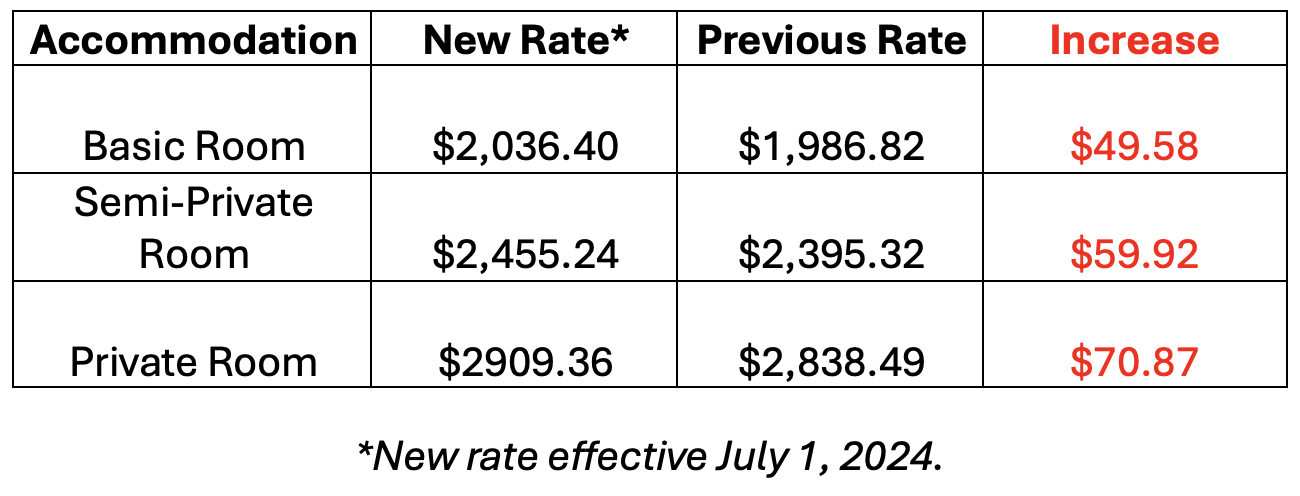
    New long-term care rates beginning July 1, 2024

    It's typical for long-term care rates to nudge up every year. On July 1, 2024 the monthly rate for a basic room in long-term care is going up $49.58 to $2,036.40. Semi private rooms see a $59.92 bump up to $2,455.24. And private rooms see the biggest increase of $70.87 to $2,909.36.

    image

    Long-term care rate reductions

    Rate reductions continue to be available to low-income individuals living in a basic room, or partners living together in a two-bed semi-private room that has been redesignated as basic accommodation.

    From the Ministry of Long-Term Care

    All residents receiving a rate reduction should re-apply for a reduction in the basic co-payment rate for the 2024-25 cycle, beginning on July 1, 2024. Staff at your LTC home will provide you with the application form and will help you to submit your application to the Ministry of Long-Term Care.

  • Elderado Receives CABHI Ignite Grant to Improve Dementia Care Navigation in Ontario

    We’re proud to announce that Elderado has been selected as one of 23 innovators awarded funding through the Centre for Aging + Brain Health Innovation (CABHI)’s new Ignite program. This prestigious initiative supports early-stage Canadian companies working to improve aging and brain health, with a strong focus on dementia care, caregiver support, and care coordination.

    As part of the Ignite cohort, Elderado will receive funding and expert guidance to accelerate our mission: helping families in Ontario compare retirement homes and long-term care homes with clarity and confidence.


    What is CABHI Ignite?

    CABHI Ignite is a national innovation program powered by Baycrest, a global leader in brain health and dementia care. The Ignite program invests in promising early-stage solutions that tackle some of the biggest challenges facing older adults in Canada today.

    From AI-powered diagnostic tools to culturally safe dementia support platforms, CABHI is supporting a new generation of innovators. In total, $2.6 million in funding has been awarded to 23 organizations across six innovation themes:

    • Aging at Home
    • Caregiver Support
    • Care Coordination and Navigation
    • Cognitive and Mental Health
    • Financial Health and Wellness
    • Women’s Brain Health + FemTech

    How Elderado Supports Dementia Care in Ontario

    Elderado is a free online platform that simplifies the process of finding the right elder care option—whether you’re planning ahead or responding to a hospital discharge. We help families:

    • Compare retirement homes and long-term care homes in Ontario
    • Filter homes by language of care, cultural preferences, and services
    • Access inspection reports, video tours, menus, and activity calendars
    • Connect directly with homes that meet your needs

    This grant recognizes Elderado’s potential to improve care navigation for people living with dementia and their families—especially when language or cultural needs make the process even harder.

    Our work supports families who are often under pressure to make fast decisions without enough information. Elderado provides tools and insights that make it easier to choose the right care home with confidence.


    What the Grant Will Support

    With CABHI’s funding and expert support, Elderado will expand our platform’s ability to:

    • Highlight homes with dementia care programs
    • Make it easier to search by cultural and language preferences
    • Improve the experience for families from diverse communities across Ontario
    • Strengthen Elderado’s role as a trusted resource in dementia care navigation

    We’re especially excited to work with CABHI’s Leap validation platform to incorporate direct feedback from people living with dementia, caregivers, and health professionals.


    Why This Matters

    Dementia affects over 600,000 Canadians—and that number is growing. For many families, the search for elder care is complicated by urgent timelines, language barriers, and a lack of transparent information. Elderado was built to address that problem.

    With CABHI’s support, we’ll continue making elder care more accessible, inclusive, and transparent for all Ontarians.


    Learn More

  • Touring Amica Taunton

    Amica Taunton is a new retirement home in Whitby, Ontario that offers independent living, assisted living, and memory care.

    Amica Retirement Homes

    Anytime I've walked into an Amica retirement home it's felt like luxury. You can see it in the premium finishes, and feel it in the way spaces are designed and decorated – and Amica Taunton is no exception.

    image

    The Food at Amica Taunton

    The only food I've eaten at Amica Taunton are appetizers at networking events, and they knock those out of the park, so all indications are that they've earned their reputation for great food. Plus the menu looks great, and a resident I was chatting with raved about the salmon and creme brule.

    Location – Just east of Brock Street on Taunton Road

    Amica Taunton is in a great location if you're mobile. There's a Starbucks and Tim Hortons within walking distance, as well as all sorts of other shops and restaurants. Amica Taunton is on a fairly busy road – Taunton Road, just east of Brock Street – but they've orientated the retirement home to face away from the road, so it feels quite calm and peaceful at the main entrance.

    The Rooms at Amica Taunton

    Inside the suites, there's all the obvious things – they have the rooms staged beautifully with well thoughtout layouts. If I'm getting down to it, there's 3 things about the room that stand out to me.

    1. Roll-in shower. This is a big plus for me! If I am looking at a retirement suite for myself, I want one with a shower that does not have any sort of step or lip. I've been sore after a long run and had some trouble getting into the shower, so I can see how this can be a problem down the line. This could help me maintain independence.
    2. Balcony. My wife and I were those people who actually used their tiny condo balcony and loved it. A suite with a balcony is definitely a plus.
    3. In-suite laundry. I've always felt like where I do my laundry is my home, and I think having in-suite laundry would help me transitioning to a retirement home – making it my new home. This wouldn't be a deal breaker, but definitely bonus points that Amica Taunton has it!

    image
    image
    image

    The price for a suite at Amica Taunton

    Let's call a spade a spade, Amica is known as a premium retirement home. If you're looking for the least expensive retirement home, it's not likely going to be an Amica home. But I was surprised to find out they currently have studios starting from $3,995* – it's not the cheapest option, but it's competitive. I don't know the terms, but if I was looking for independent living somewhere in Durham, I'd call Amica Taunton to find out.

    **(As of the time of original publishing on March 16, 2025)*

  • What to Look for During a Retirement Home Tour in Ontario: Key Questions & Tips

    What to Look for During a Retirement Home Tour: A Guide for Ontario Families

    Introduction

    Looking for a retirement home—whether for yourself or a loved one—can feel overwhelming. There are so many options, each with different services, amenities, and pricing. That’s why taking a guided tour is one of the best ways to see if a home is the right fit.

    But how do you know what to look for? What questions should you ask? And how do you make sure you’re making the best decision? This guide will walk you through everything you need to know before, during, and after your retirement home tour—so you can feel confident in your choice.


    1. Getting Ready: What to Ask Before the Tour

    Before you even step inside a retirement home, it’s smart to get some basic info upfront. A quick phone call or email can help you narrow down your list and make sure you’re only visiting places that meet your needs. You can contact every retirement home through their page on Elderado.

    Key Questions to Ask Before Booking a Tour:

    ✔ What types of care and services are offered? (Independent living? Assisted living? Memory care?)

    ✔ What’s included in the monthly fee, and what costs extra?

    ✔ Are there currently suites available?

    ✔ What happens if care needs change over time?

    ✔ Can I talk to current residents about their experience?


    2. What to Look for During the Tour

    First impressions matter! When you walk into a retirement home, trust your instincts. Some retirement homes feel more luxiorious, and others more homey. Some homes have an active environment, and others a slower pace. Does it feel welcoming? Do staff members seem friendly and engaged? Do residents look happy?

    Beyond the vibe, here are some important things to keep an eye on:

    Physical Environment

    • Is the building clean and well-maintained? No weird smells or signs of neglect?
    • Is the bathroom, bedroom, and doorways wide enough for mobility aids like walkers and wheelchairs?
    • Do the suites feel comfortable with good natural lighting and emergency call systems?
    • Is there outdoor space for fresh air and relaxation?

    Staff & Community Feel

    • Do staff seem genuinely friendly and attentive?
    • Are residents socializing and participating in activities?
    • Does the home have a warm and welcoming atmosphere?

    Safety & Security

    • What emergency systems are in place?
    • Is there 24/7 on-site staff?
    • Are entrances and exits monitored and secure?

    ✔ Questions to Ask the Staff:

    • How do you handle medical emergencies?
    • What’s the staff-to-resident ratio? What about at night?
    • How do you accommodate changing health needs?

    3. Checking Out the Lifestyle & Services

    Every retirement home has its own personality. Some are big on social events and fitness programs, while others focus more on relaxed, independent living. Think about what kind of lifestyle you (or your loved one) would enjoy!

    Dining & Food

    • Are meals fresh, healthy, and customizable?
    • Can residents choose meal times and menu options?
    • Are snacks and beverages available throughout the day?

    ✔ Questions to Ask:

    • Can I see a sample menu?
    • How do you handle dietary restrictions?
    • Can family and friends join for meals?

    Activities & Social Life

    • Are there organized activities, clubs, and events?
    • Is there a calendar of social, recreational, and educational programs?
    • Do they arrange outings and day trips?

    ✔ Questions to Ask:

    • What kinds of activities do most residents participate in?
    • Do you offer transportation for shopping or medical appointments?
    • Can I sit in on an event or activity to see what it’s like?

    Health & Wellness Support

    • Is there on-site medical staff like nurses or physiotherapists?
    • Can residents get help with medications or mobility support?
    • How often are care needs reassessed?

    ✔ Questions to Ask:

    • What’s included in the base care package?
    • What happens if someone needs more care later?
    • Do you offer short-term stays for trial visits?

    4. Understanding the Costs & Fine Print

    Once you’ve found a home you like, it’s time to talk money. Get a clear picture of all costs upfront so there are no surprises later.

    Key Cost Considerations:

    • What’s the monthly rent?
    • What services are included vs. extra?
    • Are there move-in fees or deposits?
    • How often do rates increase?

    ✔ Questions to Ask:

    • Can I get a full breakdown of costs?
    • What’s your policy on move-outs?
    • What are some costs that sometimes take residents by surprise?

    5. After the Tour: Making a Decision

    Once you’ve toured a few places, take some time to compare your notes. Ask yourself:

    ✅ Did the home feel welcoming and comfortable?

    ✅ Do I trust the staff to provide great care?

    ✅ Does it fit within my budget?

    ✅ Can I see myself (or my loved one) being happy here?

    If you’re still unsure, consider booking a second tour at a different time of day to see how it feels. You can also use Elderado.ca to compare all the retirement homes you're considering.


    Conclusion: Let Elderado Help You Find the Right Fit

    Choosing the right retirement home is a big decision, but with the right questions and a good tour, you can find a place that feels just right. Elderado makes it easy to compare retirement homes in Ontario, helping you find the perfect fit based on location, services, and cost.

    Start your search today at www.elderado.ca and take the next step toward finding the best retirement home for you or your loved one!

  • Women Leading the Way in Senior Care: The Heart and Strength Behind Ontario’s Long-Term Care and Retirement Homes

    The senior care industry in Ontario wouldn’t function without the dedication, skill, and compassion of women. Across long-term care and retirement homes, women are the backbone of the sector, making up the majority of personal support workers (PSWs), nurses, and social workers who provide daily care and life-enhancing services to older adults.

    Did you know?

    • 96% of personal support workers in Ontario are women.
    • 91% of nurses in the province are women.
    • 87% of social workers—who provide crucial emotional and practical support—are women.

    These professionals don’t just show up for work; they show up with empathy, resilience, and a deep commitment to the well-being of seniors.


    Beyond Caregiving: Women Driving Innovation in Senior Care

    While frontline caregiving is essential, women are also the visionaries behind transformative initiatives in the senior care space. They are leading innovations that improve the quality of life for older adults in Ontario:

    🔹 Tina Mavriyannakis, Founder of The Smile Room – A champion for senior oral health, Tina is ensuring thousands of older adults have access to much-needed dental care, preventing pain and serious health complications.

    🔹 Mallory McGrath, Founder of Viive Planning – Estate and end-of-life planning can be overwhelming, but Mallory is changing the conversation and approach, making it easier for families to prepare for the future with dignity and clarity.

    🔹 Jennifer McCrae, Founder of Soul Transitions – Helping families navigate grief and end-of-life transitions, Jennifer provides support and guidance during some of life’s most difficult moments.

    These women are reshaping how we think about aging, caregiving, and the end-of-life journey. Their work ensures that seniors receive the respect, care, and support they deserve.


    The Strength of Women in Senior Care

    Despite the progress society has made, one truth remains: when it comes to answering the call for strength, compassion, and leadership in senior care, women step up—again and again.

    From the PSWs providing hands-on care to the entrepreneurs revolutionizing elder services, women continue to drive meaningful change in Ontario’s long-term care and retirement home sectors.

    Celebrating Women in Senior Care

    On this International Women’s Day, let’s take a moment to recognize, support, and celebrate the incredible women who are making a difference in the lives of seniors. Their work is not just essential—it’s life-changing.

  • Let’s Make 100 Social Workers Smile!

    Social workers are like wolves

    They show up during some of life’s toughest moments—offering support, guidance, and sometimes just a reassuring presence when things feel impossible. And yet, they rarely get the appreciation they deserve.

    Well, we’re here to change that—one handwritten letter and one Tim Hortons gift card at a time!

    We’re sending 100 handwritten letters, each with a Tim Hortons gift card, to 100 amazing social workers. And the best part? YOU get to decide who gets them!

    How It Works (Super Easy, We Promise!)

    If you know a social worker who deserves a little surprise in their mailbox, here’s what to do:

    • Fill out the form with the name of a social worker you want to nominate.
    • Don’t know their name? No stress—just tell us where they work, and we’ll do our best detective work to find them.
    • The first 100 names submitted will get a handwritten letter and a Tim Hortons gift card. Boom. Instant day-maker!

    Nominate a social worker here.

    Why Are We Doing This? (Because Social Workers Are Awesome!)

    Let’s be real—social workers do some of the hardest, most heartwarming, and most emotionally intense jobs out there. They help people through life’s messiest moments, and they do it all with way too little recognition (and probably way too much caffeine ☕).

    A simple letter and a cup of coffee won’t change the world, but it might just brighten someone’s day. And honestly, if there’s anyone who deserves a little surprise appreciation, it’s a social worker.

    The Magic of a Little ‘Thank You’

    Did you know that feeling appreciated makes people happier, less stressed, and more motivated? True story. And in a field like social work—where burnout is way too common—a little unexpected kindness can go a LONG way.

    That’s why we’re inviting YOU to be part of this mission. Let’s make sure 100 social workers feel the love!

    Be a Part of This Feel-Good Movement! 🚀

    We won’t stop until 100 social workers have received a well-deserved thank-you. But we need your help to make it happen!

    💙 Nominate a social worker today: CLICK HERE

    ⏳ Deadline: Until we reach 100 names or March 9th, 11:59 PM
    📢 Share this post! Send to a friend, a coworker, or someone who knows a social worker who deserves this surprise.

    A small act of kindness can go a long way—so let’s do this! 💌☕