Trying to make sense of senior care options can feel overwhelming. Retirement living, long-term care, home supports – the terminology alone is enough to leave families unsure where to begin, let alone how the pieces fit together.
That’s exactly what this upcoming free webinar is designed to clear up.
About the session
Navigating Senior Care in Northumberland: Understanding Retirement Living, Long-Term Care and Home Supports is a free, one-hour session built to help residents and caregivers understand the senior care landscape and learn how to navigate the system with confidence.
It’s hosted by the Northumberland Health Team and features:
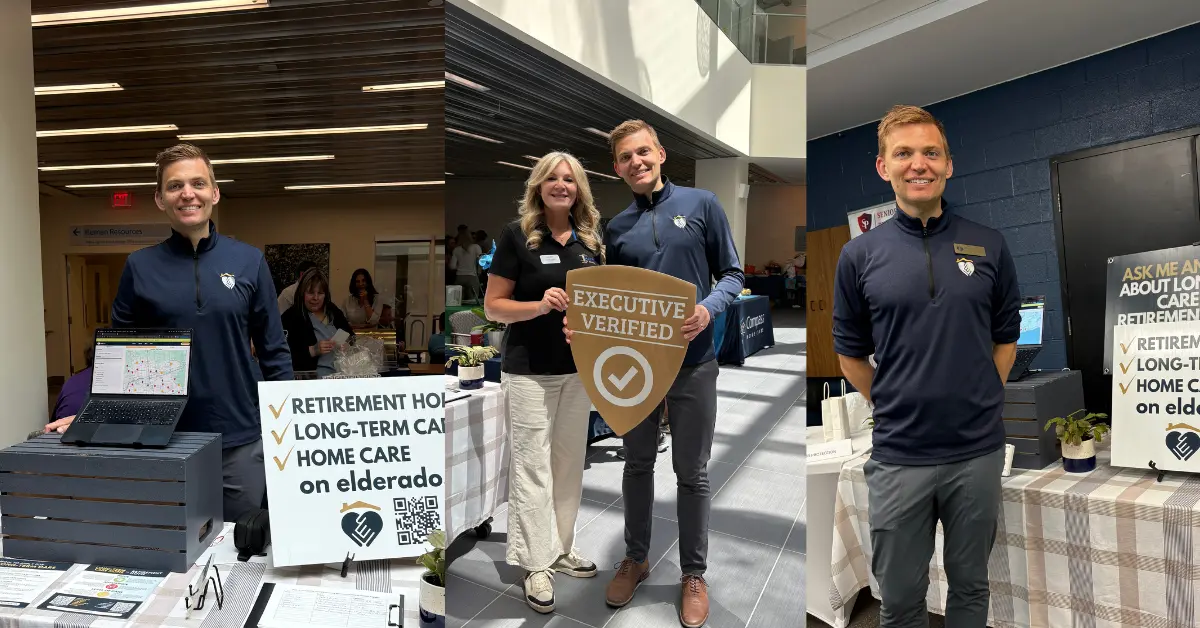
Daniel Clarke, founder of Elderado
Nousha Naweeda and Vanessa Bright, Senior Managers from Ontario Health atHome
Together, they’ll walk through the main types of senior care, explain how the system actually works, and answer the questions families most often get stuck on.
A note on location
This particular session is tailored to Northumberland County residents, with local context and resources in mind. But here’s the thing: the fundamentals of senior care — understanding the difference between retirement living and long-term care, knowing what home supports exist, and learning how to advocate within the system — apply no matter where you live.
So even if you’re outside Northumberland, the session is well worth your time. The principles travel; only some of the specific contacts and programs are local.
On May 3, I lined up at the Toronto Half Marathon with a simple challenge:
Start in last place, ask people to sponsor me $0.01 for every runner I pass, and then run fast to pass as many people as I could.
Race day exceeded my expectations!
By the time I crossed the finish line, I had passed 9,477 runners. More importantly, 76 donors came together to raise $7,464.32 for the Senior Living CaRES Fund.
The Challenge
The concept was simple.
Supporters pledged $0.01 for every runner I passed after starting at the very back of the field.
The better the race went, the more money we’d raise.
Race Day Results
The weather cooperated, my legs felt good, and there were more runners on the course than expected.
Final results:
Runners passed: 9,477
Half marathon finishers: 10,558
Chip time: 1:25:38
Gun time: 1:53:35
Gun time place: 1,081
But the most important result wasn’t my finish time.
It was the impact created by the people who supported the challenge.
$7,464 for the Senior Living CaRES Fund
Together, 76 donors raised $7,464.32 for the Senior Living CaRES Fund.
I’m incredibly grateful to everyone who participated.
Some donors work in senior living. Others are friends, family members, business partners, and members of the broader community. Every donation helped turn a fun race-day challenge into meaningful support for the people who care for older adults every day.
Why the Senior Living CaRES Fund Matters
The Senior Living CaRES Fund supports frontline team members working in senior living communities through emergency bursaries and education grants.
The people working in senior living dedicate their careers to caring for older adults. This fundraiser was an opportunity to give back to the people who spend every day supporting residents and their families.
Thank You
To all 76 donors, thank you.
Your generosity transformed a half marathon into something much bigger.
The goal was to pass runners.
The result was $7,464.32 raised to support the people who care for our older adults.
June is Seniors Month in Ontario, a time to celebrate the contributions of older adults and connect people with the programs, services, and resources that support healthy aging.
At Elderado, Seniors Month is always one of our busiest and most rewarding times of the year. Throughout June, we’ll be attending health fairs, educational events, conferences, webinars, and community gatherings across Ontario to help older adults and family caregivers learn more about retirement homes, long-term care, home care, and elder care planning.
Whether you’re supporting an aging parent, planning for your own future, or simply looking for local resources, we’d love to meet you.
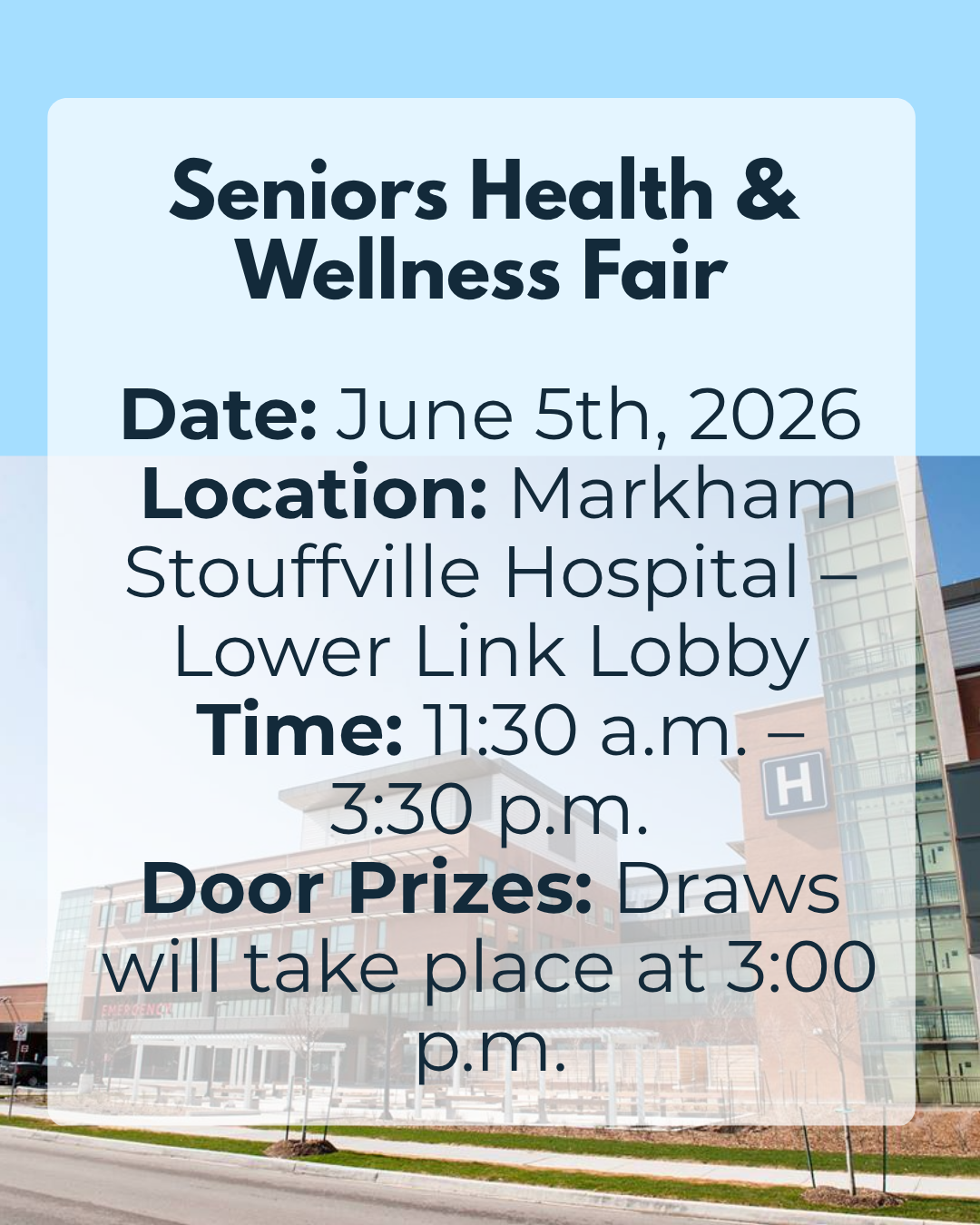
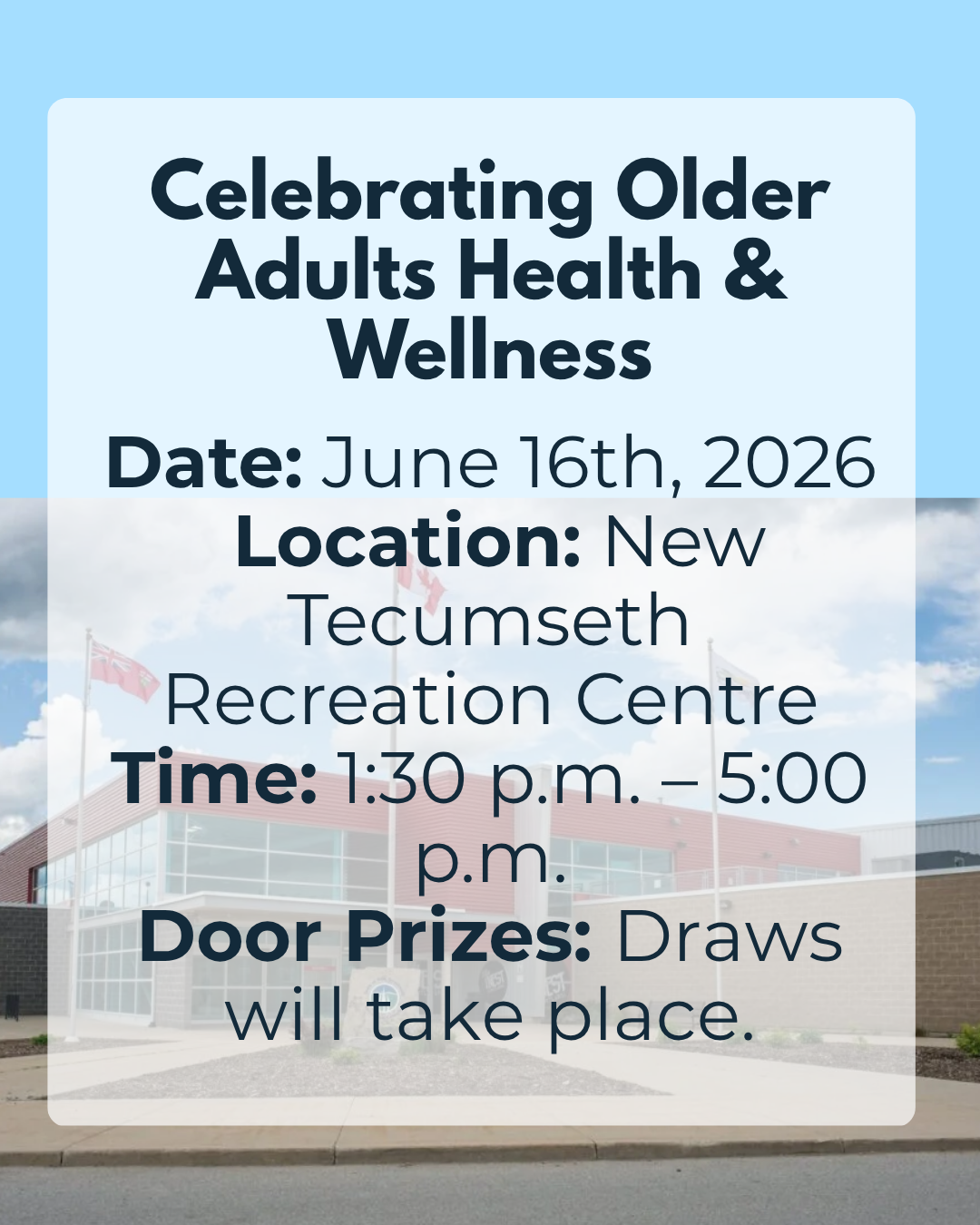
We’re kicking off Seniors Month at Markham Stouffville Hospital’s Seniors Health & Wellness Fair.
This event brings together healthcare providers, community organizations, and local services that support older adults and caregivers. We’ll be there sharing information about retirement homes, long-term care, home care, and elder care navigation resources.
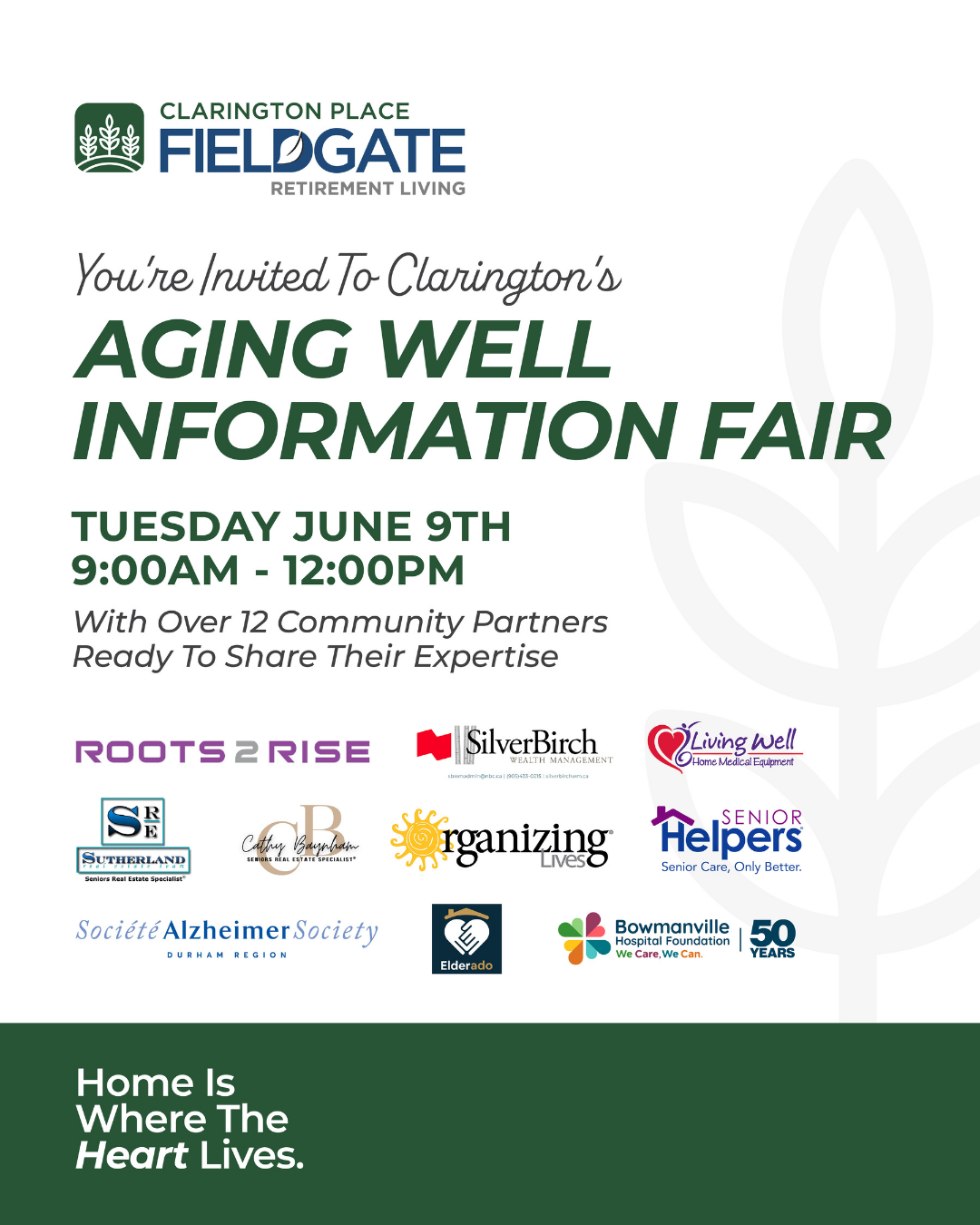
Not Another Seniors Expo takes a fresh approach to connecting older adults with community resources, businesses, and organizations serving seniors across Durham Region.
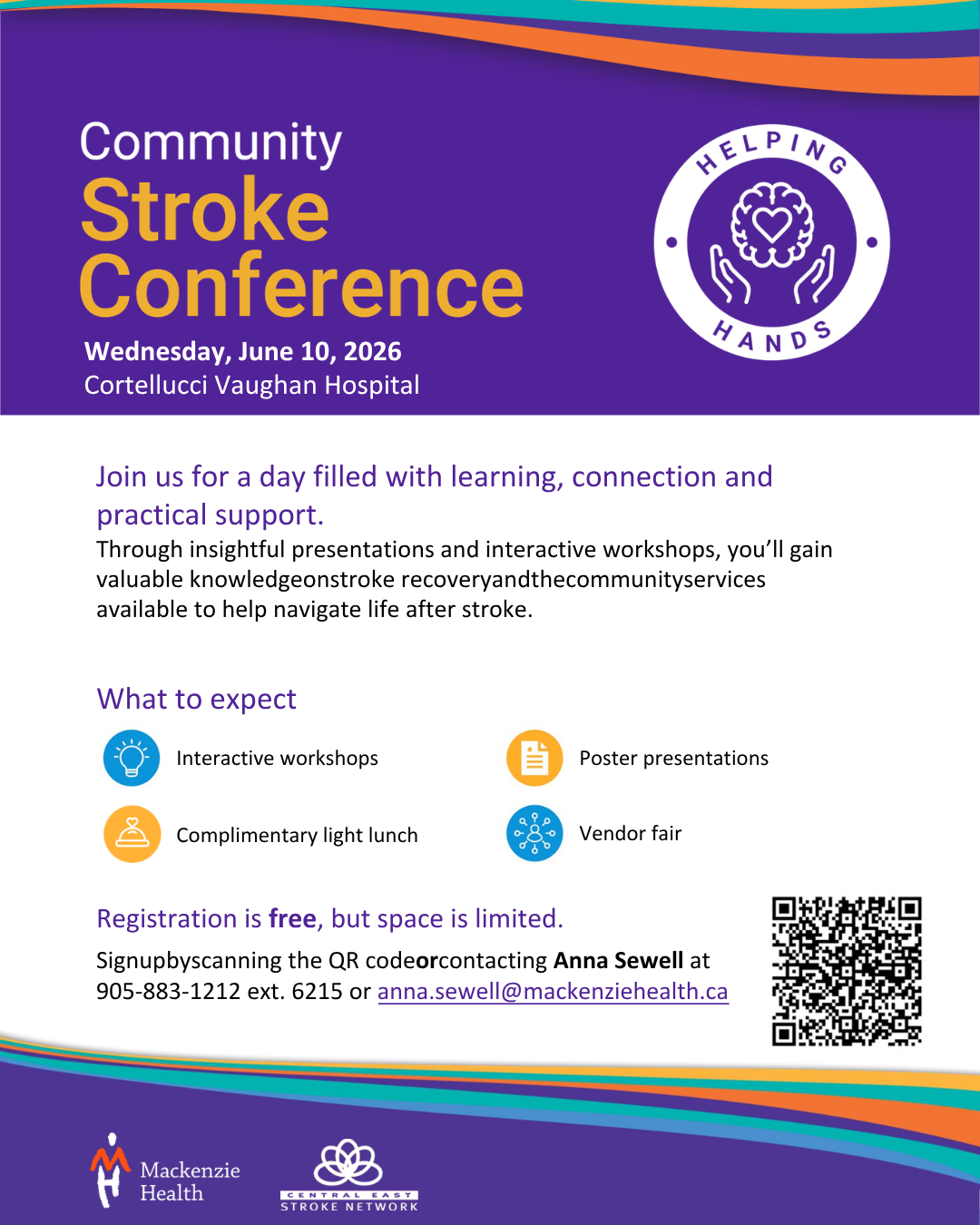
We’re honoured to participate in the Community Stroke Conference at Cortellucci Vaughan Hospital.
Recovering from a stroke often leads families to ask important questions about housing, rehabilitation, home care, and long-term support options. We’ll be sharing information and resources that can help families navigate those decisions.
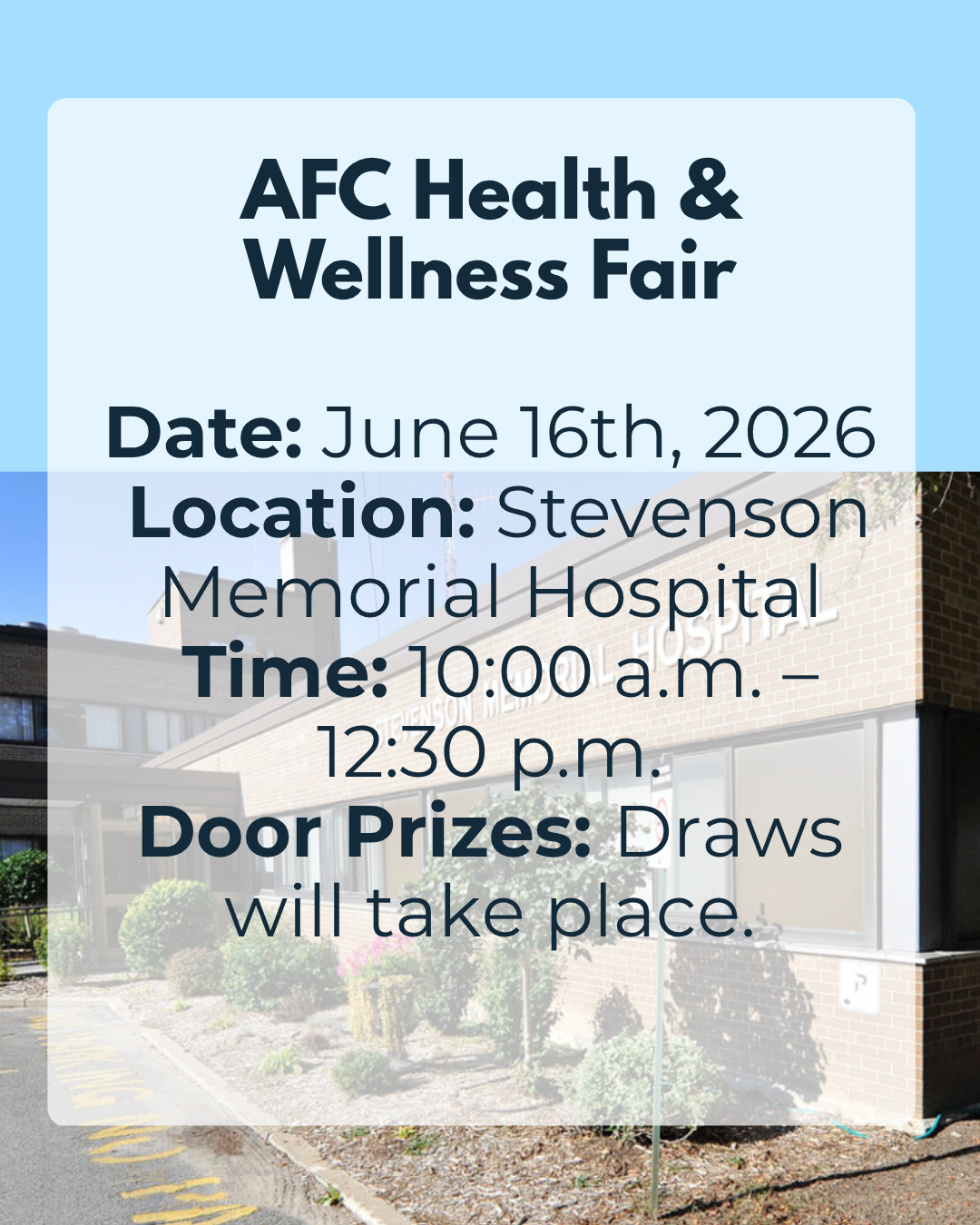
We’re excited to join the AFC Health & Wellness Fair at Stevenson Memorial Hospital.
Events like these provide valuable opportunities for families to discover local programs and services that can help them age well and remain connected to their communities.
Who says Seniors Month can’t include a little competition?
We’ll be joining Pickleball4All at Ontario Tech University, celebrating one of the fastest-growing sports while connecting with older adults and caregivers from across Durham Region.
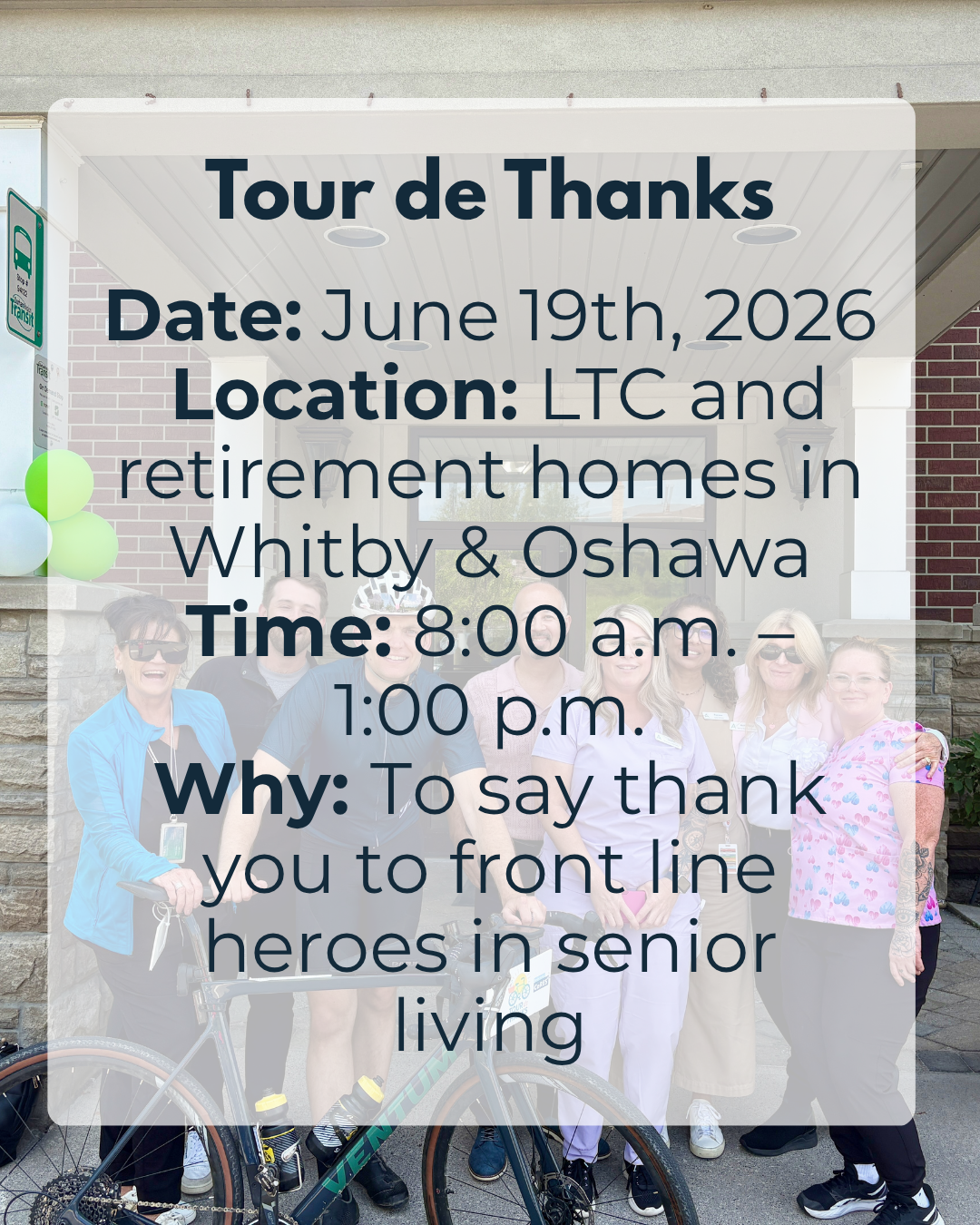
The Tour de Thanks is a cycling fundraiser we co-host with the Senior Living CaRES Fund to recognize the incredible frontline workers who support older adults every day.
There are 10 routes in Ontario and 1 route in BC where riders will be visiting retirement homes and long-term care homes at to thank team members for the work they do and raise awareness for the Senior Living CaRES Fund’s emergency bursary and education programs.
We’ll wrap up our Seniors Month events by joining AgeTech Toronto for The Story That Sells.
This event brings together innovators, entrepreneurs, and leaders working to improve aging and elder care through technology and innovation.
As elder care continues to evolve, conversations like these help shape what the future may look like for older adults and their families.
Why We Participate in Seniors Month
At Elderado, our mission is to make it easier for families to navigate elder care.
Every event is an opportunity to meet older adults, family caregivers, healthcare professionals, and community organizations working to improve aging experiences across Ontario.
If you’re attending any of these events, please stop by and introduce yourself. We’d love to meet you.
One of the challenges families face when considering a new retirement residence is that the building isn’t always open yet.
That doesn’t mean you have to wait until opening day to learn more.
I recently visited the Amica Glen Abbey Presentation Centre at Oakville Place in Oakville, where Amica has created a full one-bedroom model suite to showcase what residents can expect when the community opens in Summer 2026.
The presentation centre offers an opportunity to explore the suite design, learn about the care options, and get a better understanding of what life at Amica Glen Abbey will look like.
For families considering retirement living in Oakville, it can be a valuable way to move beyond floor plans and renderings and start visualizing what day-to-day life might look like in the community.
How to Find the Amica Glen Abbey Presentation Centre
The Amica Glen Abbey Presentation Centre is located inside Oakville Place Mall.
Address:
Oakville Place
240 Leighland Avenue, Unit 202
Oakville, ON L6H 3H6
The presentation centre is located on the second floor of the mall, beside Sephora.
If you’re visiting for the first time, it’s worth giving yourself a few extra minutes to find the location.
A Full One-Bedroom Model Suite
The highlight of the presentation centre is the full one-bedroom model suite.
While renderings and floor plans can help you understand a residence, walking through a suite provides a much better sense of how the space feels.
The suite is bright, modern, and thoughtfully designed. Large windows allow natural light to fill the living area, creating an open and welcoming atmosphere.
The layout provides a good sense of how residents can personalize their space with their own furniture, artwork, and belongings.
What Will Amica Glen Abbey Be Like?
Amica Glen Abbey is expected to open in Summer 2026 and will offer a full continuum of care to support residents as their needs change.
Independent Living
Assisted Living
Memory Care
One of Amica’s strengths is its ability to provide additional support within the home as care needs evolve.
For many families, this can provide reassurance that support is available without necessarily requiring another move in the future.
The residence is being designed with the amenities and services many families have come to expect from Amica communities, including premium dining, wellness programs, social opportunities, and personalized care services.
Amenities and Lifestyle
While the residence is still under construction, the presentation centre provides a glimpse into the lifestyle residents can expect when the community opens.
Amenities include a spa & hair salon, library, fitness centre, swimming pool, games room with billiards, fireplace lounges, craft kitchen, home theatre, grand outdoor terrace and a greenhouse.
Like other Amica communities, Amica Glen Abbey is being designed to support active, engaged living while removing many of the responsibilities that come with maintaining a home.
For some residents, that means spending more time pursuing hobbies and interests. For others, it means enjoying the convenience of prepared meals, housekeeping, transportation, and support services when needed.
Who Might Be Interested in Amica Glen Abbey?
Amica Glen Abbey may be worth exploring if you are:
Looking for a newly built retirement residence in Oakville
Interested in independent living with access to future care options
Exploring assisted living or memory care in Halton for yourself or a loved one
Planning ahead and wanting to learn about retirement living before a need becomes urgent
Visiting the presentation centre can help families determine whether the community aligns with their needs and priorities before the residence officially opens.
Why Visit the Presentation Centre?
Many families begin researching retirement living months or even years before making a move.
The presentation centre provides an opportunity to:
Tour a full model suite
Learn about available living options
Meet the team
Explore floor plans
Ask questions about care and services
Learn about pricing and availability
Gain a better understanding of what the completed community will offer
For families who like to plan ahead, it’s a practical first step.
Final Thoughts
The Amica Glen Abbey model suite provides a helpful look at the design, finishes, and approach Amica is bringing to its newest residence. More importantly, it gives families a chance to gather information and determine whether the community could be a good fit.
If you’re exploring retirement living options in Oakville, the presentation centre is worth a visit.
Amica Glen Abbey Presentation Centre
Oakville Place
240 Leighland Avenue, Unit 202
Oakville, ON L6H 3H6
If you or a loved one lives in a long-term care home in Ontario, accommodation rates increase on July 1, 2026.
The Ministry of Long-Term Care adjusts long-term care accommodation rates each year to reflect inflation and rising accommodation costs.
In this guide, we’ll explain how long-term care rates work in Ontario, what families can expect in 2026, and how the Long-Term Care Rate Reduction Program can help residents who have limited income.
Note: This article has been updated to include the 2026 Long-Term Care Rates.
When Do Long-Term Care Rates Change in Ontario?
Long-term care accommodation rates are updated annually on July 1.
The Ministry of Long-Term Care sets maximum accommodation charges for:
Basic accommodation
Semi-private accommodation
Private accommodation
Short-stay (respite) stays
These rates are standardized across Ontario, meaning every long-term care home follows the same maximum accommodation charges, regardless of whether the home is for-profit, non-profit, or municipal.
Residents receive the same nursing and personal care regardless of room type. The accommodation charge covers room and board rather than medical care.
What Will Ontario Long-Term Care Rates Be in 2026?
Historically, annual increases are tied to inflation as measured by the Consumer Price Index (CPI), subject to a maximum annual increase of 2.5%. In 2025, accommodation rates increased by 2.4%.
New 2026 Long-Term Care Rates (Effective July 1, 2026)
Accommodation Type
Daily Rate
Monthly Rate
Basic
$70.00
$2,129.17
Semi-Private*
$79.61 – $84.40
$2,421.47 – $2,567.17
Private*
$91.58 – $100.01
$2,785.56 – $3,041.97
Short-Stay
$45.31/day
N/A
*Rates vary depending on the age and classification of the bed.
Previous Long-Term Care Rates (Effective July 1, 2025)
Accommodation Type
Daily Rate
Monthly Rate
Basic
$68.56
$2,085.37
Semi-Private*
$77.97 – $82.66
$2,371.59 – $2,514.24
Private*
$89.70 – $97.95
$2,728.38 – $2,979.32
Short-Stay
$44.38/day
N/A
*Rates vary depending on the age and classification of the bed.
Why Do Long-Term Care Rates Increase?
Long-term care accommodation rates are adjusted annually to help offset inflation and rising operating costs.
Accommodation fees contribute toward:
Meals and snacks
Housekeeping
Laundry
Building maintenance
Administration and accommodation costs
The provincial government continues to fund nursing care, personal support, recreation programs, therapies, and other regulated services separately.
What Is the Long-Term Care Rate Reduction Program?
One of the most misunderstood aspects of long-term care in Ontario is that many residents qualify for financial assistance.
The Long-Term Care Rate Reduction Program helps low-income residents reduce the cost of basic accommodation. The subsidy is available only for residents living in basic accommodation and certain redesignated semi-private rooms. Private and standard semi-private accommodation are not eligible.
Importantly, your assets are not considered when calculating eligibility. The program focuses on income rather than savings or property ownership. A home that you own is not counted as income for the purposes of the rate reduction calculation.
Who Qualifies for a Rate Reduction?
There is no single income cutoff because eligibility depends on several factors, including:
Annual income
Dependants living in the community
Eligible deductions and exclusions
According to the Ministry of Long-Term Care, a resident with no dependants or special deductions would likely qualify for some level of assistance if their annual income is approximately $26,812 or less based on the 2025 accommodation rates.
Most people who receive a rate reduction still contribute a portion of their accommodation costs. The amount of assistance varies based on individual circumstances.
Do You Need to Reapply Every Year?
Yes.
The Long-Term Care Rate Reduction Program runs from July 1 to June 30 each year.
Residents who receive a rate reduction must reapply annually. If you do not reapply, your long-term care home may begin charging the full basic accommodation rate. Applications are submitted through the long-term care home.
How Do You Apply for the Rate Reduction Program?
The process is straightforward:
Tell your long-term care home that you would like to apply.
Complete the required application forms.
Provide supporting income documentation.
Submit the application to your long-term care home.
Staff at the home can help residents and families complete the application process.
For questions about the program, families can contact their long-term care home administrator or email:
Choosing a retirement home is about more than comparing amenities, care services, and floor plans.
Families want to know what life actually feels like inside the community. Is it welcoming? Do residents seem engaged? Could it feel like home?
To help answer those questions, Elderado hosted a Lunch at Evergreen Retirement Community in Mississauga. Hosted by Teodora Elez, Community Relations Manager, the afternoon brought together local professionals who support older adults and family caregivers through downsizing, real estate, estate planning, financial services, and caregiver support.
Over lunch and a tour of the residence, we explored Evergreen’s model suites, amenities, outdoor spaces, and dining experience. Along the way, one theme kept coming up: Evergreen feels bright, welcoming, and full of personality.
Highlights from Lunch at Evergreen Retirement Community
A few highlights from the day included:
Touring bright and spacious model suites filled with natural light
Exploring Evergreen’s unique retro-themed lounge and bowling area
Discovering beautifully maintained outdoor gardens and patios
Learning how resident interests influence activities and programming
Meeting professionals dedicated to supporting older adults and their families
Enjoying the same lunch served to residents, including a crowd-favourite plate of pierogies
Experiencing firsthand the warm and welcoming atmosphere Evergreen is known for
First Impressions of Evergreen Retirement Community
Before seeing the suites or amenities, the first thing many of us noticed was how bright the building felt.
Natural light pours into the lobby and common areas, creating an inviting atmosphere from the moment you walk through the front doors. The residence feels open, warm, and comfortable.
Vikaas Gupta from Genie Senior Services immediately noticed the sunlight throughout the building, describing it as one of Evergreen’s standout features.
For Minnelle Williams of Ending Well With Minnelle, the strongest impression was the feeling of home.
She had visited Evergreen previously and said that feeling returned immediately when she walked through the doors again.
The combination of natural light, comfortable common spaces, and welcoming atmosphere helps explain why Evergreen made such a strong first impression on the group.
Touring the Suites
One of the most valuable parts of any retirement home tour is seeing the suites firsthand.
Photos can be helpful, but actually walking through a suite gives families a much better sense of how the space feels and functions.
The model suites at Evergreen stood out for their brightness, large windows, and practical layouts.
Cathy Baynham, a real estate professional with decades of healthcare experience as a registered nurse, was particularly impressed by the way the living space was designed.
She noted that residents would have plenty of room to relax, entertain guests, and comfortably move throughout the suite.
Mellisa Thornton from Mortgages by Mellisa shared a similar perspective, describing the suites as bright, airy, and spacious.
One thing that became clear during the tour is that Evergreen’s suites don’t feel institutional. Instead, they feel like places where someone could comfortably settle in and make their own.
The Personality of Evergreen
Every retirement home has its own personality.
Some feel formal. Some feel quiet. Others feel highly social.
Minnelle Williams called it eclectic while reflecting on the variety of spaces and experiences available throughout the residence.
During the tour, she was particularly drawn to the retro-themed lounge and bowling area. She described it as a space that feels like stepping back in time while still feeling fun and inviting.
What stood out even more was learning how Evergreen responds to resident interests. During conversations with the team, we heard examples of how activities and programming evolve based on what residents enjoy and request.
That resident-focused approach creates an environment where people can continue pursuing hobbies, exploring new interests, and finding meaningful ways to stay engaged.
For families, that’s an important part of retirement living. The goal isn’t simply finding a place to live. It’s finding a place where someone can continue living well.
Amenities That Stood Out
Evergreen offers a wide variety of amenities designed to support social connection, recreation, wellness, and lifelong learning.
Rather than simply listing amenities, what stood out was how different each space felt.
The retro-themed lounge was one of the most talked-about spaces during the tour. It’s a fun, memorable area that immediately sparked conversation among attendees.
The library provides a quieter setting for reading, reflection, and conversation.
Creative spaces help residents continue hobbies and explore new interests.
Together, these spaces help create opportunities for residents with different personalities and interests to find activities they genuinely enjoy.
Outdoor Spaces Worth Exploring
Outdoor space is often an important consideration when choosing a retirement residence.
At Evergreen, attendees were impressed by the landscaped gardens, patios, and outdoor gathering spaces.
Cathy Baynham commented that she could easily imagine herself enjoying a coffee or reading a book outdoors while taking in the surroundings.
The gardens help extend the living experience beyond the walls of the building and provide residents with opportunities to enjoy fresh air, connect with nature, and spend time with friends and family.
Lunch at Evergreen
Food is one of the topics families ask about most when touring retirement homes.
That’s one reason why sharing the same lunch served to residents is such an important part of the Lunch at experience.
The unofficial favourite of the day was the pierogies.
Most of the group had them for lunch and had nothing but positive things to say.
The dining room itself was bright and welcoming, creating an enjoyable atmosphere for conversation while giving attendees a firsthand look at what everyday dining looks like for residents.
Food is about much more than nutrition. Meals are often where friendships are built, conversations happen, and community takes shape.
Who Joined Us For Lunch?
One of the unique aspects of Lunch at Evergreen was the opportunity to bring together professionals who support older adults in different ways.
Transitions into retirement living often involve much more than selecting a residence. Families may also need support with downsizing, moving, real estate decisions, estate planning, and financial planning.
Providing integrated real estate, downsizing, appraisal, auction, and move management services.
Many professionals who attend Lunch at events have completed Elderado’s Senior Living Certified Level 1 Quiz. The quiz helps build a practical understanding of retirement living and long-term care in Ontario so professionals can better support older adults and family caregivers.
Professionals who complete the quiz can also receive a co-branded Retirement Living Availability Registry page featuring their business profile, website, contact information, and retirement home availability results for the communities they serve.
Remembering Cindy Diogo
I would also like to recognize Cindy Diogo from ConSoul, who joined us for lunch at Evergreen Retirement Community.
Since our visit, Cindy has unexpectedly passed away.
Cindy was a passionate advocate for older adults, caregivers, and innovation in senior living. Cindy always showed up, if I was going to an AgeTech or innovation event, I could count on Cindy being there too.
I’m grateful that Cindy was able to join us at Evergreen and share in the conversation.
Our thoughts are with Cindy’s family, friends, colleagues, and everyone whose lives she touched. She will be deeply missed.
Final Thoughts
From the bright common spaces and spacious suites to the retro-inspired social areas and welcoming atmosphere, Evergreen offers an environment where residents can remain active, engaged, and connected.
For families exploring retirement homes in Mississauga, Evergreen Retirement Community is certainly worth adding to the list of residences to tour.
Sometimes the best way to understand retirement living isn’t by reading about it.
It’s by experiencing it firsthand.
Learn More About Evergreen Retirement Community
Interested in learning more about Evergreen Retirement Community?
Visit Evergreen’s profile on Elderado to explore photos, amenities, services, and living options.
When people hear the name “March of Dimes Canada,” many assume it’s only connected to children or historical polio programs. But today, March of Dimes Canada plays a much bigger role in supporting older adults, caregivers, and people living with disabilities across Canada.
For many seniors and families, March of Dimes Canada can be an important source of support for aging at home, accessibility, stroke recovery, mobility challenges, and caregiver assistance.
And with Canada’s aging population continuing to grow, these services are becoming more important than ever.
What Is March of Dimes Canada?
March of Dimes Canada is a national charitable organization that supports people with disabilities and helps them live more independently in their homes and communities.
The organization originally began in the 1950s during the fight against polio. Over time, its mission expanded to support Canadians living with physical disabilities, acquired brain injuries, stroke recovery challenges, mobility limitations, and age-related health conditions.
Today, many of its programs are highly relevant for:
older adults
family caregivers
stroke survivors
people recovering from illness or injury
adults trying to remain independent at home
How March of Dimes Canada Helps Seniors
One of the biggest goals for many older adults is staying in their own home safely for as long as possible.
March of Dimes Canada supports that goal through programs focused on:
accessibility
independent living
community support
rehabilitation
caregiver support
A lot of seniors first connect with the organization after:
a fall
a stroke
a hospitalization
worsening mobility
a Parkinson’s diagnosis
increasing difficulty managing daily activities at home
Their programs are designed to help seniors maintain independence and avoid unnecessary hospital stays or premature moves into long-term care.
Home and Accessibility Support
One of the best-known programs for seniors in Ontario is the Ontario Home & Vehicle Modification Program (HVMP).
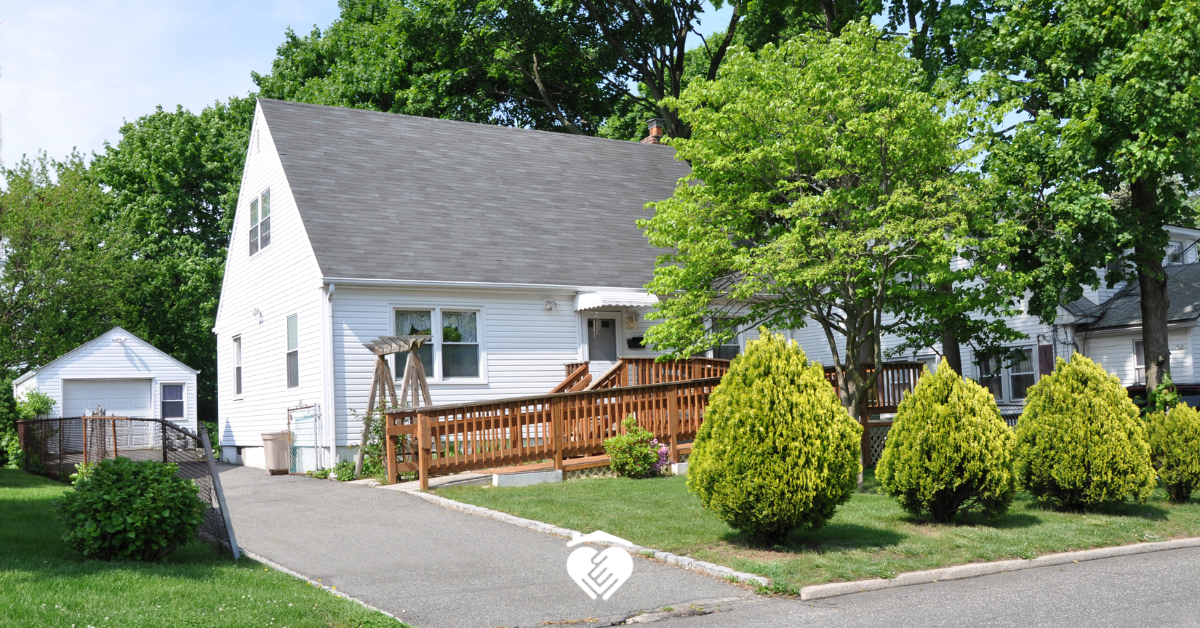
This program helps eligible Ontarians pay for accessibility upgrades such as:
wheelchair ramps
stair lifts
grab bars
accessible showers
widened doorways
vehicle accessibility modifications
The program is administered by March of Dimes Canada on behalf of the Ontario government.
For many families, these types of modifications can make the difference between:
safely aging at home, or
needing to move into retirement living or long-term care earlier than expected.
Stroke recovery is another area where March of Dimes Canada provides major support for seniors and caregivers.
Their “After Stroke” program helps stroke survivors and families navigate recovery after leaving the hospital.
Support can include:
peer support groups
recovery education
caregiver resources
virtual programming
rehabilitation guidance
community connections
Stroke recovery often continues long after someone leaves the hospital, and many families feel overwhelmed trying to figure out next steps. Programs like this can help people feel less alone during recovery.
Organizations like March of Dimes Canada help fill some of the gaps by connecting families to practical supports and services that many people don’t even know exist.
In many cases, getting the right support early can:
reduce caregiver burnout
improve safety
reduce falls
prevent unnecessary hospital visits
help seniors maintain independence longer
How to Get Started
The best starting point is contacting March of Dimes Canada directly or reviewing the services available in your region.
March of Dimes Canada also offers Information Navigators who can help families understand what programs or supports may be available.
Final Thoughts
Many families only learn about organizations like March of Dimes Canada during a health crisis or after a major life change.
But learning about these supports earlier can make a big difference.
Whether it’s accessibility funding, stroke recovery support, in-home assistance, or caregiver resources, March of Dimes Canada helps many seniors stay safer, more independent, and more connected to their community.
For many older adults in Ontario, the goal is simple: stay at home safely for as long as possible.
But as mobility changes with age, even everyday things like climbing stairs, getting into the shower, or safely entering a vehicle can become difficult. That’s where Ontario’s Home & Vehicle Modification Program (HVMP) can help.
Administered by March of Dimes Canada, the program provides funding to eligible Ontarians with mobility-related disabilities to make accessibility upgrades to their home or vehicle. The goal is to help people remain independent, reduce safety risks, and continue participating in their community.
For seniors and their loved ones, this program can make a real difference.
What Is the Home & Vehicle Modification Program?
The Home & Vehicle Modification Program is funded by the Government of Ontario and administered through March of Dimes Canada.
The program helps cover the cost of modifications that improve accessibility and safety for people with long-term mobility impairments.
That could include things like:
Installing grab bars in a bathroom
Adding a wheelchair ramp
Installing a stair lift
Converting a bathtub into a walk-in shower
Widening doorways
Modifying a vehicle with accessibility equipment
For many families, these changes can help an older adult stay in their home longer and avoid a premature move into retirement living or long-term care.
Why This Matters for Seniors
A lot of seniors want to age in place. In simple terms, that means continuing to live at home rather than moving into a care setting.
But homes are often not designed for aging. Something as small as a few stairs at the front entrance or a slippery bathtub can become a major safety issue after:
a fall
a stroke
a Parkinson’s diagnosis
worsening arthritis
declining mobility
the use of a walker or wheelchair
Accessibility upgrades can significantly improve safety and independence.
For caregivers, these modifications can also reduce physical strain and stress. Something like a stair lift or accessible shower may help a spouse or adult child continue supporting their loved one safely at home.
What Does the Program Cover?
The program can provide:
Up to $15,000 lifetime maximum for home modifications
Up to $15,000 every 10 years for vehicle modifications
Eligible home modifications may include:
ramps
stair lifts
porch lifts
grab bars
wheel-in showers
widened doorways
lowered countertops
accessible pathways
lifting and transfer devices
Eligible vehicle modifications may include:
wheelchair lifts
hand controls
specialized seating
lowered vehicle floors
garage accessibility modifications
The program may also help cover:
installation costs
labour
contractor-related work
design and assessment costs tied to approved modifications
Who Is Eligible?
As of 2026, applicants generally must:
Be a permanent Ontario resident
Have a substantial ongoing disability or impairment expected to last at least one year
Have mobility restrictions that affect daily living activities
Meet financial eligibility requirements
The program is income-tested, which means household income can impact how much funding is available.
Ontario notes that applicants with household income above approximately $35,000 may be required to contribute toward costs.
The program is intended to support people with the greatest financial need, and applicants are expected to first explore other available funding sources like insurance coverage or workplace benefits.
One Important Tip: Don’t Start Renovations Too Early
This is a big one.
Families should avoid starting renovations before receiving approval from the program. Starting work too early could affect eligibility for funding.
Before applying, it’s a good idea to:
Speak with an occupational therapist if possible
Gather quotes from contractors
Review the eligibility guidelines carefully
Submit all required paperwork before beginning work
How to Apply
The official application process is managed through March of Dimes Canada.
Depending on where you live in Ontario, there may also be additional supports available through:
municipal accessibility grant programs
Ontario Renovates programs
federal tax credits like the Home Accessibility Tax Credit (HATC)
Ontario’s Assistive Devices Program (ADP)
In some cases, these programs can be combined to reduce overall out-of-pocket costs.
Final Thoughts
Many families don’t realize accessibility funding programs like HVMP exist until they’re already in a crisis situation after a fall, hospitalization, or sudden health change.
But planning ahead can make a huge difference.
Small modifications can help seniors:
stay safer
maintain independence
reduce fall risks
ease caregiver stress
continue living comfortably at home longer
And in many cases, programs like Ontario’s Home & Vehicle Modification Program can help make those changes more affordable.
Caring for an aging loved one at home can be one of the most rewarding roles you take on but it is one that comes with challenges. Whether you’re supporting an elderly parent, spouse, or another family member, navigating care decisions can feel overwhelming, especially as needs change over time.
Home care in Ontario offers flexible, personalized support that allows older adults to remain in their own home while receiving the help they need.
What is Home Care?
Home care services refer to a range of supports delivered directly in a person’s home to help them live safely, comfortably, and independently. These services can be short-term or ongoing and are tailored to match changing physical, emotional, and cognitive needs.
Unlike residential settings, in-home care allows your loved one to stay connected to familiar surroundings, routines, and neighbours. For many families, this approach supports dignity, autonomy, and healthier lives for aging loved ones.
For many Canadians, the goal is to age in place or recover from illness within the familiar comfort of their own home. However, “home care” is an umbrella term that covers a vast spectrum of support, from light social help to intensive medical intervention.
To help you navigate these choices, here is a more detailed look at the types of professional at-home services available in Ontario.
1. Companion & Social Support
Often the first step in home care, companion services focus on emotional well-being and maintaining a high quality of life. This is ideal for seniors who are largely independent but may be experiencing social isolation.
Social Engagement: Assistance with hobbies, playing cards, or going for walks.
Community Access: Escorts to grocery stores, malls, or community centres to keep the individual active in their local neighbourhood.
Logistical Help: Managing mail, scheduling appointments, and providing transportation to and from the doctor.
Safety Supervision: Providing a “watchful eye” for those with mild forgetfulness to ensure appliances are turned off and doors are locked.
2. Personal Support Workers (PSWs)
PSWs provide “hands-on” non-medical care. In Canada, they are the backbone of the home care system, focusing on Activities of Daily Living (ADLs).
Personal Hygiene: Respectful assistance with bathing, showering, oral care, and hair washing.
Dignified Dressing: Help with choosing outfits and managing buttons or zippers, which can become difficult with arthritis.
Mobility & Transfers: Using specialized techniques or equipment (like Hoyer lifts or gait belts) to help individuals move safely from bed to chair.
Incontinence Care: Managing toileting needs with sensitivity to maintain skin health and prevent infections.
3. Skilled Nursing & Clinical Care
When care requires a medical license, registered nurses (RNs) or registered practical nurses (RPNs) step in. This level of care is often necessary for chronic disease management or post-surgical recovery.
Medical Procedures: Wound care for post-op incisions or pressure sores, catheter care, and administering injections.
Medication Administration: Going beyond simple “reminders” to actually managing complex medication schedules and monitoring for side effects.
Health Monitoring: Tracking vital signs and blood sugar levels for conditions like diabetes, COPD, or heart failure.
Palliative Care: Specialized comfort care for those with life-limiting illnesses, focusing on pain management and quality of life.
4. Specialized Rehabilitative Therapies
Home care isn’t just about maintenance; it’s also about regaining independence. Many Canadian providers offer in-home therapy sessions:
Occupational Therapy (OT): Professionals assess the home for safety hazards and suggest modifications (like grab bars or ramps) to help you live more independently.
Physiotherapy: Personalized exercise programs to improve balance, strength, and range of motion after a fall or joint replacement.
Speech-Language Pathology: Assistance for those recovering from a stroke or managing neurological conditions that affect swallowing or communication.
Dietetic Services: Registered dieticians can help design meal plans for specific medical needs, such as low-sodium or kidney-friendly diets.
5. Respite & Family Support
Caregiving is a demanding role. Respite care is specifically designed to support the caregiver by providing a professional to take over duties temporarily.
Short-Term Relief: Whether for a few hours a week or a 24-hour stay, this allows family members to attend to their own health, errands, or rest.
Crisis Support: Immediate, temporary help if the primary family caregiver becomes ill or has an emergency.
6. Household & Lifestyle Assistance
Sometimes, the biggest barrier to staying at home is the physical demand of maintaining a household.
Nutrition: Meal planning, grocery shopping, and preparing fresh, healthy meals.
Light Housekeeping: Laundry, bed-making, vacuuming, and tidying up to ensure a hygienic living environment.
Home Care in Ontario
Ontario Health atHome is a valuable resource that can help families with information and support as they search for publicly available home care. Ontario Health atHome assess a patients care needs and provides in-home and community-based services to support health and well-being, as well as access and referrals to other community services.
When care needs increase, some families consider hiring professional caregivers. These trained care providers can deliver consistent, reliable support while reducing the physical and emotional strain on you.
Private home care doesn’t replace family involvement but complements it, allowing you to focus on quality time rather than constant tasks.
Family Caregiving Responsibilities
Even with outside help, family caregiving responsibilities remain significant. You may still manage finances, attend medical appointments, and make decisions about long-term care.
Clear communication between you, your loved one, and any professional caregivers is essential. Establishing a shared care plan helps everyone understand roles, expectations, and priorities as needs evolve.
Balancing Caregiving and Personal Well-Being
Caring for someone else is difficult if you neglect your own needs. Many caregivers experience exhaustion, anxiety, or declining health over time.
Make space for rest, social connection, and activities that restore you. Accepting help, whether from professional services or trusted family and friends, is not a failure. It’s a necessary part of sustaining care and supporting healthier lives for everyone involved.
Brought to you by CarePatrol, your partner in senior care solutions. Reach out to learn more about our senior care advisory services at no cost to you. CarePatrol is paid by the company providing the care service.
If you’ve spent time browsing Elderado, you may have noticed that some retirement homes display their current availability right on their listing. This isn’t guesswork. Here’s how it works.
Elderado collects availability data directly by working with participating retirement homes. Each listing reflects information gathered through these ongoing interactions, so you can trust that what you see comes straight from the source.
We also believe that outdated information is worse than no information at all. That’s why we only display availability data that has been verified within the last 30 days. If a listing’s data falls outside that window, we remove it until it can be refreshed. We also do our best to intentionally display when the data was last verified by the home to help boost confidence in the data. It’s a simple rule, but it goes a long way toward making sure you’re never making decisions based on stale numbers.
Not every home on Elderado participates in availability sharing yet, and that’s okay. We’re always working to expand coverage so more families can plan with confidence.
Have suggestions or feedback? We’d love to hear from you. Reach us anytime at info@elderado.ca.